Tag Archives: inspiration

Inspiration and Us – How Do We Find Our Characters?

As we all know, characters are one of the most fundamental parts of fiction.  This is why we fall in love with a certain series – we are intrigued by the characters.  So where do we conjure up these story people who readers always want to know more about?  I have different methods but in this post I want to demonstrate how sometimes they simply find us.

I had to take my son, Will to rehearsals yesterday for a production he is appearing in next week.  Unfortunately, we had all had the sickness bug and I still felt as if I was on a sailing boat in high winds.  So the thought of hanging around for two hours was not an attractive proposition.  It then occurred to me that I might feel better in the glorious scenery and fresh air of the country park.  What could be more relaxing and uplifting than being surrounded by greenery whilst watching swans floating regally on the lake?

To take away the nausea, I stared at the swans gliding towards me, took deep breaths and imagined medieval music playing in the background.  I was starting to lose my physical discomfort when bounding out of the bushes was a man dressed head to foot in combat gear wielding a weapon.  For a split second, I thought he was after my handbag.  It was a truly uncomfortable moment as there was no-one else around and we were quite a way off from sanctuary.

He rushed past me as if we were in a war zone and he was trying to escape.  I have to tell you at this point that this is a rural, leafy backwater where you have to say hello to every stranger who walks past with their dog.  As I focussed upon him properly, I realised that it wasn’t a weapon he was wielding but one of those huge, phallic type cameras.  He was taking photos of the swans.  I made a quick exit and headed for the visitor centre thinking I would sit inside on one of the benches and gaze at the ducks outside through the walls of glass.

Pair of Wood Ducks

Pair of Wood Ducks (Photo credit: Wikipedia)

After popping yet another boiled sweet into my mouth to take away the nausea, I gazed at a couple of sleeping ducks and suffered envy – true, green, poisonous jealousy.    The jealousy was just on the point of going as I decided I didn’t really want to be a sleeping duck when he appeared again.  He was there aiming his huge camera at the ducks with the aggression and intensity of a hunter.  His camera truly was his rifle.  The ducks looked as if an earthquake at the side of them wouldn’t awaken them, yet he was there breathing heavily ready for action.  It was at this point that his name came to me – he was obviously called Theophile Twitcher.  The ducks slept, he waited and I watched.

After about ten minutes of inactivity, Twitcher heard a noise behind him and he turned around aiming his lethal weapon slowly, like the police do on the television when they rush into a building and don’t know who is hiding there.  Unfortunately, for him, another male duck approached the sleeping duck couple and a duck spat broke out.  Twitcher was too busy searching for lions or bears or whatever with his gun, I mean camera.  He then stalked off.

After popping another boiled sweet into my mouth, I noticed him strutting off into the distance.  I could see a huge, bulging rucksack on his back as he covered every movement and sound with his camera.  He was dressed and equipped as if he was miles away from civilisation.  At this point ,I did wonder if he realised he was in a country park in England.  No doubt, I will never find out but what I did find was a character for my next Will Blyton book.  The seed had been planted, over the next weeks and months this man will turn into a fully formed story person with a back story, personality and problems. I think the children will love him and I’m really looking forward to meeting him.  Have you had any similar experiences?

4 Comments

Filed under Creative Writing, Inspiration and Us

Inspiration and Us – Childhood Books – Shakespeare’s Stories.


Touchstone the Jester from “As You Like It.

Inspiration and us – that’s the name of a new category for the blog.  The reason I am calling it inspiration and us, instead of inspiration and me is because I want you to think about how our lives and our children’s lives inspire us.  I would also be extremely grateful to hear of your inspirational experiences.


As a child, I had many books which I loved but as this is about what inspires us, I shall be mentioning the main sources of inspiration.  One of my favourite books was one which was passed onto me.  I regret to say that I have no idea where it came from.  It was a big book which had many stories in it.  My favourites were some of the stories from Shakespeare’s plays.  They were the plays written in story form with some illustrations.  I read them over and over.  One which sticks in my mind is As You Like It.   It was pure escapism.  The idea of people running away from their everyday lives and living in a forest, appealed to me greatly.  As a child, I loved the idea of dressing up and being in disguise.  Subsequently, when Rosalind dressed up as a boy and pretended to be Ganymede, I was in the story with them.  This is a story which explores sibling rivalry, romance, has a wrestling match and a court jester named Touchstone.  I am proof that the story appeals to children.  If the play had been thrown at me at the age of nine, I would have been put off by its beautiful, poetic language.  However, I was lucky enough to have the plays as stories first and so Shakespeare‘s work was adored by me even before I had read a play or a sonnet.


illustration of William Shakespeare reciting h...

illustration of William Shakespeare reciting his play Hamlet to his family. His wife, Anne Hathaway, is sitting in the chair on the right; his son Hamnet is behind him on the left; his two daughters Susanna and Judith are on the right and left of him. (Photo credit: Wikipedia)


So how has this childhood book inspired me?  First of all, I think the greatest proof is that my son is called Will after Shakespeare.  Incidentally, one of his main ambitions is to play Hamlet at the Globe Theatre.  He has never had Literature forced fed to him.  I was worried that I would do that so I have always been careful and introduced it as the fun, mad and exciting subject that it is.


My educational route would suggest that Shakespeare’s stories also inspired me as I have an Honours Degree in Literature and an M.A. in Creative Writing.  However, I think that the most telling aspect of it is in my writing.  In my children’s book Will Blyton and The Stinking Shadow, I have a small boy trapped in a stone called Hamnet.  He has had a curse put on him by the powerful magician Corspehound.  Not only is Hamnet trapped in the stone but the curse is on his tongue.  He can only insult people.  Hamnet is actually Shakespeare’s son who died at the age of eleven.  The Bubonic Plague was rife at the time.  Little is known about Hamnet and so I wanted to keep his memory alive by re-writing his story.  Instead of perishing before his young life had really begun, I have him living on as a huger than life character.


An illustration of an undertaker during the Bu...

An illustration of an undertaker during the Bubonic plague. (Photo credit: Wikipedia)


I have already written about introducing children to Shakespeare by using insults.  Children love language if they allowed to be playful with it – this is why they love insults – they are naughty and delicious.  This was part of my enjoyment when reading A Midsummer Night’s Dream in my story book.  There was great emphasis on the argument between Hermia and Helena.  It is Midsummer, they are lost in the forest, it is a time of misrule and chaos and they are arguing over men.  Hermia calls Helena – “You juggler! You canker-blossom!” (The Arden Shakespeare – Act III, Scene II Line 282)  Later in the heated argument, Hermia also calls Helena “Thou painted maypole.” (The Arden Shakespeare – Act III, Scene II, Line 296) The enjoyment of the insults as a child turned to inspiration as an adult.  In Will Blyton and The Stinking Shadow, Hamnet is a master of insults; most of them are aimed at Will.  The first thing he ever says to him is “thine intestines wilt be mine.”  This is quickly followed by “thou wilt regret this warty nose.”


Washington Allston's 1818 painting Hermia and ...

Washington Allston's 1818 painting Hermia and Helena. (Photo credit: Wikipedia)


We cannot change our own childhoods.  However, we can be inspired by what was thrown at us and mould it.  As writers, we can turn our experiences into what we want them to be.  Although we cannot change our own childhoods, we can guide our children’s inspiration and education.  Catch them early on with Shakespeare in the form of his stories.  Talk to them about the funny characters like Bottom, from A Midsummer Night’s Dream, who gets the head of an ass for a time.  If you missed out on Shakespeare first time around – you might be surprised at what you find.  Who knows, you or your children might end up being so inspired that you write a book too.


Emil Orlik: Actor Hans Wassmann as Nick Bottom...

Emil Orlik: Actor Hans Wassmann as Nick Bottom in Shakespeare's A Midsummernight's Dream, 1909 (Photo credit: Wikipedia)


15 Comments

Filed under Creative Writing, Education, Inspiration and Us, Parenting

Let’s Talk About FRANKENSTEIN 1

Loony Literature is about being creative with literature.   It is about creative reading as well as creative writing.  As both a lover and graduate of this subject, I positively enjoy deconstructing texts from different points of view – that is what studying literature is about.  It is not about knowing every quotation from Shakespeare as non literary people often assume.  It is about taking a text and analysing and evaluating it whilst backing it all up with textual evidence.  We can add to our arguments by reading the text from a certain perspective e.g. a feminist or a Marxist point of view.  If we enjoy psychoanalytical theory we can use Lacan or even go down a Freudian route.  The possibilities are endless and as long as we can back our argument up with textual evidence, we are free to do this.  There is no right or wrong answer in literature – it is creativity heaven.

Much has been written about Mary Shelley’s Frankenstein; in fact, far too much to mention in this introduction.  I have been using the text as a springboard to write a play and workshops.  However, as all great pieces of fiction tend to do, it has demanded that I read it yet again from a totally different angle.

I love the fact that Frankenstein was written by a teenager.  The other detail about Mary Shelley which sits heavily in my consciousness is that her mother died through complications following her birth.  I am both daughter and mother.  The two relationships are entwined in my being like thread in tapestry.  I feel so much sympathy for Mary Shelley as a young girl growing up with only other people’s stories of her mother.

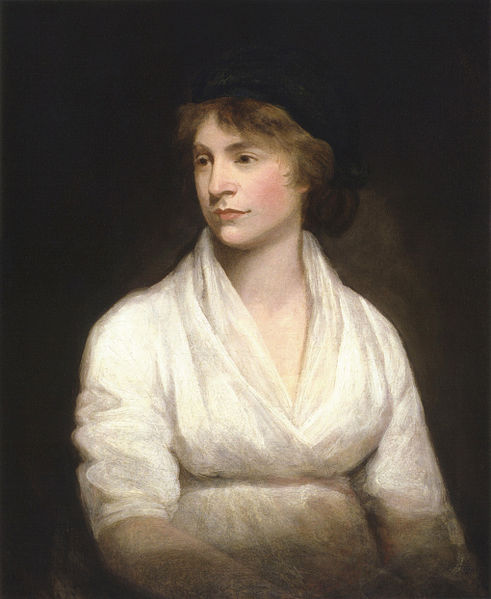
These two facts have made me read Frankenstein again.  I am going to read it as a subconscious cathartic writing exercise for Mary Shelley.  In other words, Shelley wrote herself as Frankenstein.  The monster is her dead mother, Mary Wollstonecraft.  As a teenager, Mary would read on her mother’s grave in St Pancras Churchyard.  The mother was beloved but unobtainable.  It is bad enough as a teenager when your parents do not seem to understand your emotional turmoil.  Mary did not simply have intentionally deaf ears to contend with but dead ears.  Mary needed to find a way to communicate her isolation. I believe that Frankenstein can be read as a letter from Mary Shelley to Mary Wollstonecraft.  How else can an abandoned daughter let her dead mother know what she went through whilst growing up without her?  Fundamentally, as the dead mother was a literary forerunner of her day, there was only one way to get such a mother’s attention and that was to create her own literary masterpiece.  Ironically, Mary Shelley conjured up her own dead mother in the position of abandoned child.

If the monster is supposed to portray her dead mother, why did she make him male?  We all know that women used to constantly die of childbirth in those days; by re-inventing her mother as male, she prevents this taking place.  She needs to keep her mother alive as she lives out the story of isolation Mary felt as a motherless child.

I am at the beginning of this reading of Frankenstein and hope that you will join me on the journey.  I will be making regular posts as I travel on my own new reading journey of Frankenstein.  My model for Frankenstein might not work out.  Ultimately, by offering a hypothesis and then writing a notebook on my reading, I hope that readers of the posts will come up with their own valuable insights.  If this works, I will tackle other delicious texts in the same way.  So let’s talk about Frankenstein.

17 Comments

Filed under Frankenstein, Literary Criticism

6 Great Reasons to Work with Teenagers.

Teenagers have always got bad press.  It is because they are fresh, innovative and rebellious.  Almost nothing can beat their optimism and joy when they are doing well at something they love.  I see this when I watch drama students performing.  Less than 100 yards away, I  also see a group of teenagers spraying water bottles for no reason except that they are redundant.  I use the word redundant because it means surplus to requirement; when I see dead eyes I am sure that this is how many teenagers feel – surplus to requirement.  These teens might still be at school or they might be unemployed.  Whatever the case, they are still redundant in the sense I am using because they are not being directed into finding what makes them want to get up in the morning.  It could mean that they will never feel  fully part of society.  I know they are told that they have to pass exams and get a job.  However, this is telling them what they have to do – they need to find out what they WANT to do.  When young people have no direction, they do not know their place in society – they are out in the margins looking in.  On the other hand, when a teenager has a self directed goal, they don’t need to be pushed to pass exams or get a job.  They WANT to do both.  Work experience is a step for teenagers finding what they really want to do with the rest of their lives.  I believe that even if it is just an hour a week, we can ALL benefit from having a teenager working with us.  My teenage son works with me.  Here are just some of the reasons it’s great to work with a teenager.

Technology know how.  I use a computer daily but do tend to be set in my ways in what I use.  I can find out how to do new things but it all takes time.  Time is not in abundance in my life so I will not use new ideas or pieces of technology because I haven’t got the time to learn how to use them.  This is where working with my teenage son helps.  He sits at the laptop and works miracles for me.  He saves me hours a week.

Laughter and joy.  I have always enjoyed humour.  When something really tickles me I can laugh until I feel like I am wearing a Victorian corset.  A couple of years ago, I  realised that I no longer laughed like I used to do.  It occurred to me that the responsibility of family finances, a career, motherhood, a home and health issues had made me a bit of a serious person.  If I am totally honest, I was horrified.  I remembered a younger me and wanted the fun part of her back and quickly.  Working with a teenager can do that for you.  When we are in parent mode, if there is a problem the parent  sorts it out.  However, when we work with our teenagers – the problem is shared.  Teenagers are more likely to laugh when things go pear shaped.  I don’t mean serious issues but jobs which can be straightened out.  Teenagers giggle and it is infectious.  Some of our catastrophes have had us bent over double with laughter.

It encourages other young people to look at your business. When a teenager is involved in your business, it gives it a young appeal.  For instance, at Loony Literature, we are trying to inspire young people to read and write more.  We put videos and podcasts out to get young readers and writers interested.  My son appears in both videos and podcasts which demonstrates that we are not a group of adults trying to lecture kids.  Also, by having a teen in videos and podcasts, it encourages other young people to do something similar themselves.

It helps us see our business through a young person’s perspective.  The children and teenagers in the world at the moment are tomorrow’s customers.  As grown ups, sometimes we are so busy, we don’t realise that people and their needs are rapidly changing.  When we have a teenager working with us, if we allow them enough voice – which we should – we are allowed into the world as they see it.  For instance, I have been amazed at the way children and teenagers play together on the internet.  When I was a child, I would meet my friends and we would play in the nearby woods.  We lived in a world of our own make believe.  My favourite game was being on a deserted island – I know – in reality it would be a nightmare but that is children for you.  Adults constantly say that children don’t play any more, that they are always on computers.  What many adults don’t realise is that children play the same sort of games that they used to play but on the internet.  My son played a game about a time travelling café with other kids on the internet for months.  It was a whole complete world which they had made up.  They have also been secret agents uncovering a mole in a top toy manufacturer.  The use of shared creativity and playfulness is endless.  If I had not been lucky enough to be shown the world through a teen’s perspective, I would not know about of any that.  Working with a teen has given me an insight which can be used to promote Loony Literature.  I think this might be the case for many businesses.

Work experience. – At school, teenagers are nearly always with other people who are the same age as them.  It is often the same in college.  Suddenly, they are in the workplace and everybody else is at least twice their age.  It’s no wonder they can appear sullen.  Their past experiences of grown ups often falls into two categories –a) family and friends who they know or b) figures of authority like teachers.  Teenagers are often self conscious.  When they are thrown head first into a dual world of work and middle aged strangers, they often retreat into themselves.  This is why they need work experience before they leave education.

Confidence –  The last two go hand in hand.  Work experience, if handled properly, can give teenagers the confidence to pursue the career they really want.  As all ex teenagers will remember, it is a time of extreme highs followed by sky diving lows.  These are emotions which come and go like cats constantly coming in and going out again.  Confidence, however, is something which sits inside us and probably influences every decision we take.  Teenagers who are given work experience in a field which they believe is “not for people like them”, might actually acquire the confidence to gain the examination results and pursue a career, they could only dream about.  Surely that would make a better world for all of us.

4 Comments

Filed under For Teens, Parenting

6 Great Reasons for Teens to Write.

It is therapeutic.  As an ex-teenager and the mother of a teenager, I know the experience shudders from ecstasy to the doldrums constantly and without any warning.  We go from the height of excitement when an attractive person seems to find us attractive to wanting to never see another living being when even the cat ignores us.  Everybody seems to want something from us.  For those at school, teachers want a million essays for the next day.  For the home educated, parents expect us to watch Science experiments when we’d rather be watching science fiction.  We dream of the day when all our spots have vanished, the hair is glossy rather than greasy and we are in control.  Teenagers can often feel that no-one understands them, that is why they go from storming out of the room with dramatic vigour to sitting in the corner with a face and mood to match and speaking to no-one.  Getting everything off the chest in the form of a diary or private blog is therapeutic.  It doesn’t need to be kept every day; it could be more like a journal and kept specifically for times of isolation, anger or depression.  It can be destroyed once everything is off the chest – we don’t always mean that we would seriously like to put Mrs Alwaysright in the stocks and fling rotten vegetables at her but it feels good to write it down.

It raises your self-esteemApart from when my teenage son is acting on the stage, he is quite a shy person.  One of his interests is Doctor Who, the television show whose main character is a 900 hundred year old timelord.  The Doctor Who television reviews and book reviews he writes for websites and fanzines are extremely well received.  His delight when his work is discussed and praised on forums and Twitter is obvious.  Praise from people who do not know us always raises the self-esteem because it is based purely on the merit of the work.

It raises your profile.  When we write about something with passion and expert knowledge, we become known for it.  People who enjoy our work will pass it on to others.  We become associated with the subject which we are writing about.  Often when our self-esteem is low, we feel worthless and think we know nothing of interest to anyone else.  This is not true.  If we asked a roomful of teenagers to list their interests, we would find magazines, forums and societies who share the same passion.  Therefore, teenagers writing about their particular hobbies could become well known for their insight into that subject.

It looks impressive on your resume.  Competition for colleges, universities and jobs is fierce these days.  The ability to write well should never be underestimated.  Any employer, lecturer or professor will be impressed by a candidate who writes from choice.  They will be even more impressed if the writer has gone to the trouble of getting an audience.  Anything from letters to magazines, reviews, fiction and writing a play will demonstrate that the candidate is a self starter.

It gets you prizes.  Writing has many advantages; one of them being that it can be profitable.  I picked this up as a child.  I have always loved writing. Seeing my name in print, in my favourite comic, was heavenly; however, getting a prize for it seemed unbelievable.  Research your favourite magazines by reading them thoroughly and then write something positive but thought provoking about one of their articles.  Who knows what could arrive in the post.

It is a great way of socialising.  Writing is often seen as a solitary experience with the writer locked in the attic pounding away at the keyboard.  This does not always have to be the case.  Watching teenagers having a great time together because one of them has written a play proves the point.  If we provide a vehicle for all the young actors and actresses out there, we will never be lonely.

Happy writing.

6 Comments

Filed under For Teens

6 Great Dickens Related Activities To Share With Your Child

I have a theory that if children are casually introduced to our literary heritage when they are young, they will go on to do well with English and Literature when older.  I have come across so many people who dismiss Literature because they don’t understand Shakespeare or say it’s all boring.  Quite often, I can see fear in their eyes.  Yes, it is true.  People see books written in the Victorian period as alien.  Plays written in Elizabeth I’s time, well we don’t mention those at all.  The reason for this, I am sure, is that they were not casually introduced to them as children.  When I use the word ‘casually’, I mean not making a big issue of it.  Enjoying great literature is simply a way of life.  It enriches all our lives.  It doesn’t matter if we haven’t got two pennies to rub together, NOBODY, can take away that feeling which rises through the body when we have fusion with a work of great literature.  My fourteen year old recently chose to perform the end monologue from Doctor Faustus by Marlowe for his acting exam.  He is expecting a great result because he felt so confident with it.  At the age of thirteen he got a distinction in his exam for a Richard II monologue, again something he had chosen.  He simply has no fear of great literature; this is because it has always been there in his life.  I have to hastily add, that I have never fed it to him in great dollops or made him watch or read any of it.  It has always been casually offered.

Watch Great Expectations together.  This is a good one to introduce children to Dickens.  The atmosphere of the marshes and the graves makes it eerie. Also, children can empathise with Pip’s fear when the escaped convict, Magwitch threatens him.  Even if we just watch a clip of the beginning of the film on Youtube, it’s a start to introducing our children to Charles Dickens.

Have a communal reading session together.  Make the room cosy, have something available to eat and drink, then sit around with the kids and read a few pages of Dickens to them.  Pickwick Papers has some wonderful comedy scenes which children will react to.  Always ask their opinions of the characters.  Tell them they can say exactly what they think because there is no right or wrong answer in Literature as long as they have the evidence from the text to back themselves up.  If any of the children say that it’s rubbish or they are bored, tell them that is an excellent critical opinion if they can explain what it is about the text which makes them think that way.

This is a bit eerie.  Find a graveyard with Victorian headstones and ask the children to take photographs of the headstones from that period.  Lead the children into noticing the ages when people died.  The chances are that quite a few of them would be children themselves.  This offers a discussion opportunity about the lives of children in the Victorian period.  Later use extracts from Oliver Twist to demonstrate how difficult some children’s lives were.

Visit a Charles Dickens site.  There is Dickens World in Kent, Charles Dickens Museum in London and Charles Dickens Museum in Portsmouth – the place of his birth.  There are also London Charles Dickens Walking Tours.  Taking children to places which celebrate writers and their works’ demonstrates the writer’s value in our society.  It diminishes the image of a dead person from long ago writing a dusty old book.

Dickens would walk for hours and hours.  Walking helps to give clarity with plots, character motives and helps ideas for settings.  Take the children on a Dickens type inspirational walk.  Give them notebooks, pens and a camera.  If possible, go somewhere they have not been before so that they are seeing with new eyes.  Be playful, bounce ideas around.  Something strange has probably happened in this place before – what could it be? – Who was involved?  Get important words written down in notebooks.  If the children are too young to write or simply don’t like writing yet, don’t worry, it’s the ideas which are important.  The object of the exercise is to let them see that there are creative opportunities around every corner.

Take a scene from a Dickens novel, a television adaptation or film and get the child or children to act it out in their own words.  If there are not enough children the adults can join in.  It’s great fun.  The object of this exercise is to get the child to interpret what is happening in the scene.  Also, as a language exercise, discuss how language has changed since Victorian times.  If the scene contains an upper class person (that sounds dreadful, but it is the English class terminology from then) and someone with a cockney accent, discuss the fact that the two people speak so differently.  It will give the children a valuable insight into the class system of Victorian England.  If possible, get some costumes or props.  It helps to create a Victorian atmosphere and adds to the fun.

I always make sure that I enjoy these types of activities because I know that if I don’t think they are fun, then the children involved certainly won’t.

10 Comments

Filed under Parenting

6 Great Literary Outings For Kids and Teens.

Most of the time, we associate enjoying literature as sitting at home reading a book.  Reading should be an adventure though.  Here is a starter list which will get the young literary person out and about.

Visit a writer’s home.  I don’t mean that we should turn up at Jacqueline Wilson’s door and demand a cup of coffee.  I am thinking of places like Haworth where the Bronte sisters lived.  Sometimes, writers from the Victorian period can seem unreal or stuffy to young people.  However, when they visit their homes’ and see their clothes’, their manuscripts,’ and in the case of The Brontes, the room where some of them died, the writers become real.  I remember visiting Haworth as a teenager after reading “Wuthering Heights”, I was Catherine Earnshaw as I walked on the moors.

Visit a literary festival.  It doesn’t matter whether it is a huge established one like Cheltenham or a small local one which attracts four writers.  Literary festivals charm both kids and teens.  I will never forget seeing Anthony Horowitz in a marquee at the first ever Oxford Literary Festival.  I thought I had gone to a rock concert by mistake.  The placed was packed and the atmosphere was vibrant.  This was even before Horowitz appeared.  He came on dressed in all black with his hair slicked up.  Kids of all ages were wringing their hands with glee.  Two boys at the back of me giggled excitedly as they decided he was like a mad professor.  Literary festivals inspire children and events can cost as little as a few pounds, some are free.

The library is going to seem like an obvious choice.  The reason I have chosen it is, libraries can give children, particularly teenagers, autonomy.  My fourteen year old is constantly discovering new writers and people he wants to read about.  He goes onto the online library for the county and gets books on every subject possible sent to our village.  When the book arrives, he is notified by email.  He promptly pops around the corner and picks his goodies up.  He is independent.  It doesn’t cost anything and he feels in control.

I often choose books to read for their settings.  Creating a setting for reading can really enrich a child or teen’s book experience.  For instance, we used to live about fifteen minutes from a very quiet beach.  When my son was younger, we read Michael Morpurgo’s “Kensuke’s Kingdom” by the sea.  Okay, we weren’t on a desert island but  reading Kensuke’s Kingdom with the waves a few feet away, certainly made it feel like we were.  Nowadays, we go to English Heritage ruins and read Edgar Allan Poe’s short stories – we love it.

Follow a literary trail.  There are many established ones, for instance, Lincolnshire has one for Alfred, Lord Tennyson.  It can be more exciting though, if you do your own.  Research a writer from our literary heritage and plot the places to visit.  This can take place over the course of weeks and months.  When we start doing our research, we are often surprised by what has happened on our own doorsteps.

The last one is getting out and watching literature being performed.  Shakespeare and Marlowe wrote plays to be watched and not read.  Also, it demonstrates that literature can be a social event, we don’t have to enjoy it in isolation.  Look out for drama students performing, it won’t kill the budget and the energy is rejuvenating.  I recently watched six plays, performed by drama students, over the course of a weekend.  They were not only acting in them but had written and directed them.  I was impressed by the quality of their work and their enthusiasm energised me for days afterwards.

Enjoy your literary outing.

9 Comments

Filed under Parenting