Monthly Archives: November 2016

Writing Workshop – 5 Great Ways To Place A Twist On Putting Your Character In A Coffee House

charles-dickens-for-writing-blog-post

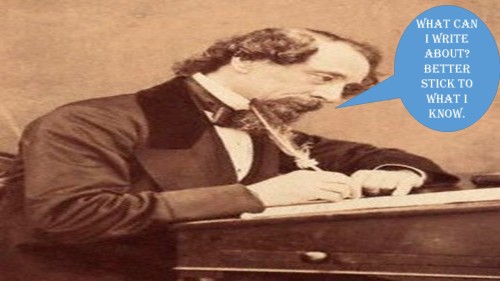
When people ask what can I write about, it is often answered by ‘write what you know’. This is good advice but I would like to offer you a twist on that. Think about the things that you do in your own life and then let your character do them but in a different time. It means that you will have to do some research but this always helps with ideas and the flavour of the piece that you are writing.

One – Find an atmospheric setting

Let me give you an example. You probably go to a coffee house and could easily set a story there so how about doing that but setting it in the past? Wouldn’t this make your story stand out that bit more?
old-london-coffee-house

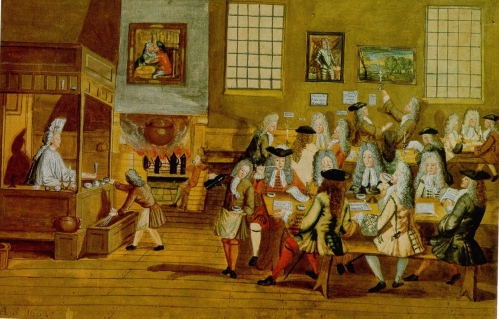
Let’s explore the situation. For a start, it is easy to imagine that coffee houses are something invented by us modern folks but that is not true. The reality is that if you pop down St Michael’s Alley which is a passage in London you will find a blue plaque on the wall of a wine house. The plaque states that the original London coffee house stood on that site and opened in 1652.  Just from that we have a place and a time that could send your mind buzzing with ideas.

Springboard 1 – A story set in 1652 in St Michael’s Passage, London when a new fangled coffee house is just opening. Imagine how the owner must feel.

Two – Find some larger than life characters
samuel-johnson

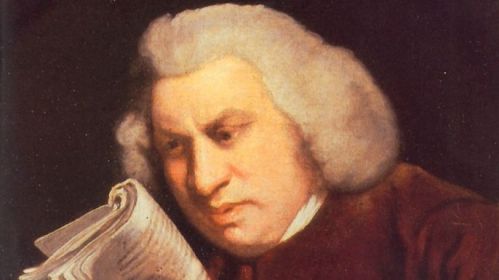
Many coffee houses sprang up in the 17th and 18th century and they were extremely important because it was where men met to do business and share ideas. We know from records that many men who were involved with the arts and scientific enquiry frequented coffee houses. Wren, Dryden, Reynolds, Johnson, Swift, Gainsborough, Garrick and Hogarth, to name but a few, were regularly seen discoursing over their passions in coffee houses. There we have a wonderful set of characters. It only takes a little bit of research and some poetic licence and you have a story about one of them.

Springboard 2 – A story about Wren, Dryden, Reynolds, Johnson, Swift, Gainsborough, Garrick or Hogarth getting into a troublesome situation in a coffee house.

Three – Create some domestic conflict
mary-w-the-rights-if-woman

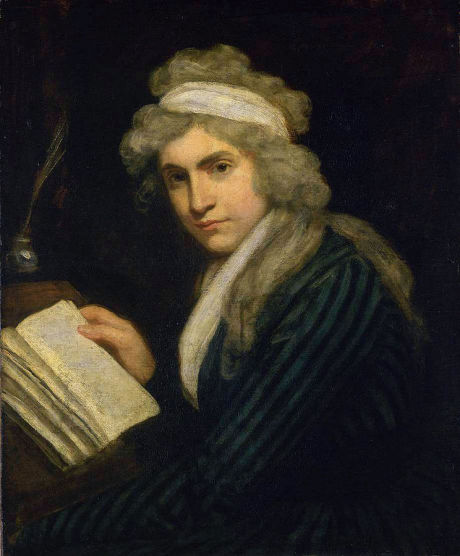
In fact, it is believed that many insurance companies and other financial businesses started as a result of deep debates in coffee houses. It has been suggested that men spent so much time in coffee houses that they were often more associated with their regular haunt than where they actually lived.  If men were at the coffee house more than at home this could cause marital rifts – this is a good plot line.  If you want to use an idea following this line, I have actually written about this on the post ‘Trouble in the Coffee House – Get Writing.’

Springboard 3 – A man would rather spend more time at the coffee house than at a home with his wife.

Four – Have a coffee house trail
outside-a-coffee-house

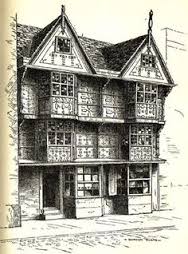
It wasn’t just the capital that boasted coffee houses either. Oxford and Cambridge both had coffee houses and Bristol is recorded as having 4 by 1666. There was at least one in York by 1669 and others in Edinburgh, Glasgow and Dublin. Exeter, Bath, Norwich, Great Yarmouth, Chester, Preston and Warwick also had coffee houses. This means that you don’t have to set your story in the capital, you have a wealth of settings to choose from. In fact, you could use coffee houses as a trail.

Springboard 4 – A man is on a secret mission that leads him around various coffee houses until he ends up in a coffee house in York about 1700. Who is he meeting there?

Five – Use details from your research to cannon ball your plot
coffee-house-sign

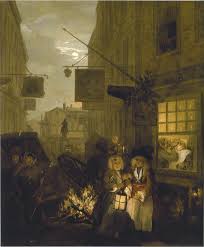
However, it was London, because of the business which was carried out in them, which had the most coffee houses and it is said that by 1714, there were at least 1,000 coffee houses there then. The houses were usually identified by a hanging sign; however, in 1762 all such signs, except at public houses, were banned.  It seems their creaking at night stopped folks from sleeping. Furthermore, if you were trotting along on a horse on a windy day, you could be knocked right off your mount by one of those blasted signs. This actually happened. Basically, the signs had become a menace to society and that is why they had to go. We can use details like this both to add authenticity to our story and to amuse our readers.

Springboard 5 – A man is knocked off his horse by a coffee house sign and a comely woman helps him – is she as kind and good as she seems to be or does she have ulterior motives?

Inspiration is everywhere – I hope that I have offered you some today. Happy writing.
 

7 Comments

Filed under Creative Writing, History, Inspiration and Us, Writing Workshop

Cheer Yourself Up With The Plague

In these days of Brexit and Trump, I have decided that it is my duty to hand out stirring advice. In fact, I’ve nominated myself as the cheerer upper of the people. It’s a role that I relish and in these coming days, I hope to erase your feelings of discontent once and for all. So without any further waffle let’s get stuck into cheering ourselves up.

plague-1

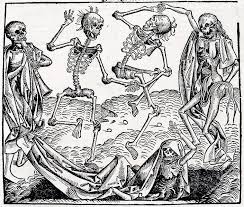
However bad you may feel, be glad that you were not alive in Tudor England when there were three main illnesses which could easily kill you. In those days, influenza was a serious killer. In fact, it travelled through the army so quickly that the generals had to call off an attempt to recapture Calais in 1557 – 1558. No flu vaccinations there then.

Carried on a flea

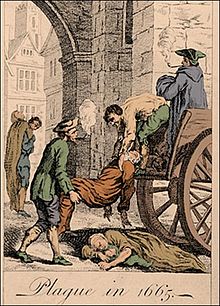
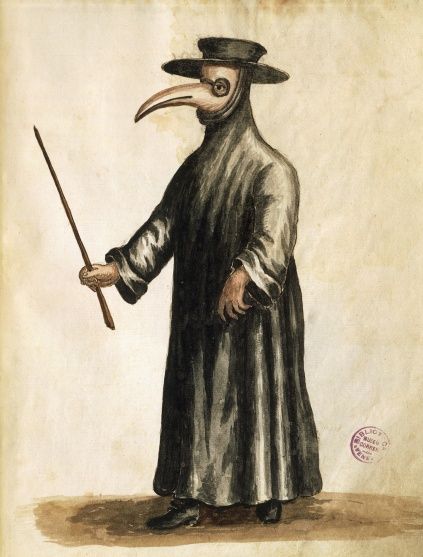
Another option was the plague and to be fair, with the plague there was a choice: Bubonic or pneumonic. This was caused by a type of bacteria which was carried on a flea on a rat. There was no cure for it during the Tudor reign and outbreaks occurred from time to time. In 1603, 38,000 people died in London and the plague doctors were little more than useless. Henry VIII had the best way of dealing with the plague – he got out of London as quickly as he could. It also broke out again in 1665.

plague-3

If the plague or the flu didn’t get you, you still couldn’t relax because the sweating sickness might not be far behind. This broke out in England in 1485, 1517 and 1551. Talk about living for the moment, you really needed to when this illness was about. You could be singing a ditty, having a tumble in the hay and knocking back the mead at lunchtime but be dead before you got your supper; that was how quickly it struck folks down. Although saying that, it did not always kill. It is now believed that it was a type of flu and was named Sudor Anglicus because for some strange reason only the English caught it.

black-death-doctor

If you did get ill, you had a choice of who to turn to. You could go to the apothecary who handled drugs and herbs. Much of what they handed out was experimental so it was a bit of a risk seeing them. However, if you visited a barber-surgeon you would get an amputation. Perhaps, a physician might be a better choice because they would just stick leeches on you to suck your blood.

Well, that concludes my cheering up session for today. I hope it stirred you.

16 Comments

Filed under About Loony Literature, Being Buoyant, The Cheerer Upper, The Peculiar Past

Trouble in the Coffee House? Get Writing.

Writing is good for your spirit and you don’t have to stay in to do it. It’s really good fun to go to a coffee house armed with your writing paraphernalia and to set your short story in there. If you really want to chance your arm you can create characters for your story from the other folks that are supping coffee around you. Whatever you do, don’t let them see. Coffee gets some people excited and you don’t want a black eye when all you are doing is creating a story.

coffe-house-1

Take down the details of the room you are sitting in and you have a setting readymade. Of course, if you wish to add or take away from that, you can do. This is the beauty of writing fiction; you can build the world to suit yourself.

Sneakily look at the people sitting nearest to you. Are they story fodder? If not, why not? If it’s an elderly couple that are talking about the cost of drinking chocolate, don’t forget that everyone has a past. She could have been a spy during World War II. He could be a retired private detective. Basically, they can be whatever you want them to be – run with your fantasy.

coffee-house-2

For those that love historical fiction, you will find that coffee houses have been around for a while and so if you wish to write a historical piece and set it in the coffee house then that is no problem. In fact, if you read on, you will find a true and hilarious situation that you can use as a basis for your story, if you so wish.

If you love popping out to the coffee house to have a good laugh and titillating gossip with your mates, you may be interested to know that this type of behaviour has been going on since the 17th century. However, back then it was purely the male that frequented the coffee house. Men would spend hours making business contacts and talking about politics in the coffee house. This did not go unnoticed by their female counterparts and trouble started to brew. (Do forgive the pun.)

Sterile and impotent

Women who were fed up of being coffee widows got together and published a hard hitting pamphlet. “The Women’s Petition Against Coffee” (1674) suggested that when men drank coffee daily it made then sterile and impotent. Obviously, this was a cause for concern in society because it would mean a reduction in the birth rate.

Women tearfully told how their husbands were turning their backs on them to enjoy the company of their peers in the coffee houses. They spoke of how this action threatened the social and economic future of the country because men were becoming incapable of fulfilling their marital duties. One woman even declared that all that coffee drinking ‘made men as unfruitful as the sandy deserts where the unhappy berry is said to be brought’.

For a moment, the men were truly speechless but only for a moment. They rallied back with “The Men’s Answer to the Women’s Petition.” They were having none of it and were rather blunt in their reply. The men suggested that drinking coffee made the erection more vigorous and then went into detail about how it actually made the sperm more potent. In other words, they fought back saying that coffee would actually make the birth rate rise.

coffee-house-3

Well that is certainly something to write about. You could write a television sitcom or a short play. It doesn’t have to be a short story. The whole idea of the exercise is to get you into the coffee shop setting and then to let your mind run wild. I think that you will be pleasantly surprised at how much you enjoy doing this. Just remember not to put pressure on yourself to produce War and Peace, this is meant to be fun.  Anything that has been written can always be improved upon at a later date if you so wish. For the time being, just have a giggle.


19 Comments

Filed under Creative Writing, Inspiration and Us, The Peculiar Past