Category Archives: Creative Writing

What sort of writer are you – explorer or planner?

English: Mulgrave Castle. Castle ruins situate...

English: Mulgrave Castle. Castle ruins situated in Mulgrave Woods, near Sandsend on the east coast. (Photo credit: Wikipedia)

At the moment, I am on a major re-write of my supernatural, Victorian novel, “Mulgrave Castle”.  I am having days where I am conjuring up the atmosphere I need to re-create the book in my head and I feel truly satisfied.  However, I am also having days when I will do anything before getting started and then find that I have wasted my writing time.  I am beginning to wonder if this is to do with the type of writer I am.

As I see it, there are basically two types of writers. (Of course, many will be a mixture of the two.)  There is the explorer who has maybe a very basic plot and outline ideas for characters and then lets the whole work evolve as she/he writes.  There is also the planner who has virtually everything worked out either on paper or in their head before they start to write.

I would love to be a planner but my writing muse hates it and I have to accept that I am an explorer.  Being an explorer can be tremendous fun as I sit and type and imagine and all sorts of scenes taking place which help me get to know my characters.  However, it means that I have to do about seven drafts of a book and by drafts I don’t mean spellcheck.  I mean doing a draft purely to re-write the plot, exploring the best point of view, then the same with character development and another one to put signposts in etc…

As I work, I have another file open which is called “Mulgrave Castle Leftovers”, this is basically the cutting room floor.  Being an explorer means that I have scene after scene which is cut because there might only be one relevant sentence in it – however writing these scenes are not a waste of time as they give me an intimate insight into characters and setting.  When we first begin to write, we find it difficult to cut, it is almost as if someone is threatening to cut parts of our person off.  The longer we work at our craft, the more we can see what doesn’t work or what simply is clogging the arteries of the story up.  I call it “boning the text” – basically, I am cutting it down to the bone.  To demonstrate the severity of it, I am on page 63 of my most recent re-write and the “Mulgrave Castle Leftovers” file has 10,000 words in it already.  Goodness knows how many words will be in it by the time I get to the end.

So, I’ve shared with you – now do tell, how do you write?

36 Comments

Filed under Creative Writing, Inspiration and Us, Mulgrave Castle - Harriet Twine the Saucy, Victorian Detective.

Conjuring and Capturing Feelings – Inspiration in Ruins.

English: The Gatehouse at Thornton Abbey

English: The Gatehouse at Thornton Abbey (Photo credit: Wikipedia)

I have great writing days and I have writing days when I simply do not understand why I am writing at all.  On the great ones, I experience life at its best, I know I am not simply alive but actually LIVING, really living as the excitement generates around my body and my fingers flash along the keyboards.  On the bad writing days, I stare at the text and I hate it, every word seems wrong; the characters are cardboard and the plot is boring.  I have trouble concentrating as my mind is more concerned with Bowie songs which will play themselves on a loop in my brain and my study looks like a dusty dump.  At this point, it might seem that on the great days, I get lots of quality writing done and on the bad days, I get nothing done at all.  On the contrary, I still get some done on the bad days, maybe not as much as the good days but the main difference is that it is unpleasant.  To be honest, it puzzled me so much that I started to analyse it to see if I could do anything about it.

I thought about the great days and how they start off and after a while it occurred to me that it is all about feeling certain ways for certain pieces of writing.  For instance, when I work on Mulgrave Castle a supernatural, Victorian novel, I often get a certain feeling coming over me which is my supernatural, Victorian feeling –all it is, is how I felt when I read books and visited places which inspired Mulgrave Castle.  In other words, I had captured the feelings when being inspired to write the book and sometimes they appear when I am actually writing it.  On the bad days, when I would rip it up, if it was on paper, I have not conjured up these feelings and it is jolly hard work.

The more I thought about this, the more it occurred to me that if I could retain the feelings I get when I am inspired and conjure them up at will, my writing and writing experience will greatly benefit from it.  I suppose that really it is merely what Stanislavski suggested  actors should do all those years ago, capture the emotion, store it and learn to bring it back at will.  As I reflected on this, I thought it would be useful if when visiting places to be inspired, I also went with the purpose of capturing the feelings to use again later.  To do this as an experiment, we decided to visit Thornton Abbey in North Lincolnshire as we have used it before for inspiration; I expect though that all ruins will do perfectly well, wherever you are.

Thornton Abbey

Thornton Abbey

There are some places which one should arrive at preferably by train, Venice being the most obvious example, however, Thornton Abbey in North Lincolnshire is another one.  If you want to feel as if you have gone back to the world of Enid Blyton or “Swallows and Amazons” dump the car at one of the rural villages along the Barton Upon Humber to Cleethorpes railway line and catch the train to Thornton Abbey.

As I chug along through the flat Lincolnshire countryside, I prepare myself for the jump down from the train.  The platform at the Thornton Abbey stop is so old, I literally have to jump off as the platform is way lower than the train.  It is at this point that I start to feel as if I’ve gone back in time.  The beautiful Thornton Abbey Gatehouse beckons in the distance as we make our way along a path which has glorious countryside on either side and big faced, lazy sheep greet us with a glimmer of interest.  The reason I suggest dumping the car and catching the train somewhere along the line is that walking up the path to Thornton Abbey transports me into another world and is a strong source of inspiration when writing children’s adventure stories.  I strongly remember being eleven and long summer holidays; I close my eyes and monitor the feeling, truly noting it and recognising it instead of simply basking in it.  I picture an eleven year old me running down the path towards Thornton Abbey and hold it.  I do a mental click as if I have taken a photograph and hope that I will be able to conjure up this wonderful feeling when the time is right.

We get to the entrance of The Gatehouse and I am really excited as I have been here before and I have to say that it is one of my favourite places to visit.  I am not going to write the history of Thornton Abbey as that is not the point of the piece and there is lots of information on that elsewhere on the internet.

One of the reasons I love visiting Thornton Abbey so much is that it has a wonderful effect on me.  Whenever I visit it, it changes my mood into a very happy, carefree one; the peaceful, happy feelings on the land are so powerful it is like taking a tonic. I intend to capture that strong feeling today, hopefully for use in the future. I have to say at this point that I am well aware that there are stories of Thornton Abbey being haunted by Thomas De Gretham, the 14th abbot of Thornton Abbey,  who was supposed to have been a practitioner of the dark arts and rather partial to the pleasures of the flesh.  He suffered for his crimes in that he was bricked up alive in an underground dungeon and was found still sitting at his desk in the 1830s, hundreds of years later.  There are supposed to have been sightings of him but the only feelings I get from there are happy, beneficial ones which I can use to energise me when I am writing.

Even though Thornton Abbey has a very strong happy aura, it can be used to create feelings for writing spooky stories.  Will and I took picnic rugs and a copy of Edgar Allan Poe’s “The Tell-tale Heart” to Thornton Abbey to read the story amongst the ruins.  We had just finished the story when the sky turned black and we were assaulted with that hard, harsh rain which hurts and soaks within minutes.  We had to shelter in the ruins, which, being ruins, did not really shelter us at all.  It was too far to run to the gatehouse or the small exhibition room so we had to wait and watch the turbulent weather and the swallows flew in and out of our shelter telling us to go – the scene was spooky but made me feel excited.  I closed my eyes and focussed on the image I experienced.  Hopefully, when I remember the scene, the emotions I experienced would return when I want to create that feeling for writing.

Thornton Abbey

A spooky place to take shelter when there is a storm.

Once the rain stopped, we went to do our final experiment.  We were going to use the main hall on the second floor of the gatehouse for Will to perform a Richard III monologue.  The room was darkly lit with a wooden floor which bends slightly when walked along and shafts of light escape through the gaps up into the room.  It was perfect for Will to perform the villain’s piece and as I watched I shivered and did feel as if I was in another time.  Will took the emotion of how he felt in that room away with him; he really did feel that it was a powerful exercise.

Thornton Abbey

I could really imagine Shakespeare’s Richard III in here plotting.

It might all seem like a great deal of fuss for a bit of writing and acting but it works, not every time because we all have times in our life when it is distraught and we cannot escape reality.  However, because the great moments in life are so precious, we have to create them when and where we can – give it a go when you get the chance or have you been doing it for years? Let me know.

17 Comments

Filed under Creative Writing, Exciting Excursions, Inspiration and Us

Giving Fanny Fear the Finger – Part One!

Conjuring up an image of Fanny Fear is important.

Gosh, that sounds downright rude but unfortunately, that is how we have to behave towards Fanny Fear.  Fanny is short for Frances or Francis, it all depends whether your shoulder blade troll is male or female.  My Fanny Fear is female, she has an extended chin which ends at a point and hunched over shoulders as she is always bent over whispering in my ear with a harsh, hissing voice.  Therefore, I will be referring to Fanny Fear as “she” throughout this post.  However, if you have a male Fanny Fear, please feel free to change the pronoun to “he”.  Fanny Fear infiltrates all aspects of our lives.  However, in this post I want to concentrate on how this shapeshifter stops us from writing, acting, filming or painting.


Let’s start at the beginning.  Fanny Fear will appear in all disguises to actually prevent you from being creative.  Fanny Fear will appear in your mind dressed as your spouse, your school friends, your mother or your work colleagues.  Fanny Fear is an accomplished mistress of disguise.  You’ve been to see a wonderful film or read a book which gave you shivers down your spine.  It has created a spark in your mind, you have an idea for a poem, short story, novel, film or painting.  Hey, this feels good – you feel uplifted, a shadow starts to cover the feeling.  You listen, can you hear something?  You realise it’s the most popular girl/ boy in the school grinning at you in your head.  All the followers appear and they are laughing.  A feeling of darkness blots out your happy, uplifted feeling as you realise they are all mocking your creative work.  Your shoulders hunch and you slump – better not risk it.

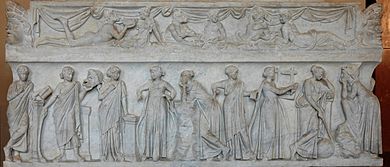
The Nine Muses from Greek mythology. The Sarcophagus at The Louvre.

You get to 45 and are still getting ideas for stories and other creative things – not as many as you used to do because you bat them away like pesky flies.  One day, that creative feeling comes over you again with a renewed strength, it makes you feel good, you want to write your idea down.  You’re a grown up now, you don’t need to worry about your school mates making you look stupid.  You imagine telling your wife/ husband that you’re going to write.  You see them in your head bursting out laughing and saying “what are you wasting your time for, you’ll never get a publisher.”  The dark shadow returns and you give it one last go – you imagine telling your mother.  In your mind, she smiles and says “that’s nice dear – did you get my tablets?”

Okay, that is a worst case scenario with Fanny Fear.  However, I had to do this to point out how Fanny Fear operates.  Fanny Fear is not other people; Fanny Fear is how we imagine other people are going to react concerning our creativity.

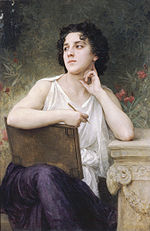
A woman searches for inspiration – William Adolphe Bouguereau.

Fanny Fear feeds on the fear of being mocked.  She sits like a piece of fungus in the back of your mind.  Each time she whispers in your ear and conjures up images in your head and you allow it, she grows and flourishes.  She is the plague of creative people.  The good news is that Fanny Fear can be controlled.

In the first instance, I want you to give Fanny Fear, who might simply be a hissing voice, a pain in your stomach or a dark shadow who looms down on you, a face and body.  It is important that you make Fanny Fear as exaggerated as possible, because that is what she is queen of, exaggeration. Okay, we have this troll fixed in your mind, can you see her?  Take her in, look her over slowly –make sure that you recognise her.  It is important that you attach the look to the dark shadowy feeling, pain in your stomach, or whatever she gives you.  Give her a new name if you like.  That is step one, recognising Fanny Fear, once you have given her a look and a name – if you think of her every time you start imagining people mocking the fact that you are being creative – the horrible feeling which is associated with this instantly lessens.

The next bit becomes easier with awareness.  Be alert because Fanny Fear sneaks up on you at all times.  If you are reading a book and stop to think of the wonderful way with language the writer has; Fanny Fear might quietly whisper “Of course, you will never be able to write like that.”  Stop!  Mentally grab the troll by the ear and face up to it.  Tell the piece of fungus, in your mind, that you are working on your writing and one day will be an accomplished writer.  It then helps to mentally give the creature a swift boot up the backside and imagine it flying through the air.  The more you do this on a regular basis, the less Fanny Fear will visit you.

Once you get Fanny Fear under control – give yourself permission to write, act, film, paint etc…  Tell yourself out loud, write it down.  You have permission to write, act, film or paint.

Okay, so what are you wasting time here for?  Get out there and give Fanny Fear some wellie and then get creating!

Have a wonderful time.

1 Comment

Filed under Creative Writing, For Teens, Inspiration and Us, Self Esteem and Literature

Inspiration and Us – Homosexuality and Blackmail in 1808!

Inspiration and Us – Can a time inspire us?

Loony Literature thrives on inspiring others.  We like to share our experiences with you, in the hope that, in turn, you might also be inspired to write something of your own.  We like to use Literature as a springboard for our own creations, this does not mean that it always has to be fiction that we write.  Literature can inspire articles too. In this post we go off on a creative tangent.  We hope you enjoy the journey and feel compelled to do something yourself after reading this.

At the moment we are working on a play inspired by Mary Shelley’s Frankenstein.   I have been intrigued by Mary Shelley’s life and it set me off wondering what my own ancestors were doing around about that time.  I imagined that compared to Mary and Percy Shelley, my own discoveries would seem dull.  I could not have been more wrong.  I wanted a picture of what my ancestors were doing after Mary Shelley’s birth 1797 up until the publication of Frankenstein 1818 – that was my springboard, my starting point.  The following article is what came out of thinking about Mary Shelley’s time.

HOMOSEXUALITY AND BLACKMAIL IN 1808

In 1808, my 4X great uncle, Robert Escritt and his friend John Paul were in the pillory 3 times for conspiring to blackmail concerning homosexuality; homosexuality was a hanging offence then.  In fact, they were one of the last recorded cases for the pillory in Driffield, East Yorkshire Reading the court documents for his trial would be enough to make any relative squirm at being related to such a cad.  However, following up my research, I uncovered a shocking twist in the tale which included injustice, villainy and transportation.

Robert Escritt was an ordinary agricultural labourer who by a wicked twist of fate had his normal life turned into what can only be imagined as a nightmare. Robert Escritt was born in 1780 at Kirkburn, East Yorkshire to William Escritt and Elizabeth Bentley.  He married Ann Braithwaite on Boxing Day (December 26th) 1802 at St Michael and All Angels Church, Garton on the Wolds and they lived in Garton on the Wolds.

English: St Michael and All Angels Church, Gar...

English: St Michael and All Angels Church, Garton on the Wolds, East Riding of Yorkshire, England. (Photo credit: Wikipedia)

Imagine Robert Escritt, like thousands of other agricultural labourers, wearing a wide brimmed hat to protect himself  from the elements, a smock which would reach down to his knees and his only pair of boots made of leather with steel toe caps and hobnailed soles.
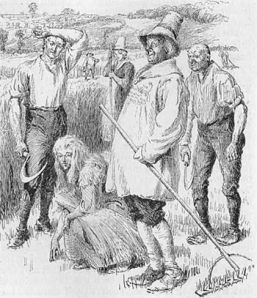
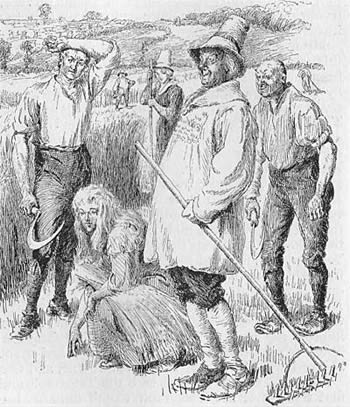
 Agricultural labourers were at the bottom of the village hierarchy.  At the top of the hierarchy in village life would be the landowner or village squire.  After him would be the tenant farmer who tended the landowner’s livestock and land.  Usually the tenant farmer would be provided with a farmhouse.  The farmers who tended a large farm with fertile soil would be able to enjoy a comfortable lifestyle.  In the middle of the village hierarchy would be the skilled craftsmen such as blacksmiths, carpenters, saddlers, thatchers and coopers.  These men were vital to the smooth running of the village.   At the very bottom of the heap would be the poor labourers like Robert Escritt and John Paul.   They would have constantly done back breaking work but the landowner would have enjoyed most of the profit.  The landowner would give the farmer his share and the labourers would get a pittance for all the relentless work they were forced to do in order to earn a meagre living.

Agricultural labourers were often the poorest people in England.  Even though their rewards were minimal, the work and suffering they had to endure was not.  For instance, during the planting season the whole family would be expected to work out in the fields, in freezing cold weather, from dawn to dusk.  Alternatively, during harvest the whole family could be toiling in the fields from dawn to dusk in the blazing sun.  He certainly would not have had much in the way of comfort but that life was probably viewed as much better than what was to come.

Looking for one ancestor can often bring up another one with the same name and an interesting story.  I was not aware of Robert Escritt’s existence until I was looking for my two of my great grandfathers by the same name.  I had decided to look on the Beverley Treasure House Archives.  The search for Robert Escritt brought up the form QSF/399/B/6 – Indictment of John Paul and Robert Escritt of Garton labourers 26th April 1808.  I knew it could not be one of my direct line Roberts as one was a farmer who had died in 1800 and the other was a cooper who was yet to be born.

After looking on Familysearch to find out if I could place that Robert Escritt, I found out that he had married Ann Braithwaite.  I referred to my family tree on Ancestry.com and was able to place Robert Escritt as my 4X great uncle.  A trip to the Treasure House was in order to see what was in the document.

Was Robert Escritt a murderer, a burglar or a petty thief?

The journey was met with both trepidation and excitement.  I knew he had done something unlawful but what?  As the archivist brought the 200 year old document to me, my mind was buzzing with every single crime that could be committed – was he a murderer, a burglar, a petty thief?  The list was endless but  I was nowhere near the truth.

The document was placed before me and weighted down.  The first court hearing was 28th July 1807.  Robert Escritt and John Paul were

“persons of ill name and fame and dishonest and unlawfully contriving to deprive one Francis Brown the younger of his good name, credit and reputation and also to obtain and get themselves of and from large sums of money on the 10th day of July in the reign of our sovereign Lord George the third with accusing him of the unnatural act of sodomy, commonly known as buggary”

It was stated that John Paul and Robert Escritt conspired to accuse Francis Brown, gentleman, of sodomy to try to obtain large amounts of money from him.

On the 11th day of July they had gone to Henry Grimston Esquire, being one of His Majesty’s justice, to keep the peace, and told him that Francis Brown had sodomised John Paul.   Robert Escritt had witnessed it.   If they were blackmailing Francis Brown for sodomy when he was not guilty, but he would not pay up, surely they would have gone on to another victim who might be so frightened that he would hand over the cash.  It does not make sense that they would have gone to the magistrate, after all they were supposed to be in it simply for the money.  However, they were poor labourers and Francis Brown was a gentleman farmer, they were not believed.  They were taken to court and suffered the humiliation of embarrassing cross examination on a subject which in those days was considered so terrible that it was a hanging offence.  On the 12th of January 1808 both men were found guilty of conspiracy to blackmail.

The cross examinations in the court, about sodomy, would have been deeply humiliating.  The punishment to come would be more so and physically painful.

The sentence was a year in the House of Correction and to stand in the pillory at Driffield for three consecutive market days.   The court document states that Robert Escritt and John Paul should stand in the pillory for one hour between twelve and 2 o’clock in the afternoon.  Robert Escritt and John Paul would have had the humiliation of standing at the top of Exchange Street, Driffield for 3 consecutive market days.   Their heads and hands would have been put into the carved out slots in the wood and then a second piece of wood would have been closed down upon them so that they could not move from the missiles which would have been thrown at them.   Decayed fruit and vegetables, rotten eggs, excrement, dead rats and sometimes hard rocks would be hurled at the person in the pillory.  Often, a pillory would be rotated so that the public could get a good look at the person trapped in it.

English: Driffield, East Riding of Yorkshire, ...

English: Driffield, East Riding of Yorkshire, England. c. 1838 (Photo credit: Wikipedia)

The House of Correction at Beverley is famous for holding Dick Turpin the highwayman.

Robert Escritt and John Paul were also sentenced to one year in the House of Correction at Beverley.   The House of Correction at Beverley is famous for holding Dick Turpin the highwayman in 1738.  His real name was John Palmer and he was incarcerated in the House of Correction for shooting his landlord’s cockerel.  In those days the House of Correction was situated at Beverley Guildhall.  The House of Correction had one small courtyard for all prisoners with a work shed in it but no water.  When the prisoners were allowed water, the gaoler would have to fetch it from across the way.  Men and women felons each had a separate day room upstairs and the room where the women would sleep would adjoin it.  The smell was overwhelming for lack of sewers.  Robert Escritt and John Paul would have slept in one of the two dirty cells below.  They measured about four square yards and were badly ventilated.  There was a small window with bars in each room.  Their beds would have had straw in the ticking and they were allowed two blankets and a rug for warmth.  To pass the time they would have been made to pound tile-shards which they were paid 6d a bushel for.

What happened to Francis Brown, the gentleman farmer?  I searched for him on Ancestry.com. and found him in the England and Wales Criminal Register 1791-1892.  He was transported for 7 years.  It was time to research in The Treasure House archives again.

A week earlier, I had been reading what a dishonest person my ancestor was for intending to deprive Francis Brown of his good name and reputation.  The document before me named Francis Brown as a common cheat.  He had promised George Sproxton, a tailor from Driffield, a house and land for £150.  The house and land had belonged to the late Francis Brown, Brown’s father.  The property had never been Brown junior’s to sell.  He simply intended to relieve George Sproxton of his money.

Always follow up any name in a story.  It is easy to overlook shocking facts.

Robert Escritt settled down to live what seems to be a quiet family life.  He returned home to Garton-on-the-Wolds to his wife Ann.  She gave birth to Robert in 1810 and Hannah in 1812.  Robert and Ann are both on the 1841 and 1851 census, still living in Garton-on-the Wolds.  Even at the age of 71, Robert put his occupation down as an agricultural labourer.  He died at the age of 77, which considering the mortality rate of the period and what he had been through, he survived quite well.

So, can a time inspire us?  I think that it can, for instance – the above piece is an article but it could also have been turned into a story – maybe it will be one day.  The point is that one of the most inspirational things you can do is ask yourself a question – what were my ancestors doing whilst Mary Shelley was growing up?  I know what one of mine was doing – how about yours?


13 Comments

Filed under Creative Writing, Education, Inspiration and Us, The Peculiar Past

Inspiration and Us – Literature – Your Challenge.

1848 Daguerreotype of Edgar Allan Poe at 39, a...

1848 Daguerreotype of Edgar Allan Poe at 39, a year before his death (Photo credit: Wikipedia)

As humans, we constantly seek connections with other humans and we have always told stories to each other, sometimes simply to make sense of the world around us.  Over the thousands of years, we see the same images emerging again and again.  It is almost as if they are branded in our collective consciousness.  Often, one particular author, artist, actor, composer or film maker does something so spectacular with one of these images that it haunts us until we are creative with it ourselves.  Look into your own creativity and see if you can spot when this has happened to you.


Edgar Allan Poe Museum (Richmond, Virginia)

Edgar Allan Poe Museum (Richmond, Virginia) (Photo credit: Wikipedia)

In my children’s book Will Blyton and The Stinking Shadow, I have an evil shapeshifter called Ravensmite.  He changes from a huge raven into a gothic looking teenage boy at will.  I discussed the use of the raven with a wonderful person and writer, Maria Thermann who also uses ravens in Willow the Vampire and The Sacred Grove.  Maria suggested that we had probably been subconsciously inspired by Edgar Allan Poe’s “The Raven”.  She was absolutely correct.  Edgar Allan Poe had inspired me to create a character, although I had not realised it until Maria pointed it out to me.

Cover for "The Raven" by Edgar Allan...

Cover for “The Raven” by Edgar Allan Poe as illustrated by Gustave Dore (Photo credit: Wikipedia)

The Raven is a narrative poem which has a gothic atmosphere.  A talking raven makes a midnight visit to a mourning lover.   Here is a marvellous video of an animated Poe reciting “The Raven.”  It is done by the very talented poetryreincarnations .


Here’s your challenge – watch the video and use it as a springboard to create something yourself.  Happy writing, acting, painting, composing or filming.


5 Comments

Filed under Creative Writing, For Teens, Inspiration and Us

Inspiration and Us. Enid Blyton is to Blame!

Enid Blyton helped make me the person that I am today so much so that my son’s middle name is Blyton.  Before anyone suggests throttling this author, who is no longer with us, for all the pain of Loony Literature which is thrust upon you – let me explain what I mean.

I love detective stories, they comfort me when I am depressed, ill or simply exhausted – that makes me sound like a bundle of fun, I know  – but I think you get what I mean.  I would go so far as to say that detective stories are my adult comfort blanket.  I can see I am digging myself further in here – chocolate, ice-cream, a glass of wine or even loud music are the usual comforters – stories about murder? Never!  It is all down to Enid Blyton.

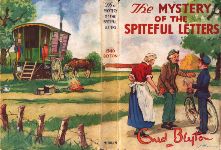
The first story in the series.

The first ever detective stories that I stumbled upon were Enid Blyton’s Five Findouter Mystery series.  I am surprised that although most people have heard of the Famous Five and The Secret Seven, a lot of folks have not come across The Five Findouters Mystery series.

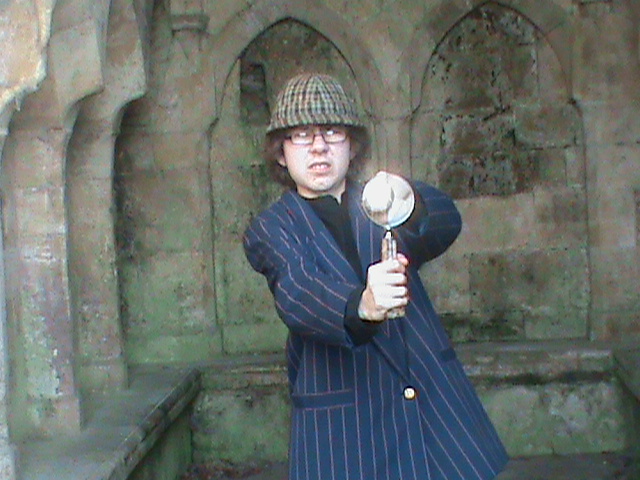
There was one aspect of these books which made them different from all the other books I read as a child and that was the character of Fatty – Frederick Algernon Trotteville.   Fatty’s life intrigued me.  It was how I wanted my eight or nine year old life to be.  He had a shed which he used as a headquarters and in it, he had disguises galore.  Fatty would use his disguises to fool villains and solve crimes.  I was so taken with Fatty that I started rifling my mother’s clothes and anyone else’s I could get my hands on.  I distinctly remember dressing up as a Russian spy and talking in a Russian accent – well, it was my idea of what a Russian spy was like in the late 1960s.  The point is that I still have dressing up trunks, masks and long gloves – the enjoyment has never left me.  When I have parties, they are always costumed and sometimes people are given different persona’s.  The character of Fatty is still sitting on my back, watching and motivating me.

Fatty in disguise as an old gypsy woman.

About six years ago, I stumbled across Enid Blyton’s eldest daughter, Gillian Baverstock purely by chance at a literary festival.  Unfortunately, I missed her event, however, I told her how much her mother’s books had meant to me and the lovely lady talked at length about her childhood with her mother.  It was heavenly.  Sadly, she died shortly afterwards.

Enid with her daughters, Gillian and Imogen.

Of late, we have had a television drama about Enid Blyton which was not exactly a rosy portrait of her as a mother and we have heard her books being slammed for not being politically correct.  I would like to say that her daughter, Gillian spoke with lovely childhood memories of her.  Furthermore, we live in different times from when the books were written, I am not condoning anything which is not politically correct – I believe in absolute equality and respect for everyone.  However, I think that if we try to remove all trace of past deviancy with language, we remove the memory of how it should not be – that, I think is dangerous.

Enid Blyton is also guilty of inspiring me to write.  The Findouter Mystery series has stayed with me all these years.  I think that as I entered my teenage years I realised that in reality I was not going to be a freelance detective who solved crimes whilst in disguise.  Subsequently, it went on the back burner until a couple of years ago when I was inspired by my son to create Will Blyton – The Alternative Detective.  It’s not the perfect solution to my yearning to be Fatty but I can be him in my mind – sort of.

Will Blyton having a detecting moment.

17 Comments

Filed under Creative Writing, Inspiration and Us, Parenting

Inspiration and Us – How Do We Find Our Characters?

As we all know, characters are one of the most fundamental parts of fiction.  This is why we fall in love with a certain series – we are intrigued by the characters.  So where do we conjure up these story people who readers always want to know more about?  I have different methods but in this post I want to demonstrate how sometimes they simply find us.

I had to take my son, Will to rehearsals yesterday for a production he is appearing in next week.  Unfortunately, we had all had the sickness bug and I still felt as if I was on a sailing boat in high winds.  So the thought of hanging around for two hours was not an attractive proposition.  It then occurred to me that I might feel better in the glorious scenery and fresh air of the country park.  What could be more relaxing and uplifting than being surrounded by greenery whilst watching swans floating regally on the lake?

To take away the nausea, I stared at the swans gliding towards me, took deep breaths and imagined medieval music playing in the background.  I was starting to lose my physical discomfort when bounding out of the bushes was a man dressed head to foot in combat gear wielding a weapon.  For a split second, I thought he was after my handbag.  It was a truly uncomfortable moment as there was no-one else around and we were quite a way off from sanctuary.

He rushed past me as if we were in a war zone and he was trying to escape.  I have to tell you at this point that this is a rural, leafy backwater where you have to say hello to every stranger who walks past with their dog.  As I focussed upon him properly, I realised that it wasn’t a weapon he was wielding but one of those huge, phallic type cameras.  He was taking photos of the swans.  I made a quick exit and headed for the visitor centre thinking I would sit inside on one of the benches and gaze at the ducks outside through the walls of glass.

Pair of Wood Ducks

Pair of Wood Ducks (Photo credit: Wikipedia)

After popping yet another boiled sweet into my mouth to take away the nausea, I gazed at a couple of sleeping ducks and suffered envy – true, green, poisonous jealousy.    The jealousy was just on the point of going as I decided I didn’t really want to be a sleeping duck when he appeared again.  He was there aiming his huge camera at the ducks with the aggression and intensity of a hunter.  His camera truly was his rifle.  The ducks looked as if an earthquake at the side of them wouldn’t awaken them, yet he was there breathing heavily ready for action.  It was at this point that his name came to me – he was obviously called Theophile Twitcher.  The ducks slept, he waited and I watched.

After about ten minutes of inactivity, Twitcher heard a noise behind him and he turned around aiming his lethal weapon slowly, like the police do on the television when they rush into a building and don’t know who is hiding there.  Unfortunately, for him, another male duck approached the sleeping duck couple and a duck spat broke out.  Twitcher was too busy searching for lions or bears or whatever with his gun, I mean camera.  He then stalked off.

After popping another boiled sweet into my mouth, I noticed him strutting off into the distance.  I could see a huge, bulging rucksack on his back as he covered every movement and sound with his camera.  He was dressed and equipped as if he was miles away from civilisation.  At this point ,I did wonder if he realised he was in a country park in England.  No doubt, I will never find out but what I did find was a character for my next Will Blyton book.  The seed had been planted, over the next weeks and months this man will turn into a fully formed story person with a back story, personality and problems. I think the children will love him and I’m really looking forward to meeting him.  Have you had any similar experiences?

4 Comments

Filed under Creative Writing, Inspiration and Us

Inspiration and Us – Childhood Books – Shakespeare’s Stories.


Touchstone the Jester from “As You Like It.

Inspiration and us – that’s the name of a new category for the blog.  The reason I am calling it inspiration and us, instead of inspiration and me is because I want you to think about how our lives and our children’s lives inspire us.  I would also be extremely grateful to hear of your inspirational experiences.


As a child, I had many books which I loved but as this is about what inspires us, I shall be mentioning the main sources of inspiration.  One of my favourite books was one which was passed onto me.  I regret to say that I have no idea where it came from.  It was a big book which had many stories in it.  My favourites were some of the stories from Shakespeare’s plays.  They were the plays written in story form with some illustrations.  I read them over and over.  One which sticks in my mind is As You Like It.   It was pure escapism.  The idea of people running away from their everyday lives and living in a forest, appealed to me greatly.  As a child, I loved the idea of dressing up and being in disguise.  Subsequently, when Rosalind dressed up as a boy and pretended to be Ganymede, I was in the story with them.  This is a story which explores sibling rivalry, romance, has a wrestling match and a court jester named Touchstone.  I am proof that the story appeals to children.  If the play had been thrown at me at the age of nine, I would have been put off by its beautiful, poetic language.  However, I was lucky enough to have the plays as stories first and so Shakespeare‘s work was adored by me even before I had read a play or a sonnet.


illustration of William Shakespeare reciting h...

illustration of William Shakespeare reciting his play Hamlet to his family. His wife, Anne Hathaway, is sitting in the chair on the right; his son Hamnet is behind him on the left; his two daughters Susanna and Judith are on the right and left of him. (Photo credit: Wikipedia)


So how has this childhood book inspired me?  First of all, I think the greatest proof is that my son is called Will after Shakespeare.  Incidentally, one of his main ambitions is to play Hamlet at the Globe Theatre.  He has never had Literature forced fed to him.  I was worried that I would do that so I have always been careful and introduced it as the fun, mad and exciting subject that it is.


My educational route would suggest that Shakespeare’s stories also inspired me as I have an Honours Degree in Literature and an M.A. in Creative Writing.  However, I think that the most telling aspect of it is in my writing.  In my children’s book Will Blyton and The Stinking Shadow, I have a small boy trapped in a stone called Hamnet.  He has had a curse put on him by the powerful magician Corspehound.  Not only is Hamnet trapped in the stone but the curse is on his tongue.  He can only insult people.  Hamnet is actually Shakespeare’s son who died at the age of eleven.  The Bubonic Plague was rife at the time.  Little is known about Hamnet and so I wanted to keep his memory alive by re-writing his story.  Instead of perishing before his young life had really begun, I have him living on as a huger than life character.


An illustration of an undertaker during the Bu...

An illustration of an undertaker during the Bubonic plague. (Photo credit: Wikipedia)


I have already written about introducing children to Shakespeare by using insults.  Children love language if they allowed to be playful with it – this is why they love insults – they are naughty and delicious.  This was part of my enjoyment when reading A Midsummer Night’s Dream in my story book.  There was great emphasis on the argument between Hermia and Helena.  It is Midsummer, they are lost in the forest, it is a time of misrule and chaos and they are arguing over men.  Hermia calls Helena – “You juggler! You canker-blossom!” (The Arden Shakespeare – Act III, Scene II Line 282)  Later in the heated argument, Hermia also calls Helena “Thou painted maypole.” (The Arden Shakespeare – Act III, Scene II, Line 296) The enjoyment of the insults as a child turned to inspiration as an adult.  In Will Blyton and The Stinking Shadow, Hamnet is a master of insults; most of them are aimed at Will.  The first thing he ever says to him is “thine intestines wilt be mine.”  This is quickly followed by “thou wilt regret this warty nose.”


Washington Allston's 1818 painting Hermia and ...

Washington Allston's 1818 painting Hermia and Helena. (Photo credit: Wikipedia)


We cannot change our own childhoods.  However, we can be inspired by what was thrown at us and mould it.  As writers, we can turn our experiences into what we want them to be.  Although we cannot change our own childhoods, we can guide our children’s inspiration and education.  Catch them early on with Shakespeare in the form of his stories.  Talk to them about the funny characters like Bottom, from A Midsummer Night’s Dream, who gets the head of an ass for a time.  If you missed out on Shakespeare first time around – you might be surprised at what you find.  Who knows, you or your children might end up being so inspired that you write a book too.


Emil Orlik: Actor Hans Wassmann as Nick Bottom...

Emil Orlik: Actor Hans Wassmann as Nick Bottom in Shakespeare's A Midsummernight's Dream, 1909 (Photo credit: Wikipedia)


15 Comments

Filed under Creative Writing, Education, Inspiration and Us, Parenting

Introducing children to Shakespeare by using insults.

Thou art a base, proud, shallow, beggarly, three suited, hundred pound, filthy, worsted stocking knave…” (King Lear)  I hope, dear reader, you don’t think I am referring to you.   Perish the thought, no, I simply wanted to grab your swan-like neck and swing it in my direction.  I don’t want to insult you but I do want to talk about insults and how they can be used to help children be comfortable with Shakespeare’s plays.

 Children love Shakespeare if they are introduced to his works properly.  Unfortunately, what should be an exciting journey with The Bard often becomes painful, embarrassing and boring.  I say painful, embarrassing and boring because if the background work is not done, Shakespeare’s language can seem unapproachable.  It then becomes embarrassing because the learner feels stupid.  We all know that feeling when something seems to be definitely “not for us”, we cut off and it becomes boring.  I am a great believer, therefore, of priming children with Shakespeare’s works well before they reach the teenage years.  Children who have been introduced to the stories   (it is important that children know what is happening in story form well in advance of reading a full blown play) and aspects of the language are ready to read one of Shakespeare’s plays.  It is thoughtless to expect teenagers who haven’t grown up in a literary atmosphere or a book loving household to embrace a sixteenth century play without any former grounding.  Fundamentally, I cannot stress the importance of introducing children to Shakespeare in a child friendly manner.

This is where insults are invaluable.  I first came across this exercise whilst doing a day long workshop with The Royal Shakespeare Company.  It was used as a warming up exercise to allow everyone to relax and clear out those dreadful inhibitions we can suffer from.  Everyone is given a piece of card with an insult written on it.  It can be something like this quotation from King Lear:

Thou art a boil, a plague sore, an embossed carbuncle in my corrupted blood.

Elizabethan music can be played whilst everyone swiftly marches or skips around the room.  When the music stops you turn to the nearest person to you and shout your insult out at the top of your voice.  They then shout their insult back at you.  The next time, it can be whispered in a sly manner. In essence, the insults can be said in many different ways e.g. angrily or with uncontrollable laughter. It is a very good drama exercise. The insult cards can then be changed around.  Incidentally, children, teenagers and adults love this as they are actually allowed to use insults without getting into trouble – it has that naughty, delicious edge to it which allows us to let off steam and then gives us the desire to learn.  It also gives Shakespeare a bit of street cred before he gets the label of boring.

As children love to be creative, I have added an activity so that they can create the insults themselves.

Activity

They need to take an insult from the first two sections below (both of these are adjectives) and then add it to the third section which is a noun.  Add ‘thou’ at the beginning and you have a lovely Shakespearean insult.

Section 1 – base, proud, shallow, beggarly, bawdy, filthy, coward, paunchy, gorbellied, puking, droning, dankish.

Section 2  worsted-stocking, pigeon-egg,  boil-brained, onion-eyed, elf-skinned, trunk-inheriting, clapper-clawed, milk-livered, lily-livered, doghearted, hundred-pound.

Section 3 knave, rogue, bladder, bugbear, pribbling, flap-dragon, boar-pig, barnacle, apple-john, maggot-pie, coxcomb.

For instance – Thou filthy, boil-brained boar-pig.

For any children who particularly enjoy the insults, I love Elizabethan insults so much that I have them all the way through my book Will Blyton and The Stinking Shadow.  Will finds Hamnet, a small boy trapped in a stone, who unfortunately hurls insults every time he opens his mouth.  He is, of course, from the Elizabethan period and has had a curse put upon him by the evil, Elizabethan magician Corpsehound.  His outrageous insults get Will into trouble everywhere he goes.

“Leave me be, thou fetid, old skanky breath,” says Hamnet.


So thou base, clapper-clawed rogue – I’m sorry it’s become a habit.  What I really mean is “until we meet again, dear reader.”

19 Comments

Filed under Creative Writing, Education, Literary Criticism, Parenting