Story Ideas To Get You Writing – Getting Married in the Buff!

Stuck for something to write about? Here at Loony Literature, we are pure suckers for history so when we come across something which we think might be a good springboard to get you folks writing, we will shout about it. Even if this doesn’t make you start writing frantically, it will inform and entertain you – hopefully.

To write or not to write.

To write or not to write.

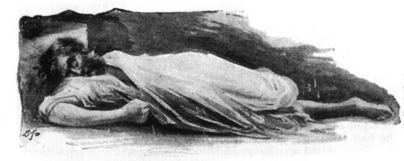
In the 18th century ‘smock weddings’ were a type of ceremony. A ‘smock wedding’ would see a bride getting married in the nude or barefoot and wearing only a chemise or underskirt, as we call them these days. The idea was that if she brought no clothes or property to the marriage, her new husband to be was not liable for any of the debts of her past life.

The smock wedding was particularly useful for a widowed woman whose husband had died leaving a lot of debts. We know because of a newspaper report in September 1775 that a Mr Richard Elcock who was bricklayer married Mrs Judith Redding. It seems that so Mr Elcock would not be liable for any of the debts that Mrs Redding might have been left with from an earlier marriage, she went into one of the pews in the church and stripped off everything except her slip.

A few years earlier, at Saint Michael’s Church in Ashton under Lyne, Nathaniel Eller married the widow Hibbert. Both of them were around fifty years of age. The widow went through the ceremony with her hair tied behind with horse hair and wearing only a shift so that her new husband would not have to pay off any of her former husband’s debts.

In December 1797, several newspapers reported from St Philips parish church in Birmingham that the bride wore nothing. She was a woman of wealth and property but she was marrying a debt ridden husband and she believed that getting married in the nude would prevent her new husband’s creditors from seizing her property. She was not the only lady to be married in that fashion. It seems that some women would turn up to church in a cloak and nothing else. With a flourish they would remove the cloak and the ceremony would begin.

Happy writing.


2 Comments

Filed under Creative Writing, History, The Peculiar Past

Textual or Sexual?

English: Portrait of Virginia Woolf

English: Portrait of Virginia Woolf (Photo credit: Wikipedia)

One of my great interests in reading matter is how desire is handled.  After the huge sales of “Fifty Shades of Grey”, I had begun to wonder if readers needed their sex spelled out more nowadays, if so, does that mean that many readers are missing out on playful texts as titillating as Orlando by Virginia Woolf?  In this written piece, I hope to persuade readers to interact with text such as “Orlando” for a deeper and potentially more sexually satisfying read.

I have taken chapter 3 from Orlando (Great Classic Library, 1994) to demonstrate that often it is not what is said that conjures up fantasy but what is not said.  Also, I use the constant ‘she’ but this refers to both sexes, it is simply to keep the text tidy.

Cover of "Orlando"

Orlando by Virginia Woolf with the talented Tilda Swinton on the cover. She played Orlando in the film.

If we can imagine a courtship between reader and text, then it becomes obvious that the text (Orlando) is using details to entice the reader as love object.  Whilst the reader is consumed with the desire to see and know the text, it encourages fevered requests for knowledge by constant teasing.  It attempts to keep the reader interested by manipulative and provocative tantalisation which never allows the desire for textual knowledge to be fulfilled.  Subsequently the reader continues to endeavour to explore and undress the body of the text.  In other words, the text uses a playful strategy which depicts an innocence by using understated sexuality to allure and provoke the reader into the commitment of interpretation.  The signals are there, the reader merely needs to be seduced.

The text displays constant symptoms of needing the reader to become its love object.  Consequently, in order to overcome this, it must attain to interest its love object; therefore it is only by seducing the reader into the position of desiring to know the text that it can attempt to fulfill the desire for unattainable completion.  To initiate interest, the text suggests that it will become love slave to  the reader’s fantasies but only if the reader will respond by opening her psychic space.


“There was a hole in the manuscript big enough to put your finger through …. but it has been necessary to speculate, to surmise and even to use the imagination.” (page 54)


The language cleverly entices the reader to visualize that which is being suggested.  The beckoning finger attempts to coax the reader into penetrating the written sign and being seduced into allowing her repressed fantasy to filter through.  It invites the reader into its existence with a manipulative proposition which offers a text lacking in language, subtly suggesting that the reader fills in the gap for herself.  Subsequently, the text is pertaining to reach unity with the reader by a language of denial being impregnated by the reader completing the gaps.  However, the fantasy must remain fragmented as the text’s constant denial of knowledge defies fixed interpretation.

As the suggestive finger tempts the reader, so the text uses thresholds to tease and control the reader’s access.  Windows are used to allow a connived amount of voyeurism.


“The windows of the Embassy brilliantly illuminated.  Again details are lacking.” (page 57)


Windows are used to set a scene to draw the reader in.  They are used as a controlled promise of an insight into the text.  The text manipulates a sense of deviant excitement as the reader anticipates the fantasy of voyeur as illicit views through the windows suggest that the reader should not be in attendance, that she will be witness to a scene which is too prurient to be written about.  However, the text denies the details the reader is hoping for; in essence, the text leaves spaces for the reader to mould it into whatever is fantasised about.

As opened windows are used to lure the reader into the ranks of hopeful voyeur, so the closing of doors is a carefully operated device which causes the reader’s mind to engage itself in a frenzied thought process which hungers for knowledge of the text.


“The Ambassador was seen to go to his room, still wearing the insignia of his rank, and shut the door.  Some say he locked it, which was against his custom.” (page 59)


The narrative content of the text draws the reader in by locking her out.  The concept of the text as love slave is being played as the reader is only provided with alleged details.  The text essentially offers the reader the chance to create her own fantasy within the text.  In other words, the text is again using denial of details as a promise of adaption in order to satisfy the reader’s fantasy.

English: Entrance to Freuds consulting room

English: Entrance to Freuds consulting room (Photo credit: Wikipedia)

In a never ending craving to complete the cycle of lack and desire the text successfully employs the device of ellipsis to create more gaps to encourage the reader to allow her repressed fantasies to surface.  The use of ellipsis suggests events which are too shocking to mention.


“Wondrous… utterly beyond description… gold plates…candelabras…negroes in plush breeches…” (page 58) ( please note that I do not agree with racist labels and I am not suggesting that Virginia was racist either; I am merely quoting the text)


The language which is used paints a decadence to indicate indulgence; to add ellipsis creates a subjacent meaning for the reader which arouses the most dormant of fantasies.  Fundamentally, the text works the reader’s mind.  The lack of language in the text encourages the reader to search the decadent language which is present for signs which indicate what the reader is hoping to locate.  As ellipsis in the text intimates a joining of language and absent language, the marriage must result in a lack desire interchange which can never be fulfilled as both are always acting as chameleons in search of each other.

The text uses Orlando as bait for the reader’s desires.  The sexual titillation concerning Orlando’s body is ambivalent.  The denial of details can be interpreted as writing which is vaguely aware of sexuality but unaware of how to work it; similarly it can be interpreted as the love object who attempts to lure the reader by a provocative indication of sexuality.  The interpretation will be open to the reader’s own exploration of the text but it is ultimately a stimulation used to attempt satiation of the reader’s psychic erotic space.


“Going indoors again, withdrew to his bath.  An hour later, properly scented, curled and anointed.” (page 54)


The reader is denied access to the bathroom in order to fantasise about Orlando having his body prepared for the events of the day.  The connotations of the above quotations are erotic by denial of detail.  It is probable that nudity and genital washing is involved, but it is purposely ambiguous as to whether he is vainly paying homage to his body himself or whether another is used to cleanse and cream the crevices of the protagonist’s person.  The innuendo is perverse as the use of the two sentences allows the reader to act as voyeur (which can be regarded as a perverse act in itself) to the most personal erotic bathroom fantasies desired.

If the text entices the reader with suggestions of being voyeur to Orlando’s personal moments, then to have Orlando in position of ultimately any fantasy is the pinnacle of invitations for the reader.


“And still Orlando slept.  Morning and evening they watched him.” (page 60)


The text deigns to give details as to Orlando’s long sleep but using sleep is an indication of death which can be an interpretation of orgasm.  According to Sigmund Freud in “The Interpretation of Dreams” sleep also is a signal for repressed fantasies being released in the form of dream.  Therefore the written sign becomes cohesive with the code of sexuality which encourages the reader to embark upon a scenario of being the mistress of Orlando’s body.  In actuality, the text as love slave is seducing the reader into being the love object by stimulating the fantasy of control for Orlando’s sleeping body.

Finally, as Orlando undergoes metamorphosis from man to woman:


“THE SOUND OF TRUMPETS died away and Orlando stood stark naked.  No human being, since the world began has ever looked more ravishing.  His form combined in one the strength of a man and a woman’s grace.” (page 62)


The reader is denied details of Orlando’s perfect form except the fact that he/she is ravishing.  This implies that the text is again using Orlando to capture the reader as love object.  In other words, Orlando is there to be moulded and created into the reader’s version of that which would be desirable, a Frankenstein’s monster made in the form of beauty to the eye of the reader.  The denial of details are cleverly used to incorporate whatever the reader desires in the way of physical features.  Therefore, as details of Orlando are lacking, the reader will write the body of Orlando herself to portray her own fantasy of loveliness.  Subsequently, by continual denial of detail to the reader, the text ensures in a controlled and intelligent manner that the reader commits an interest to it by being whatever she desires.

In conclusion, with a text as fluid as Orlando, we can write our own sexual fantasies, in essence, this means that the text can be read as a sexual fantasy or simply as a fine story; fundamentally, it adapts to what its love object – you the reader wants – can this be said about text like “Fifty Shades of Grey?”


33 Comments

Filed under Literary Criticism, Reading

Victorian Lady Detectives – Loveday Brooke.

The murderof old Sandy.

Loveday Brooke was sent to work undercover to investigate the murder of old Sandy.

Loveday Brooke is a genuine Victorian lady detective.  By that, I mean that she was created in the Victorian period by Catherine Louisa Pirkis.  Many of the different adventures (The Black Bag Left On a Doorstep; The Murder at Troyte’s Hill; The Redhill Sisterhood; A Princess’s Vengeance; Drawn Daggers and The Ghost of Fountain Lane) were first published in the Ludgate Monthly in 1893.  In 1894, these stories and Missing were put together to produce the book, The Experiences of Loveday Brooke, Lady Detective which was Pirkis’s fourteenth and last book.

The stories have been criticized because there is no character development with Loveday but it is important to take into consideration that atmosphere and plot or solving the puzzle are what make these stories work and, for me, the fact that that we know little about Loveday makes the stories all the more intriguing.

So what do we know about Loveday?  She dresses in black and is “almost Quaker like”in her attire.  She is of average height, medium colouring and nondescript looking.  We know that when she is concentrating she droops her eyelids over her eyes until she seems to be peering out through slits.  In essence, Loveday is perfect for going undercover and not being noticed.  We also know that poverty was beckoning to her like the grim reaper but she did not meekly follow it, no, she laughed in the face of Victorian society and re-invented herself by finding work in a Fleet Street agency.  There have been criticisms that we do not know why Loveday suddenly faced poverty.  Again, I feel that as I read the stories, this makes her more mysterious, like the later Albert Campion by Margery Allingham.  In effect, Loveday Brooke is somewhat an enigma and that is one of the reasons why the stories the stories work.

Another winning factor for me with Loveday is that she uses logic to solve the crimes instead of relying on feminine wiles as women often have to do in fiction for some strange reason.  In The Murder at Troyte’s Hill, Griffiths of the Newcastle Constabulary is asking Loveday to explain one or two things about the case to him.

“Put your questions to me in categorical order,” said Loveday.

For women and men the world over who wince at the stereotypical dotty female portrayed in fiction; this has to be a triumph and it was actually written in the Victorian era which makes it all the more delicious.

For anyone who loves the atmosphere of the Victorian era and the female detective, I would suggest that you lose yourselves in the atmosphere of The Murder at Troyte’s Hill ( by following this link) in which Loveday goes to work undercover in the country house.

What do you think – does Loveday Brooke work for you as a Victorian lady detective?

30 Comments

Filed under Victorian Detective., Victorian Detectives.

6 Great Activities To Introduce Kids to Charles Dicken’s “Christmas Carol.”

Create a Victorian Ghost Story Atmosphere.   On Christmas Eve, it is a family tradition in our house to sit around the fire and by candlelight we tell ghost stories just like the Victorians did.  This is a great way to introduce children to “Christmas Carol”.  For older children read the original Charles Dicken’s “Christmas Carol” and do it in stages on the run up to Christmas.  It will be something which they will look forward to particularly if you create the right atmosphere with candles, hot chocolate and marshmallows and a sense of fun thrown in.  For younger children, there are some excellent versions of the story which  have illustrations in and will introduce them to the basic concept of the story.  The main thing is to create the atmosphere and have fun.

Scrooge, from Charles Dickens: A Christmas Car...

Scrooge, from Charles Dickens: A Christmas Carol. In Prose. Being a Ghost Story of Christmas. With Illustrations by John Leech. London: Chapman & Hall, 1843. First edition. (Photo credit: Wikipedia)

Introduce Scrooge  I was first introduced to “Christmas Carol” by watching the old 1951 version starring Alistair Simm as Scrooge.  It was Christmas Eve and the snow floated down outside as I watched it, it was an afternoon which was to mould my attitude to Christmas.  If the children are older you could watch it all the way through, however, for younger ones you only need to watch the first six minutes for them to get a fascinating insight of the character of Scrooge.  Tell the kids you’re going to show them a film clip of a man called Scrooge and they have to decide if he is a Christmas baddie or not.  As you watch the first six minutes ask them why he is not nice and get them to boo him.  It’s also great fun to shout “Baddie! Baddie! Baddie!”  You can even get them to vote as to whether he is the worst Christmas baddie ever or can they think of worse ones and why are they worse than Scrooge.  The important thing is to get a conversation going as to why we don’t like Scrooge and to have fun, fun fun.  For older kids, ask if they think Scrooge can ever become nice and then question why they think that he can or can’t and then tell them that they need to watch the whole film to find out whether he changes or not.   You can watch it here.

Make your own Christmas ghosts on film.   Watch Horace Gawp’s Christmas Carol below, check out our ghosts and then make your own.  It is easy and great fun to do.  All you have to do is get the kids to put some of their dressing up clothes on or use different clothes than they normally wear.  If there are any hats or wigs in the house these can be used.  Putting clothes on which are far too big or small will give a comic effect.  Once the clothes are on, get the children to pretend that they are a long lost ancestor – they don’t have to exist – you can pull them out of the air for instance, you can have great uncle Theophilus Windbag.  Tell the children to pretend that they have come to visit each other or you with a message for the future.  When they have worked out their message, get them to act it out and film them.  It doesn’t need to be very long.  Upload your chip to your computer and if you have ‘windows live movie maker’ – you can use that.  If you haven’t got ‘windows live movie maker’ on your computer upload your film to Youtube. (For You tube, upload your film and click on “enhancements “- you will see a menu of different colours, it is probably best to choose the lightest but play around with different ones to get the effect which you wish.  Don’t forget to save your final choice.)   For ‘ windows live  maker’, click on that.  In the top menu click on “add videos and photos”  and it will ask you to choose which photo or video you wish to use.  Click on the film clip you have just made.  When your film pops up, look at the top menu and click on “visual effects”.  You will see one which is all white, this is the one which we used for our ghosts, however – play around to see which suits you best.  Once you have done this, return to the “home” menu at the top and save your film.  You will be asked to give it a title and that’s it you have created your own speaking ghost.

Error
This video doesn’t exist

Create your own Christmas Ghost Story.   Once you have gotten in the mood for Christmas ghost stories, it is a good idea for the kids to create their own.  I use the term “create” as opposed to “writing” because I know that as some stage most adults are able to read and write, however, to me, it is more important to concentrate on encouraging children to think creatively.  Once they are bursting with ideas then they can be recorded but the pressure to put pen to paper before the ideas have been thought often creates a creative blockage.  So if you start off with a framework of a person who treats others badly at Christmas time but gets visited by three ghosts who want to show him something from his/her past, present and future, then you have got a basic plot to work from.  Character wise – start off with Scrooge (or whatever you wish to call your main character) and perhaps discuss why this person treats others so badly and hates Christmas time.  You will be surprised how much this gives you to put into your story.  The main point here is to get the kids thinking and having fun.  Let them create three ghosts, get them talking about where they want their story to be and in what time period.  It is amazing how creative kids become once the pressure to sit down and write is off them – so get them shouting out their ideas, looking on the internet for what their ghosts can look like and generally having fun.  It doesn’t matter if the story never gets finished because the end product is not what this exercise is about.  The object of the exercise is to get the kids to know a little about Christmas Carol and Charles Dickens and most of all it is to give them the confidence to be creative.  Encouraging them to be creative is one of the most important gifts you will ever give them as creative thinking is quite simply problem solving – this is needed every day of our lives and the  more children do it, the better they become at it – need I say more?

Marley's ghost, from Charles Dickens: A Christ...

Marley’s ghost, from Charles Dickens: A Christmas Carol. In Prose. Being a Ghost Story of Christmas. With Illustrations by John Leech. London: Chapman & Hall, 1843. First edition. (Photo credit: Wikipedia)

Playing at Christmas Carol.    When I was a child we would watch a film or television programme and then we would go outside and play “Batman” or “Robin Hood”.  When kids play like this, they are effectively creating drama.  So if you’ve read them the story or watched the film, it’s a great idea to let them play some scenes from “Christmas Carol”  Which child wouldn’t like to be the horrible Scrooge?  They can get out all their inner niggles without getting in trouble.  How exciting to play Marley’s Ghost with the chains and frightening the life out of that horrible Scrooge.  Let them improvise with their own words and their own rendition of the story, join in with them until they get the hang of it and let them get lost in the old fashioned world of playing.  Who knows, they might come up with their own shortened version which they want to put on for the family for Christmas.  Children never fail to surprise me with the depths of creativity once a seed has been planted.

Ignorance and Want, woodcut — from A Christmas...

Ignorance and Want, woodcut — from A Christmas Carol by Charles Dickens (1812 – 1870) (Photo credit: Wikipedia)

Visit a stately home in the run up to Christmas.    Hardly anybody can build up a Dickensian atmosphere like these folks.  There the children will see the costumes and decorations in reality.  Many places have got special events on this year which will especially demonstrate how Christmas was in Charles Dickens “Christmas Carol.  The National TrustEnglish Heritage and Historic Houses Association are good places to begin looking.

We hope these “Christmas Carol” activities have been of use to you but most of all we wish you a very Merry Christmas.  Have fun.

27 Comments

Filed under Christmas, Education

Writing For Kids – Three Easy Steps to Help Kids Create Characters.

Follow these three steps to get kids to create their own characters in a fun and easy way. From our sister site willblyton.com

Michelle Barber's avatarWill Blyton - The Alternative Detective


I see so many people who remind me of animals and I don’t mean that in a nasty way as I am a great animal lover, what I mean is if people remind us of animals in reality, why not get children to use animals as a way of helping them create characters when they write stories, act sketches or make their own comic books?   Using these three easy steps, we can give children the confidence to realise that they too can create story people.

*****************************************************************************************************************************************


 Step One


This fun step shows children how people can actually remind us of animals and how  it actually works so that they get a full understanding of what we are trying to achieve.  I have given you  a choice of three different ways of doing this, you only need to pick the way which appeals to you the…

View original post 1,368 more words

Leave a comment

Filed under About Loony Literature, Creative Writing, Education, Will Blyton and The Stinking Shadow Chapter 1

Diary of a Writer – Graveyards.

My eyeballs felt as if someone had tried to peel them like an onion.  Actually, it might have been with an onion they were stinging so much. Does terror from staring at a computer screen cause sore eyes?  It was no use, it did not matter how long I glazed over at the manuscript of “Mulgrave Castle”, I was not feeling spooky, Victorian or psychic.  For a second, I played with the idea that somewhere on the internet there could be a sort of Viagra for writers which instead of making them feel sexy sort of erected the atmosphere they were meant to be in.  I didn’t think there would be one and one has to be so careful what one searches for these days.

In a state of desperation, I went from staring at the computer screen to staring out of the window.  I overlook a graveyard and a six hundred year church.  It all looked spooky and I thought I could stare at that to get in the mood. Not so, suddenly car after car arrived on the car park.  The next thing was that a gang of energetic, octogenarian walkers all had their car boots up whilst they took their flasks of coffee out and started drinking and socialising before their walk.   It then occurred to me that I could make some film clips of a graveyard and that might be helpful in summoning up atmosphere anytime I am working on “Mulgrave Castle”.

I grabbed my video camera but couldn’t film at the graveyard next to me as the gang had now taken sandwiches out of their car boots and seemed to be settling down for the day.  After thinking up an elaborate plan to get rid of them, I decided that dressing up in my Loony Literature gear and brandishing a large bell whilst shouting “plague” might not actually work.

I glared some more out of the window and then decided to go to a nearby market town and film there.  I didn’t want to look conspicuous hanging around a graveyard alone so I asked my mother if she fancied going out for hot chocolate.  As she is under five feet tall, just under eighty and looks charmingly innocent, I thought she was the perfect lookout for me.

All was going well, apart from my mother complaining about the lack of hot chocolate, until an elderly man with white, curly whiskers around his chin and leading a similar looking dog tried to cross examine me.

“You one of them family historians then?”  Both dog and man stared at me whilst they waited for a reply.  I was relieved that I didn’t have to lie, after all, I do do family history, I just wasn’t doing it then.  I nodded and waited for him to pass by.

“Who you looking for then?”  Both the man and the dog moved closer.  I would never make a spy, I stammered and stumbled and said “we’ve found nothing.”  He shrugged and I expected him to move on but he still watched us.  I linked my arm through my mother’s and we slowly walked away from the graveyard and then I slyly turned to see if the dog walker had moved on.  He didn’t, he watched us as we walked away but then he bent down to talk to his terrier and at that moment I grabbed my mother by the arm and we hid behind a tree and waited for him to go.   He looked up and shrugged in a disappointed manner and slowly moved away.

We hotfooted it back to the graveyard and I quickly did my filming in case the dog walker found me there again on his way back.  I was extremely pleased with myself as I thought my graveyard filming was done with, I simply had to put it on the laptop and it was ready for use – until I looked at it.  The clip is fine until it comes to second twenty seven and then there seems to be a man only from his torso (legs must be in the earth) with his head bent praying by the side of one of the graves.  I examined the clip but could not come up with what it could really be.

A week later, I decided that I would return to the spot to try to see what I had photographed and take some still shots of the spot.  Four teenagers, without coats, were sitting right by my spot, hanging out.  I had to decide whether to continue with my photography or just pretend to be walking past.    I decided to pretend that they weren’t there.  I examined the spot from all angles making sure that each headstone was where I thought it was.  I could not see what could possibly represent the image on the film.  I took my video camera from my bag and somehow it had become as dead as a parish council meeting on a Saturday night.  I quickly put it away and tried not to look at the teenagers who, I could see out of the corner of my eye, were all sitting in a line staring at me.  Luckily, I had my son’s camera with me as a backup, so I quickly took that out and tried to switch it on – dead.  I poked the on button and prodded it frantically.  The teenagers had moved closer but I could not contain my enthusiastic and violent prods onto the camera.  Nothing happened.  I lifted my head proudly and with a majestic air swept past the viewing teenagers with my mother following swiftly behind. How both batteries on both cameras came to be so dead, I will never know.  My video camera had one hundred minutes on it when I checked the night before.

The following Saturday I made sure that both cameras were fully charged when I set out.  I managed to take photographs without an audience but I cannot find out what the shape is in the video.  After all that, I’ve decided that maybe I should try something else to conjure up atmosphere.  Haunted castle anyone?

16 Comments

Filed under Creative Writing, Diary of a Writer., Inspiration and Us

Hallowe’en – How to build a monster easily!

I’ve had a few emails asking for tips on how to make monsters and ghoulish figures.  So I’ve taken an extract from the play “Frankenstein’s Revenge – a play full of shifty manoeuvres and time travel” to demonstrate how we built the Monster’s Bride.  Using these ideas you can build your very own monster for Hallowe’en and then bring it out year after year for the spooky season.  Note: having a resident monster is very helpful for answering the door to unwanted callers – you simply have it sitting in a chair by the open door –   it’s amazing the effect it it has on people.

Franknestein's Revenge

The Monster’s Bride in her best outfit.

How We Made The Monster’s Bride.


We wanted to build Frankenstein’s Laboratory to demonstrate our vision of it to children.  In the beginning, before the play was finished, we imagined that we would have The Monster on the table where Dr. Frankenstein was working on him.  So we needed to get a monster.  When we were thinking about getting The Monster, we decided to buy a mannequin and put blood and warts on him, a mask and then dress him.  The problem was that we did not know a lot about mannequins and bought one cheaply over the internet.  Originally, we wanted to lay The Monster on the table but when we received the mannequin he would not lie down.  We had purchased a mannequin which would only sit up.  After much thought, we decided that The Monster would be sitting in a chair and we would have The Monster’s Bride lying on Dr Frankenstein’s work table.

Frankenstein's Revenge.

These days we can buy masks galore on the internet, at car boot sales, in shops and on markets.

After the mistake with The Monster, we decided to build The Monster’s Bride ourselves.  It was suggested to me to use a frogman’s suit as had been done for Doctor Who’s original Cybermen.  Unbelievably, as this was suggested, one came up for sale at the local auction house.  So there I was waving my paddle with vigour and landing a fantastic bargain.

Frankenstein's Revenge.

Bubble wrap is a great way to stuff a skull and it adds to the effect on the eyeballs when they are added. So when you receive a parcel, never, ever throw your bubble wrap away.

The first job was to stuff the suit and sew up the openings at the wrists and ankles.  Don’t ever underestimate how many old clothes it takes to stuff a frogman’s suit.  I was desperate to get it finished and in the end shoved everything within reach into it.  Unfortunately, that exercise returns to haunt me when I can’t find a certain skirt.  I eye the monster’s bride and wonder what she is hiding in there.  By the time I came to stitch up the arms and legs, my own arms and hands were aching from the constant compressing of old garments.  We had a body.  (Another way to make a body is to stuff a jumper and sew up the arms and neck.  After this, stuff a pair of trousers and sew the ankles up.  Sew the jumper and trousers together to produce a body.)

Frankenstein's Revenge.

Cheap bathroom decorations bought off a market, car boot sale or charity shop make weird eyeballs especially when encased in bubble wrap.

The next part of the monster’s bride was easy.  That is, apart from struggling to put a pair of black fish net tights on a stuffed, floppy frogsuit.  I dressed the body in a long skirt and jacket and then attached a gory hand and foot, purchased off the internet.  All that was missing was a head.  The internet is fantastic for masks.  I bought an alien looking mask and stuffed it with bubble wrap.  Two small blue plastic turtles fitted nicely behind the eyes.  I used a coat hanger inside the monster’s jacket to attach the head.  It simply latches onto the coat hanger’s hook.  The monster’s bride was born.

Frankenstein's Revenge.

So there, you have a head in a few short steps.

Frankenstein’s Revenge is aimed at introducing children to the novel “Frankenstein” but it wants to do much more than that.  The intention is to use it as a springboard for creativity, including building a monster.  Once the main body is made, it can be used again and again for different productions; it simply needs a change of costume to convert it into a different character.

Frankenstein's Revenge

Slipping a coat hanger inside the monster’s coat makes it easy to attach the head to the body and it also means that you can swap heads easily.

 Related articles

14 Comments

Filed under Frankenstein's Revenge

Writing – Using Real People in Fiction Can Spell Trouble!

Victorian Lady Portrait

Victorian Lady Portrait (Photo credit: Aminimanda)

The other day, I was telling my son about a dead relative whose personality I have partly used when creating Jane Snow, my heroine’s paid companion and fellow detective in Mulgrave Castle.  My relative had a strange notion that when a man smiled at her, he had certain ideas because the chaps were too frisky for their own good.  One of the theme’s I want to explore in this series of Victorian psychic novels is female desire in the Victorian era as I became very interested in how it was used in Literature whilst a student.  Although, I have used Jane Snow’s attitude to males in a comic way because it was something which was both amusing and endearing in my relative, I think she might react badly if she knew that this aspect of Jane’s character is based on her.  I think she might see it as being laughed at instead of understanding that it is celebrating the fact that she was such a character.  Although, to be honest, I wonder if she would identify herself with the character, she might not.


The reason I say that my relative might not recognise herself is because of a story I was told when I was doing a course on scriptwriting.  The writer who took the course was a playwright and a television scriptwriter.  He was adamant about only using one aspect of a person’s personality when creating your own characters.  The reason for this was personal experience.  He had written a television drama and used a few aspects of the personality of a woman who was in his circle of friends as one of the characters; at the time of writing, he thought that he had disguised her well enough for no-one to know whom he had based the character on.


After the drama was screened, he was shocked that most of the circle of friends identified the woman whom he had used as a character.  Fortunately, the woman did not recognise herself and none of the others pointed it out to her.  The experience was enough to convince him though that we should never use more than one aspect of a person’s personality traits when creating a character.


On the other hand, I created the character, Will Blyton based on my son, Will and am writing a second book about him.  Often, I will read a part out to him and he will call me a cheeky so and so because I am depicting a real live occurrence.  He knows I am writing about a character based on him and likes the fact that he is my muse.  However, if he did not, I would not do it.


So what about you?  Have you ever written about someone and they have recognised themselves?  Do you use aspects of real life people at all when creating characters?  Do tell!


20 Comments

Filed under Creative Writing, Inspiration and Us

Writing – Are you a butterfly or a mole?

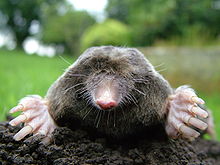
Writing - Are you a butterfly or a mole?

Is it better to flutter from project to project?


At the moment, I am questioning whether I am using the best strategy for my writing career.  I am adopting the butterfly method whereby I flit from children’s fiction to children’s plays to adult fiction.  (By adult fiction, I don’t mean X rated stuff, I simply mean books for adults.  The reason I am explaining this is that I had an embarrassing incident years ago when donating videos to my child’s school fair.  All the ones I had seen donated were videos for children, so I asked if they accepted adult ones – the teaching assistant thought I meant porn and coloured highly when I thrust my “Pride and Prejudice into her hand.)

I am a writing butterfly, I flicker back and forth working on both adult and children’s fiction and I wonder whether I would be more effective if I was a mole, digging and focusing on one tunnel or book until I had reach my goal.

Being a butterfly has its positive aspects in that it keeps the writing schedule fresh and lively.  It also means that if children think my kids’ stuff reeks, their mothers’ might like my physic detective.  In other words, I’m not putting all my eggs into one basket as the old saying goes.

I do feel that being a butterfly has its negative side especially when it comes to marketing.  It means trying to interest two sets of audience, which as any writer knows attracting a single one can be tough going, initially.  It also means that I constantly have more than one plot, setting and set of characters going around in my head which can be like living inside a bee hive at times.

When I talk about being a mole, I must clarify that I mean someone who works on a particular novel but also has a blog and writes articles etc…   I don’t mean that they only work on the novel they are writing at the time and nothing else whatsoever.  The positive side to being a mole is that we can concentrate wholly on the piece we are working on, we might have ideas for future books in our heads but if it is a series with the same main character, it all helps to know this person better.  I think it is the same with marketing, if we are sticking mainly to say writing vampire stories for adults, we can aim all our marketing energy into the one market; the output is far better targeted than that of the butterfly writer.

The negative side to being a mole writer is that the writing atmosphere could become a little staid for the writer after a period of time.  Fundamentally, I think that the main problem is that if the mole concentrates for instance, completely on a series with an alien detective and it flops, the mole needs to start again; obviously, this is not a problem if the series is a hit.

I have to say that as a butterfly writer, I do question whether I would be better off being a mole.  So what are you and is this because you have a strategy or is it because it is the only way for you to write?

Writing - Are you a butterfly or mole?

Being focused hits the spot.

29 Comments

Filed under Creative Writing, Inspiration and Us

Writing – Embracing Characterisation in a haunted, Victorian Prison.

Lincoln Victorian Prison in Lincoln Castle.

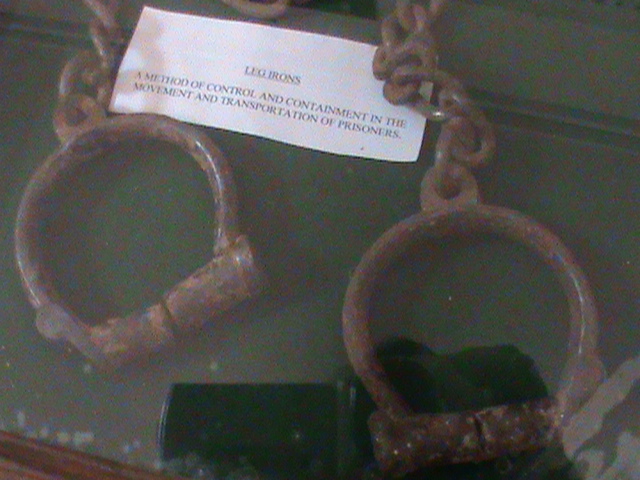
Handcuffs on display at Lincoln Victorian Prison in Lincoln Castle.


I am working on a novel called Mulgrave Castle in which my main character Harriet Twine is a psychic, Victorian detective.  In order to really embrace my character as I re-write, I wanted to visit a place I had been to before which I knew had both a mixture of atmosphere and spiritual energy.  It is the Victorian prison in Lincoln castle.

Lincoln Victorian Prison in Lincoln Castle

A faithful dog on display at the prison. His master was a poacher who shot a head keeper in the knee. Unfortunately, the man died and William Clark alias Slenderman was hanged for it at Lincoln Prison in 1877.

I decided to do most of my journey by train as this was a popular Victorian mode of transport.  I would have liked to do the whole day in Victorian costume but after doing other experiments in costume, I decided it really was not practical and I would have to use my imagination as far as clothing went.

I have written about the prison elsewhere on the site under Exciting Excursions.  The place which impressed me most on my last visit is the prison chapel.  In 1849 the Separate System came into force.  It was believed that if prisoners were kept in isolation they would become rehabilitated.  They were only let out of their cells to go to the Chapel and for exercise.  It is said to be the only one of its kind left in the world.  The Separate System meant that the inmates would sit in closed in seats, in The Chapel, so that they could not see or speak to anyone else.  The seats are tilted, therefore if any prisoners dared to fall asleep during a sermon they would fall forward and be punished.  There was an open bench at the back which was especially for condemned criminals; obviously it was thought that they were beyond redemption.  Debtors also were not included in the separate system and they would be seated in the gallery with the men above and the female debtors below.  There were sloping seats at the front for the women.  Each criminal in the Separate System was locked into his seat before another could be let in.  In addition to not being allowed to see others, the prisoners also had to wear masks to cover their faces.  In 1851, it was realized that this system did not work and it was abandoned.

Lincoln Victorian Prison in Lincoln Castle.

This is the only chapel of this kind left in the world.

The remarkable aspect of all this is that visitors to the chapel today can stand in the pulpit and have the view which the prison chaplain would have.  Some seats are fitted with a dummy criminal wearing a mask.  The vision is intimidating and the atmosphere is awful and on my first visit it gave me shivers down my back.

Lincoln Victorian Prison, Lincoln Castle

This is the view from the pulpit.

For this visit, I had strongly psyched myself up not to be so intimidated by the chapel, after all, Harriet is Victorian and has never witnessed the liberal world which I am used to.  As I stood in the pulpit looking down on the chapel to take the photographs, I felt a very strong sensation which made me lean backwards so that I could not be pushed.  I put that down to my own imagination and went down into the seats and sat on the front row.

I had not planned to do this but I found that I was sitting observing the other visitors.  People seemed reluctant to stay in the chapel, I found that most were scuttling straight through and not visiting the pulpit.  They seemed as if they should not be in there and were frightened of getting caught.  I decided to stop the next visitors and explain about the pulpit and directed them up to it.  They didn’t look happy and didn’t actually climb into the box.  So as the next people I directed up there were sneaking off, I pointed the pulpit out.  They declined going in.  I eventually witnessed one couple going in and their faces suggested they had eaten something which had gone off.

I felt at this point that my experiment had worked in that I had become like my intrepid Victorian heroine compared to the other visitors, I had lost my modern day queasiness for harder times than ours.

Lincoln Victorian Prison, Lincoln Castle.

A display portraying the gallows just in case we forget what took place in Lincoln Prison.

However, all of that fell by the wayside when I entered Cobb Hall which was built in the 13th century and has been used as a prison and for executions.  The stench of urine as I entered was overwhelming which puzzled me, later it actually made sense as when people are extremely frightened it is not unknown for them to wet themselves.  There is a ladder which leads down to the dungeon and there was very strong negative energy emanating from that area so I declined to go down.  I felt rather ashamed at that point as Harriet would definitely have gone down to try to find out what had happened down there.  For me however, the feeling of evil was too strong.  I did climb up to the top where the hangings took place.  In the mode of Victorian psychic detective, I did not sense anything there.

Cobb Hall, Lincoln Castle.

For many, when they went through those doors – they never came out again alive.

Whilst I was up at the top, unbeknown to me, my son had entered Cobb Hall seen the ladder area leading down to the dungeon and had left immediately, he too got a really negative feeling from that area and rushed to tell me about it as I left Cobb Hall.

Cobb Hall, Lincoln Prison

Down into the dungeon. There is a malevolent energy around this spot.

Did my experiment work?  I feel it did as I think that I have discovered that Harriet is rather more adventurous than I am.  I have discovered that leading a life as a sheltered Victorian lady has made her more likely to throw herself into situations because her life is dull and it is not enough for her.

Do you ever do experiments like this?  If so, please tell so that I know that I am not the only one hanging around Victorian prisons.

18 Comments

Filed under Creative Writing, Inspiration and Us, Mulgrave Castle - Harriet Twine the Saucy, Victorian Detective.