How Dare You Think You Will Enjoy Great Literature!

The theme in my life this week has been self -esteem, or rather lack of it.  It seems that there is an epidemic going on.  I don’t know whether it is always there or I am noticing it more since I am on the last legs of Mulgrave Castle, a romantic mystery which has self- esteem as its theme.   Of course, lack of self -esteem comes in many guises.  The one I want to focus upon in this article is how other people can make you believe that you do not have the right to enjoy great literature.

Menabilly. Hidden by the woodland, Menabilly w...

Menabilly. Hidden by the woodland, Menabilly was the home of Daphne du Maurier, and the inspiration for Manderley in "Rebecca". (Photo credit: Wikipedia)

Lack of self-esteem is universal, so much so that writers like Daphne Du Maurier have used it as a plot device.   In Rebecca, the main character who tellingly is never named, cannot believe that she has been rescued from being a paid companion by the older, attractive, handsome Maxim de Winter.  The whole of this wonderful, psychological drama hangs on the fact that the new Mrs de Winter has low self -esteem.  In fiction, that is fine.  In reality, it is not.  In Rebecca, we see obnoxious characters like Mrs Van Hopper chiselling away at her paid companion’s sense of self to make sure that she stays underfoot.  In reality, I get told by people how, when they were children,  grown-ups told them that writers like Shakespeare and Dickens were too difficult for them.  Let me catch my breath a moment whilst I let out an exasperated sigh.

Title page of the First Folio, by William shag...

Title page of the First Folio, by William shagsper, with copper engraving of the author by Martin Droeshout. Image courtesy of the Elizabeth Club and the Beinecke Rare Book & Manuscript Library, Yale University. http://beinecke.library.yale.edu/dl_crosscollex/brbldl/oneITEM.asp?pid=2018031&iid=1071364&srchtype= (Photo credit: Wikipedia)

I have said it before and I will say it again – most people, if properly introduced and grounded in Literature will enjoy it at some level.  A case, in hand, I took a lesson about “The Laboratory”, a poem by Victorian writer Robert Browning to a mixed group of adults.  In the audience were three male fire fighters, two of whom were positive Victorian poetry was most definitely not for them.   After the lesson, the two fire fighters who were sure that they would just switch off from this stuffy old nonsense, said that they had actually enjoyed it.  The general consensus of the group was that if they had had that lesson whilst at school, they would all see Literature differently.  I was lucky that I had great English teachers.  As the years have gone by, it has slowly dawned on me how many people either were not taught writers like Shakespeare or it was offered in an unhelpful way.  This leads me to ask – why is there a sense of elitism with writers like Shakespeare?  After all, let’s think back, Shakespeare wrote and performed his plays mostly for the Joe Bloggs and Fanny Rumble’s of the sixteenth century.  Okay, so he performed in front of Elizabeth I, but mostly it was in front of ordinary people like me.  So, I say to you, whoever you may be, LITERATURE IS FOR YOU.

Related articles

4 Comments

Filed under Education, Self Esteem and Literature

Introducing children to Shakespeare by using insults.

Thou art a base, proud, shallow, beggarly, three suited, hundred pound, filthy, worsted stocking knave…” (King Lear)  I hope, dear reader, you don’t think I am referring to you.   Perish the thought, no, I simply wanted to grab your swan-like neck and swing it in my direction.  I don’t want to insult you but I do want to talk about insults and how they can be used to help children be comfortable with Shakespeare’s plays.

 Children love Shakespeare if they are introduced to his works properly.  Unfortunately, what should be an exciting journey with The Bard often becomes painful, embarrassing and boring.  I say painful, embarrassing and boring because if the background work is not done, Shakespeare’s language can seem unapproachable.  It then becomes embarrassing because the learner feels stupid.  We all know that feeling when something seems to be definitely “not for us”, we cut off and it becomes boring.  I am a great believer, therefore, of priming children with Shakespeare’s works well before they reach the teenage years.  Children who have been introduced to the stories   (it is important that children know what is happening in story form well in advance of reading a full blown play) and aspects of the language are ready to read one of Shakespeare’s plays.  It is thoughtless to expect teenagers who haven’t grown up in a literary atmosphere or a book loving household to embrace a sixteenth century play without any former grounding.  Fundamentally, I cannot stress the importance of introducing children to Shakespeare in a child friendly manner.

This is where insults are invaluable.  I first came across this exercise whilst doing a day long workshop with The Royal Shakespeare Company.  It was used as a warming up exercise to allow everyone to relax and clear out those dreadful inhibitions we can suffer from.  Everyone is given a piece of card with an insult written on it.  It can be something like this quotation from King Lear:

Thou art a boil, a plague sore, an embossed carbuncle in my corrupted blood.

Elizabethan music can be played whilst everyone swiftly marches or skips around the room.  When the music stops you turn to the nearest person to you and shout your insult out at the top of your voice.  They then shout their insult back at you.  The next time, it can be whispered in a sly manner. In essence, the insults can be said in many different ways e.g. angrily or with uncontrollable laughter. It is a very good drama exercise. The insult cards can then be changed around.  Incidentally, children, teenagers and adults love this as they are actually allowed to use insults without getting into trouble – it has that naughty, delicious edge to it which allows us to let off steam and then gives us the desire to learn.  It also gives Shakespeare a bit of street cred before he gets the label of boring.

As children love to be creative, I have added an activity so that they can create the insults themselves.

Activity

They need to take an insult from the first two sections below (both of these are adjectives) and then add it to the third section which is a noun.  Add ‘thou’ at the beginning and you have a lovely Shakespearean insult.

Section 1 – base, proud, shallow, beggarly, bawdy, filthy, coward, paunchy, gorbellied, puking, droning, dankish.

Section 2  worsted-stocking, pigeon-egg,  boil-brained, onion-eyed, elf-skinned, trunk-inheriting, clapper-clawed, milk-livered, lily-livered, doghearted, hundred-pound.

Section 3 knave, rogue, bladder, bugbear, pribbling, flap-dragon, boar-pig, barnacle, apple-john, maggot-pie, coxcomb.

For instance – Thou filthy, boil-brained boar-pig.

For any children who particularly enjoy the insults, I love Elizabethan insults so much that I have them all the way through my book Will Blyton and The Stinking Shadow.  Will finds Hamnet, a small boy trapped in a stone, who unfortunately hurls insults every time he opens his mouth.  He is, of course, from the Elizabethan period and has had a curse put upon him by the evil, Elizabethan magician Corpsehound.  His outrageous insults get Will into trouble everywhere he goes.

“Leave me be, thou fetid, old skanky breath,” says Hamnet.


So thou base, clapper-clawed rogue – I’m sorry it’s become a habit.  What I really mean is “until we meet again, dear reader.”

19 Comments

Filed under Creative Writing, Education, Literary Criticism, Parenting

Let’s Talk About Frankenstein (2) – Walton’s First Three Letters.

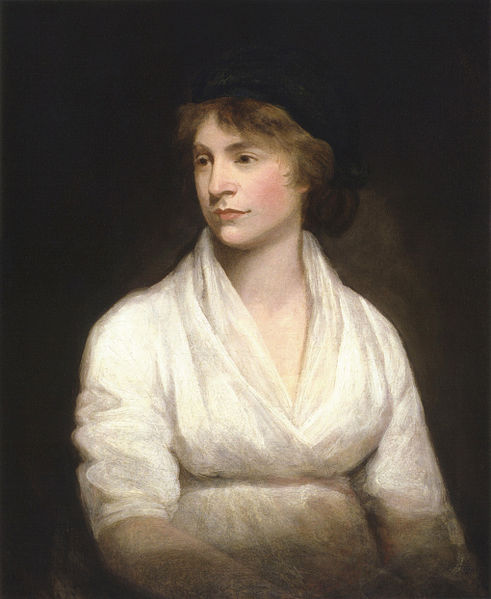
In the introductory post, I offered the hypothesis that “Frankenstein” (1) was a letter written by the teenage Mary Shelley to her dead mother, Mary Wollstonecraft.  I suggested that Shelley had written herself as Frankenstein with her mother Wollstonecraft as the monster.  It occurred to me that Shelley wanted her dead mother to understand how it felt to be an abandoned child.  It could be suggested that this hypothesis is flawed because we start the text with the explorer, Walton and his sister, Margaret Saville.  However, if we reason that Shelley is the mother of sci fi; I think we can safely expect her to have fluidity in her writing.  Even though she was writing in the early 1800s, Shelley was not bound by convention.  As her main character Frankenstein was a scientist, an experimenter, so Shelley embraced investigation in her writing.   I think that Shelley explores her communications with her dead mother throughout the text in a theatrical way.   The characters change their costumes and become someone else.   Hence, in the beginning, we are introduced to Walton the explorer and his sister Margaret Saville who are simply Shelley and Wollstonecraft, respectively.

In this post, I will explore how my hypothesis fits with the beginning of the book when we read Walton the explorer’s first three  letters to his sister, Mrs Saville.   Mrs Saville has been left at home whilst her brother has exciting adventures.  It is a typical 18th century scenario.  The male has inherited the family fortune and is off proving his masculinity whilst his sister sits at home waiting for his correspondence.  As the daughter of the first feminist writer, Mary Wollstonecraft, it is easy to see how the text could be perceived as a bit tongue in cheek.  However, as I am reading the letters  as  letters  from Mary Shelley to Mary Wollstonecraft, they can be viewed another way.

As I suggested earlier, Mary Shelley has depicted herself as Walton whilst her dead mother is the sister Mrs Saville.  Mary was a teenager when she penned Frankenstein, Walton is an explorer.  The teenage years are when young people try many things for the first time.  In other words, teenagers are explorers.

It is obvious that Shelley both loved and mourned her mother – she would read on her grave.  In Frankenstein, she has placed Mrs Saville in the home.  The sense of Mrs Saville being tied to her domestic quarters is obvious, so distinct in fact, that it suggests the home we never leave – the coffin.  The sub text is sly; it is similar to having a rag of ether placed over your face whilst you are unaware of it.  In other words, it creeps up on you insidiously but once you are conscious of it, it is obviously there.  The message is loud and clear to the dead mother – “Look at me, this is living.  Look at what you are missing by abandoning me.”  Fundamentally, the first letter is all about bravado –”I am an explorer of life and you are tied to the domesticity of the grave.”

When we read the second letter there is a huge change of mood.  The teenager who has bragged, strutted and portrayed herself as a complete adult returns to the isolation of a toddler missing her parents.  Shelley as Walton laments her loneliness.  Even though there are many men aboard the ship, Walton suffers from a sense of alienation.

“I have no friend, Margaret: when I am glowing with the enthusiasm of success, there will be none to participate my joy; if I am assailed by disappointment, no-one will endeavour to sustain me in dejection.” (2)

Letter three is a short missive.  Walton does not speak of personal matters.  He merely discusses the weather.  However, in the last paragraph he tells Margaret that he will “not rashly encounter danger.  I will be cool, persevering and prudent.” (3)   I would strongly suggest that this is Shelley writing to the dead Wollstonecraft.   She is telling her that although she is embarking on a voyage of motherhood, she can and will look after herself.   The message is ambivalent.  It partly consoles the mother that she doesn’t need to worry about her daughter.  Contrastingly, it also says that she has had to learn to steer her own vessel onto safe waters because the captain jumped ship.

Shelley is a mistress of signposts.  We have to be vigilant when we read her.  She throws small clues into the text which the eye might skim over.  A good example of this is the way Walton has signed the first three letters to his sister.  They are signed – Your affectionate brother, R. Walton; Your affectionate brother Robert Walton and Most affectionately yours, R.W.  (4)  By signing each letter differently, Shelley is depicting changes in Walton’s moods.   Fundamentally, the changes in Walton’s moods are a teenage girl’s conflicting emotions towards the dead mother she is desperate to communicate with.

Notes.

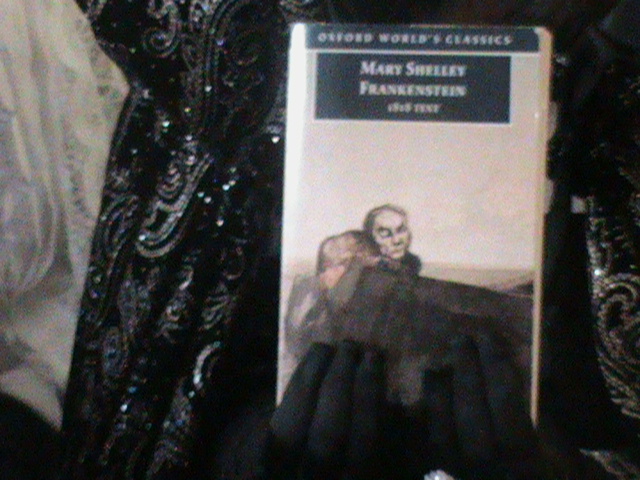
  1. Shelley, Mary, Frankenstein 1818 text.

(Oxford World’s Classics.)

  1. ‘ibid; p.8
  2. ‘ibid’,p.11
  3. ‘ibid’ p.8,p11.

7 Comments

Filed under Frankenstein, Literary Criticism

Let’s Talk About FRANKENSTEIN 1

Loony Literature is about being creative with literature.   It is about creative reading as well as creative writing.  As both a lover and graduate of this subject, I positively enjoy deconstructing texts from different points of view – that is what studying literature is about.  It is not about knowing every quotation from Shakespeare as non literary people often assume.  It is about taking a text and analysing and evaluating it whilst backing it all up with textual evidence.  We can add to our arguments by reading the text from a certain perspective e.g. a feminist or a Marxist point of view.  If we enjoy psychoanalytical theory we can use Lacan or even go down a Freudian route.  The possibilities are endless and as long as we can back our argument up with textual evidence, we are free to do this.  There is no right or wrong answer in literature – it is creativity heaven.

Much has been written about Mary Shelley’s Frankenstein; in fact, far too much to mention in this introduction.  I have been using the text as a springboard to write a play and workshops.  However, as all great pieces of fiction tend to do, it has demanded that I read it yet again from a totally different angle.

I love the fact that Frankenstein was written by a teenager.  The other detail about Mary Shelley which sits heavily in my consciousness is that her mother died through complications following her birth.  I am both daughter and mother.  The two relationships are entwined in my being like thread in tapestry.  I feel so much sympathy for Mary Shelley as a young girl growing up with only other people’s stories of her mother.

These two facts have made me read Frankenstein again.  I am going to read it as a subconscious cathartic writing exercise for Mary Shelley.  In other words, Shelley wrote herself as Frankenstein.  The monster is her dead mother, Mary Wollstonecraft.  As a teenager, Mary would read on her mother’s grave in St Pancras Churchyard.  The mother was beloved but unobtainable.  It is bad enough as a teenager when your parents do not seem to understand your emotional turmoil.  Mary did not simply have intentionally deaf ears to contend with but dead ears.  Mary needed to find a way to communicate her isolation. I believe that Frankenstein can be read as a letter from Mary Shelley to Mary Wollstonecraft.  How else can an abandoned daughter let her dead mother know what she went through whilst growing up without her?  Fundamentally, as the dead mother was a literary forerunner of her day, there was only one way to get such a mother’s attention and that was to create her own literary masterpiece.  Ironically, Mary Shelley conjured up her own dead mother in the position of abandoned child.

If the monster is supposed to portray her dead mother, why did she make him male?  We all know that women used to constantly die of childbirth in those days; by re-inventing her mother as male, she prevents this taking place.  She needs to keep her mother alive as she lives out the story of isolation Mary felt as a motherless child.

I am at the beginning of this reading of Frankenstein and hope that you will join me on the journey.  I will be making regular posts as I travel on my own new reading journey of Frankenstein.  My model for Frankenstein might not work out.  Ultimately, by offering a hypothesis and then writing a notebook on my reading, I hope that readers of the posts will come up with their own valuable insights.  If this works, I will tackle other delicious texts in the same way.  So let’s talk about Frankenstein.

17 Comments

Filed under Frankenstein, Literary Criticism

6 Great Reasons to Work with Teenagers.

Teenagers have always got bad press.  It is because they are fresh, innovative and rebellious.  Almost nothing can beat their optimism and joy when they are doing well at something they love.  I see this when I watch drama students performing.  Less than 100 yards away, I  also see a group of teenagers spraying water bottles for no reason except that they are redundant.  I use the word redundant because it means surplus to requirement; when I see dead eyes I am sure that this is how many teenagers feel – surplus to requirement.  These teens might still be at school or they might be unemployed.  Whatever the case, they are still redundant in the sense I am using because they are not being directed into finding what makes them want to get up in the morning.  It could mean that they will never feel  fully part of society.  I know they are told that they have to pass exams and get a job.  However, this is telling them what they have to do – they need to find out what they WANT to do.  When young people have no direction, they do not know their place in society – they are out in the margins looking in.  On the other hand, when a teenager has a self directed goal, they don’t need to be pushed to pass exams or get a job.  They WANT to do both.  Work experience is a step for teenagers finding what they really want to do with the rest of their lives.  I believe that even if it is just an hour a week, we can ALL benefit from having a teenager working with us.  My teenage son works with me.  Here are just some of the reasons it’s great to work with a teenager.

Technology know how.  I use a computer daily but do tend to be set in my ways in what I use.  I can find out how to do new things but it all takes time.  Time is not in abundance in my life so I will not use new ideas or pieces of technology because I haven’t got the time to learn how to use them.  This is where working with my teenage son helps.  He sits at the laptop and works miracles for me.  He saves me hours a week.

Laughter and joy.  I have always enjoyed humour.  When something really tickles me I can laugh until I feel like I am wearing a Victorian corset.  A couple of years ago, I  realised that I no longer laughed like I used to do.  It occurred to me that the responsibility of family finances, a career, motherhood, a home and health issues had made me a bit of a serious person.  If I am totally honest, I was horrified.  I remembered a younger me and wanted the fun part of her back and quickly.  Working with a teenager can do that for you.  When we are in parent mode, if there is a problem the parent  sorts it out.  However, when we work with our teenagers – the problem is shared.  Teenagers are more likely to laugh when things go pear shaped.  I don’t mean serious issues but jobs which can be straightened out.  Teenagers giggle and it is infectious.  Some of our catastrophes have had us bent over double with laughter.

It encourages other young people to look at your business. When a teenager is involved in your business, it gives it a young appeal.  For instance, at Loony Literature, we are trying to inspire young people to read and write more.  We put videos and podcasts out to get young readers and writers interested.  My son appears in both videos and podcasts which demonstrates that we are not a group of adults trying to lecture kids.  Also, by having a teen in videos and podcasts, it encourages other young people to do something similar themselves.

It helps us see our business through a young person’s perspective.  The children and teenagers in the world at the moment are tomorrow’s customers.  As grown ups, sometimes we are so busy, we don’t realise that people and their needs are rapidly changing.  When we have a teenager working with us, if we allow them enough voice – which we should – we are allowed into the world as they see it.  For instance, I have been amazed at the way children and teenagers play together on the internet.  When I was a child, I would meet my friends and we would play in the nearby woods.  We lived in a world of our own make believe.  My favourite game was being on a deserted island – I know – in reality it would be a nightmare but that is children for you.  Adults constantly say that children don’t play any more, that they are always on computers.  What many adults don’t realise is that children play the same sort of games that they used to play but on the internet.  My son played a game about a time travelling café with other kids on the internet for months.  It was a whole complete world which they had made up.  They have also been secret agents uncovering a mole in a top toy manufacturer.  The use of shared creativity and playfulness is endless.  If I had not been lucky enough to be shown the world through a teen’s perspective, I would not know about of any that.  Working with a teen has given me an insight which can be used to promote Loony Literature.  I think this might be the case for many businesses.

Work experience. – At school, teenagers are nearly always with other people who are the same age as them.  It is often the same in college.  Suddenly, they are in the workplace and everybody else is at least twice their age.  It’s no wonder they can appear sullen.  Their past experiences of grown ups often falls into two categories –a) family and friends who they know or b) figures of authority like teachers.  Teenagers are often self conscious.  When they are thrown head first into a dual world of work and middle aged strangers, they often retreat into themselves.  This is why they need work experience before they leave education.

Confidence –  The last two go hand in hand.  Work experience, if handled properly, can give teenagers the confidence to pursue the career they really want.  As all ex teenagers will remember, it is a time of extreme highs followed by sky diving lows.  These are emotions which come and go like cats constantly coming in and going out again.  Confidence, however, is something which sits inside us and probably influences every decision we take.  Teenagers who are given work experience in a field which they believe is “not for people like them”, might actually acquire the confidence to gain the examination results and pursue a career, they could only dream about.  Surely that would make a better world for all of us.

4 Comments

Filed under For Teens, Parenting

6 Great Reasons for Teens to Write.

It is therapeutic.  As an ex-teenager and the mother of a teenager, I know the experience shudders from ecstasy to the doldrums constantly and without any warning.  We go from the height of excitement when an attractive person seems to find us attractive to wanting to never see another living being when even the cat ignores us.  Everybody seems to want something from us.  For those at school, teachers want a million essays for the next day.  For the home educated, parents expect us to watch Science experiments when we’d rather be watching science fiction.  We dream of the day when all our spots have vanished, the hair is glossy rather than greasy and we are in control.  Teenagers can often feel that no-one understands them, that is why they go from storming out of the room with dramatic vigour to sitting in the corner with a face and mood to match and speaking to no-one.  Getting everything off the chest in the form of a diary or private blog is therapeutic.  It doesn’t need to be kept every day; it could be more like a journal and kept specifically for times of isolation, anger or depression.  It can be destroyed once everything is off the chest – we don’t always mean that we would seriously like to put Mrs Alwaysright in the stocks and fling rotten vegetables at her but it feels good to write it down.

It raises your self-esteemApart from when my teenage son is acting on the stage, he is quite a shy person.  One of his interests is Doctor Who, the television show whose main character is a 900 hundred year old timelord.  The Doctor Who television reviews and book reviews he writes for websites and fanzines are extremely well received.  His delight when his work is discussed and praised on forums and Twitter is obvious.  Praise from people who do not know us always raises the self-esteem because it is based purely on the merit of the work.

It raises your profile.  When we write about something with passion and expert knowledge, we become known for it.  People who enjoy our work will pass it on to others.  We become associated with the subject which we are writing about.  Often when our self-esteem is low, we feel worthless and think we know nothing of interest to anyone else.  This is not true.  If we asked a roomful of teenagers to list their interests, we would find magazines, forums and societies who share the same passion.  Therefore, teenagers writing about their particular hobbies could become well known for their insight into that subject.

It looks impressive on your resume.  Competition for colleges, universities and jobs is fierce these days.  The ability to write well should never be underestimated.  Any employer, lecturer or professor will be impressed by a candidate who writes from choice.  They will be even more impressed if the writer has gone to the trouble of getting an audience.  Anything from letters to magazines, reviews, fiction and writing a play will demonstrate that the candidate is a self starter.

It gets you prizes.  Writing has many advantages; one of them being that it can be profitable.  I picked this up as a child.  I have always loved writing. Seeing my name in print, in my favourite comic, was heavenly; however, getting a prize for it seemed unbelievable.  Research your favourite magazines by reading them thoroughly and then write something positive but thought provoking about one of their articles.  Who knows what could arrive in the post.

It is a great way of socialising.  Writing is often seen as a solitary experience with the writer locked in the attic pounding away at the keyboard.  This does not always have to be the case.  Watching teenagers having a great time together because one of them has written a play proves the point.  If we provide a vehicle for all the young actors and actresses out there, we will never be lonely.

Happy writing.

6 Comments

Filed under For Teens

6 Great Dickens Related Activities To Share With Your Child

I have a theory that if children are casually introduced to our literary heritage when they are young, they will go on to do well with English and Literature when older.  I have come across so many people who dismiss Literature because they don’t understand Shakespeare or say it’s all boring.  Quite often, I can see fear in their eyes.  Yes, it is true.  People see books written in the Victorian period as alien.  Plays written in Elizabeth I’s time, well we don’t mention those at all.  The reason for this, I am sure, is that they were not casually introduced to them as children.  When I use the word ‘casually’, I mean not making a big issue of it.  Enjoying great literature is simply a way of life.  It enriches all our lives.  It doesn’t matter if we haven’t got two pennies to rub together, NOBODY, can take away that feeling which rises through the body when we have fusion with a work of great literature.  My fourteen year old recently chose to perform the end monologue from Doctor Faustus by Marlowe for his acting exam.  He is expecting a great result because he felt so confident with it.  At the age of thirteen he got a distinction in his exam for a Richard II monologue, again something he had chosen.  He simply has no fear of great literature; this is because it has always been there in his life.  I have to hastily add, that I have never fed it to him in great dollops or made him watch or read any of it.  It has always been casually offered.

Watch Great Expectations together.  This is a good one to introduce children to Dickens.  The atmosphere of the marshes and the graves makes it eerie. Also, children can empathise with Pip’s fear when the escaped convict, Magwitch threatens him.  Even if we just watch a clip of the beginning of the film on Youtube, it’s a start to introducing our children to Charles Dickens.

Have a communal reading session together.  Make the room cosy, have something available to eat and drink, then sit around with the kids and read a few pages of Dickens to them.  Pickwick Papers has some wonderful comedy scenes which children will react to.  Always ask their opinions of the characters.  Tell them they can say exactly what they think because there is no right or wrong answer in Literature as long as they have the evidence from the text to back themselves up.  If any of the children say that it’s rubbish or they are bored, tell them that is an excellent critical opinion if they can explain what it is about the text which makes them think that way.

This is a bit eerie.  Find a graveyard with Victorian headstones and ask the children to take photographs of the headstones from that period.  Lead the children into noticing the ages when people died.  The chances are that quite a few of them would be children themselves.  This offers a discussion opportunity about the lives of children in the Victorian period.  Later use extracts from Oliver Twist to demonstrate how difficult some children’s lives were.

Visit a Charles Dickens site.  There is Dickens World in Kent, Charles Dickens Museum in London and Charles Dickens Museum in Portsmouth – the place of his birth.  There are also London Charles Dickens Walking Tours.  Taking children to places which celebrate writers and their works’ demonstrates the writer’s value in our society.  It diminishes the image of a dead person from long ago writing a dusty old book.

Dickens would walk for hours and hours.  Walking helps to give clarity with plots, character motives and helps ideas for settings.  Take the children on a Dickens type inspirational walk.  Give them notebooks, pens and a camera.  If possible, go somewhere they have not been before so that they are seeing with new eyes.  Be playful, bounce ideas around.  Something strange has probably happened in this place before – what could it be? – Who was involved?  Get important words written down in notebooks.  If the children are too young to write or simply don’t like writing yet, don’t worry, it’s the ideas which are important.  The object of the exercise is to let them see that there are creative opportunities around every corner.

Take a scene from a Dickens novel, a television adaptation or film and get the child or children to act it out in their own words.  If there are not enough children the adults can join in.  It’s great fun.  The object of this exercise is to get the child to interpret what is happening in the scene.  Also, as a language exercise, discuss how language has changed since Victorian times.  If the scene contains an upper class person (that sounds dreadful, but it is the English class terminology from then) and someone with a cockney accent, discuss the fact that the two people speak so differently.  It will give the children a valuable insight into the class system of Victorian England.  If possible, get some costumes or props.  It helps to create a Victorian atmosphere and adds to the fun.

I always make sure that I enjoy these types of activities because I know that if I don’t think they are fun, then the children involved certainly won’t.

10 Comments

Filed under Parenting

6 Great Literary Outings For Kids and Teens.

Most of the time, we associate enjoying literature as sitting at home reading a book.  Reading should be an adventure though.  Here is a starter list which will get the young literary person out and about.

Visit a writer’s home.  I don’t mean that we should turn up at Jacqueline Wilson’s door and demand a cup of coffee.  I am thinking of places like Haworth where the Bronte sisters lived.  Sometimes, writers from the Victorian period can seem unreal or stuffy to young people.  However, when they visit their homes’ and see their clothes’, their manuscripts,’ and in the case of The Brontes, the room where some of them died, the writers become real.  I remember visiting Haworth as a teenager after reading “Wuthering Heights”, I was Catherine Earnshaw as I walked on the moors.

Visit a literary festival.  It doesn’t matter whether it is a huge established one like Cheltenham or a small local one which attracts four writers.  Literary festivals charm both kids and teens.  I will never forget seeing Anthony Horowitz in a marquee at the first ever Oxford Literary Festival.  I thought I had gone to a rock concert by mistake.  The placed was packed and the atmosphere was vibrant.  This was even before Horowitz appeared.  He came on dressed in all black with his hair slicked up.  Kids of all ages were wringing their hands with glee.  Two boys at the back of me giggled excitedly as they decided he was like a mad professor.  Literary festivals inspire children and events can cost as little as a few pounds, some are free.

The library is going to seem like an obvious choice.  The reason I have chosen it is, libraries can give children, particularly teenagers, autonomy.  My fourteen year old is constantly discovering new writers and people he wants to read about.  He goes onto the online library for the county and gets books on every subject possible sent to our village.  When the book arrives, he is notified by email.  He promptly pops around the corner and picks his goodies up.  He is independent.  It doesn’t cost anything and he feels in control.

I often choose books to read for their settings.  Creating a setting for reading can really enrich a child or teen’s book experience.  For instance, we used to live about fifteen minutes from a very quiet beach.  When my son was younger, we read Michael Morpurgo’s “Kensuke’s Kingdom” by the sea.  Okay, we weren’t on a desert island but  reading Kensuke’s Kingdom with the waves a few feet away, certainly made it feel like we were.  Nowadays, we go to English Heritage ruins and read Edgar Allan Poe’s short stories – we love it.

Follow a literary trail.  There are many established ones, for instance, Lincolnshire has one for Alfred, Lord Tennyson.  It can be more exciting though, if you do your own.  Research a writer from our literary heritage and plot the places to visit.  This can take place over the course of weeks and months.  When we start doing our research, we are often surprised by what has happened on our own doorsteps.

The last one is getting out and watching literature being performed.  Shakespeare and Marlowe wrote plays to be watched and not read.  Also, it demonstrates that literature can be a social event, we don’t have to enjoy it in isolation.  Look out for drama students performing, it won’t kill the budget and the energy is rejuvenating.  I recently watched six plays, performed by drama students, over the course of a weekend.  They were not only acting in them but had written and directed them.  I was impressed by the quality of their work and their enthusiasm energised me for days afterwards.

Enjoy your literary outing.

9 Comments

Filed under Parenting

6 Great Reasons To Read To Teens.

Solitary reading is a recent pastime.  Traditionally, a book was read to an audience.  Since people could speak they have gathered around fires exchanging stories.  Wonderful family traditions can be built on communal reading – I read a Victorian ghost story to the family every Christmas Eve.  We sit by the fire in a candle lit room and collectively enjoy the atmosphere.  It’s very Charles Dickens.

Poster promoting reading by Charles Dickens in...

Poster promoting reading by Charles Dickens in Nottingham (Photo credit: Wikipedia)

Great literature wrestles with difficult subjects.  Sometimes when we try discussing a subject with our teens, it can sound like we are preaching and our well meant words fall on ear phone ears.  However, when we read to our teens, difficult subjects arise naturally and we can talk about them as part of our reading experience.  For instance, in Doctor Jekyll and Mr Hyde, Doctor Jekyll takes chemical substances which change both his appearance and his behaviour.  In effect, it ruins his life.  When we chat with our teens about their opinion of Doctor Jekyll, we usually find that they have already made up their minds about him and his actions.

The Strange Case of Dr. Jekyll and Mr. Hyde po...

The Strange Case of Dr. Jekyll and Mr. Hyde poster. Converted losslessly from .tif to .png by uploader. (Photo credit: Wikipedia)

Schools do not have time to cover a full novel because of their tight curriculum.    At this point, I expect parents are wondering, who does have time to read a full novel to a teenager especially as they could read it themselves.  To cover the last point first, many great novels are being overlooked because teenagers are not being introduced to them.  Many teenagers read novels from our literary heritage because they have to to pass exams.  This gives out the wrong message about these great works of fiction.  If we offer lounging on the sofa, having a piece of cake and being introduced to the world of Laurie Lee’s “Cider With Rosie”, without having to write an essay on it, it’s an appealing proposition.  As for the time factor, reading sessions can replace: watching programmes which nobody really wants to watch, time spent complaining of boredom, time spent squabbling or staring at a computer screen because there seems nothing more interesting to do.

Cider with Rosie. This rather overgrown cider ...

Cider with Rosie. This rather overgrown cider press is just off the B4070, where the path leads up to Wickridge Hill. It's only a quarter of a mile from Slad where Laurie Lee, of "Cider with Rosie" fame was a regular at the Woolpack Inn (Photo credit: Wikipedia)

Reading to our teenagers aids bonding.  Before our children can read, most of us, read them bedtime stories at least.  The beaming child’s face gives us the sense of joy which only parenting can release. The child gets to a certain reading stage though and we feel that we no longer need to read to them.  Often, parents and teenagers can seem to grow apart because although they share a home, they live in different worlds.  Reading to our teenagers gives us something to share with them, therefore something to discuss.  I love Mary Shelley’s “Frankenstein”, my teenage son doesn’t.  We have stimulating arguments about it.  It’s better than quarrelling over the fact that he hasn’t put his dirty socks in the wash.

Promotional photo of Boris Karloff from The Br...

Promotional photo of Boris Karloff from The Bride of Frankenstein as Frankenstein's monster. (Photo credit: Wikipedia)

Reading to our teens balances the relationship between child and parent as it empowers them to read to us.  If we read to them, after a while they will choose books, stories etc to read to us. It gives them self esteem and therefore balances the teenager/parent struggle.  Teenagers who have a sense of control in their lives are easier to live with.  Having their parents listening to their choice of literature gives them a feeling of autonomy.

Teenagers are the adults of the future and we need them to embrace our great literary heritage.  We need them to read to their future children.  By reading to our teens we are promoting a love and understanding of literature.  We are sending out the message “do as I do, not as I say.”

Happy reading.

15 Comments

Filed under Education, Parenting

Lincoln Gaol

Sometimes we take our children on days out which we think are educational but exciting for them.  All too often we pay out our hard earned cash and the only thing they are interested in is the shop at the venue.  Little ones mostly enjoy anything but the older ones are not so easy to impress.  Exciting excursions therefore looks at the more grisly side of our heritage.

LINCOLN GAOL HAS A REPUTATION FOR BEING HAUNTED!!!

The Victorian prison is set in the grounds of Lincoln Castle in the historical city of Lincoln.

The Lucy Tower is perhaps one of the most unusual graveyards that can be found.  The visitor has to climb many steep steps to get to the graveyard.  Once inside, we find ourselves in an enclosed cemetery.  The other bizarre aspect of the graveyard is that all the graves are of prisoners who were hanged in Lincoln Gaol.  One of whom was William Frederick Harry who was hanged on April 1st, 1872 for the murder of his wife.  Others who were hanged at Lincoln Gaol were : Peter Blanchard  -1875, William Clark – 1877, James Anderson -1883 and Thomas Garry in 1868.  The first private female hanging was that of Pricilla Biggerdyke in 1868.   Apparently she was having an affair with the lodger and her husband died of rat poisoning.  Although Priscilla actually bought the poison she maintained that she was innocent up until her execution.  Years later, the lodger confessed to the dastardly deed on his deathbed.  Priscilla was pardoned – too little, too late.

Older children seem to enjoy these grisly tales and it brings history to life for them when they actually visit the spot where it happened.  This case is well documented and it is good for their I.T. skills to do further research on real life historical cases.  Sometimes, older children also seem to be more interested in grisly tales of everyday people of the past.   The violence of the Kings and Queens often seems unreal and more like something from the Grimm Brothers’ fairy tales.

There is a bench for visitors to sit upon in The Lucy Tower.  It could be imagined that sitting up there in unhallowed ground, amongst people who had suffered violent deaths, would cause an atmosphere of unrest – that is the strangest aspect of The Lucy Tower.  It offers a feeling of peace and tranquility bordering on sanctuary.

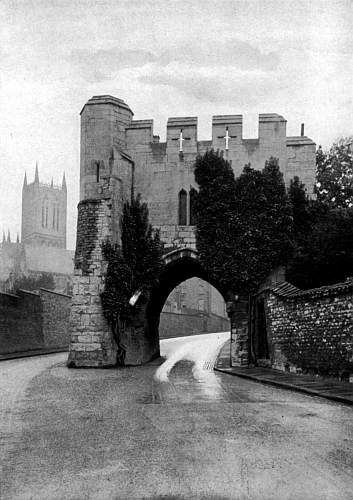
Lincoln Gate.


The original mound upon which The Lucy Tower stands was built in 1068.  It would have been built with a mixture of earth and stones and then covered in clay.  The first tower would have been made of wood.  If the enemy had taken over the castle, The Lucy Tower most probably would have been the last line of defence.  It was not made into a prison graveyard until 1824.

Standing in the pulpit of the prison chapel is intimidating; it is something which I will never forget.

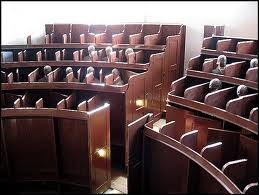
In 1849 the Separate System came into force.  It was believed that if prisoners were kept in isolation they would become rehabilitated.  They were only let out of their cells to go to the Chapel and for exercise.  If strangely enough, The Lucy Tower gives the visitor a pleasant feeling, then the Chapel does the opposite.  It is said to be the only one of its kind left in the world.  The Separate System meant that the inmates would sit in closed in seats, in The Chapel, so that they could not see or speak to anyone else.  The seats are tilted, therefore if any prisoners dared to fall asleep during a sermon they would fall forward and be punished.  There was an open bench at the back which was especially for condemned criminals; obviously it was thought that they were beyond redemption.  Debtors also were not included in the separate system and they would be seated in the gallery with the men above and the female debtors below.  There were sloping seats at the front for the women.  Each criminal in the Separate System was locked into his seat before another could be let in.  In addition to not being allowed to see others, the prisoners also had to wear masks to cover their faces.  In 1851, it was realized that this system did not work and it was abandoned.

The remarkable aspect of all this is that visitors to the chapel today can stand in the pulpit and have the view which the prison chaplain would have.  Some seats are fitted with a dummy criminal wearing a mask.  The vision is intimidating and the atmosphere is awful, it gave me shivers down my back.  If it made me feel so uncomfortable when the situation was simply being portrayed, I can not imagine what it must have been like to be there in reality.  It is places like this which really help children understand what the past was like.

There is also the castle and the castle walls to visit.

2 Comments

Filed under Exciting Excursions