In this episode of the podcast, Michelle Barber discusses whether Emily Bronte may have been inspired by Mary Shelley’s Frankenstein. Initially, she considers the similarities between the two authors. After that, she discusses the turning point, the moment of rejection when monster personalities are created. This is followed by the second point that explores how both writers demonstrate marital love deprivation for those in the margins. Finally, she compares the revenge on the father figure in both novels. You can listen here.
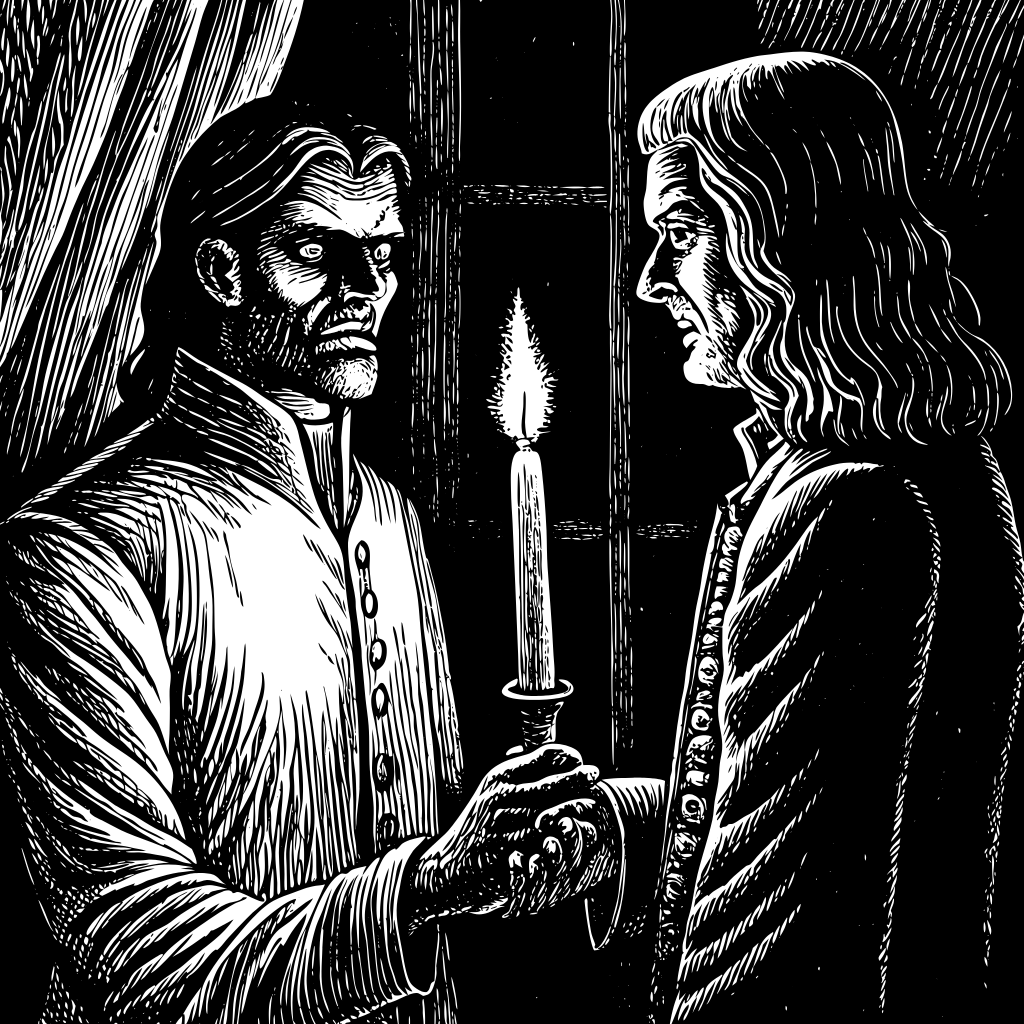
You can buy a copy of my illustrated Wuthering Heights here.
I’m delighted to share my latest podcast with you.
In this episode, Michelle Barber asks the question ‘Is ‘The Laboratory’ by Robert Browning a macabre tale of revenge. She talks about the poem being inspired by a serial killer from the eighteenth century. There is a dramatic reading of the poem and then each stanza is deconstructed focusing on character analysis and plot to give you all the dirt. Yes, indeed, this is a macabre tale of revenge. Make yourselves comfortable and enjoy your trip to The Laboratory.
Many years ago, we launched Loony Literature to get people reading more. It worked well for a while until life’s turmoil took over. However, this important mission has never left us and so here we are back again, with an idea that inspires and excites us. It’s our pleasure to introduce you to Black Cat and Lavender, we are publishing a mixture of old voices and new voices to keep the joy of reading alive. In the first instance, we are offering a range of our favourite classic gothic novels and historical texts. Later, we will be adding new, exciting, innovative voices to our list.
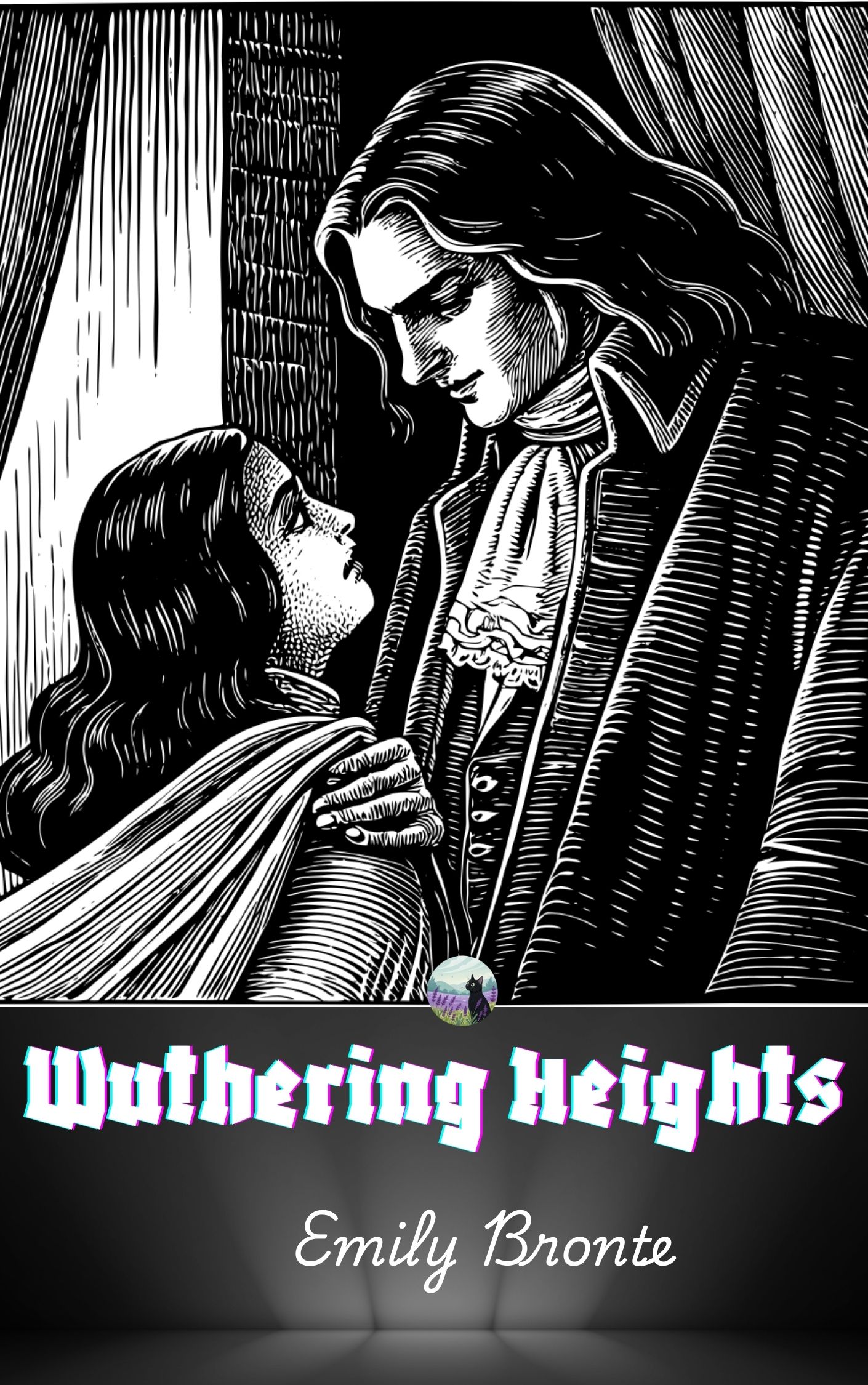
Below is the front and back cover of the hardcover collector’s edition of Wuthering Heights. You can buy a copy here.
Of course, the first book on the list had to be Wuthering Heights. It is our all-time favourite. This book has been with me since I was fourteen or fifteen years old and still moves me emotionally to this day. There is an e book, a paperback and a hardback collector’s edition. Each one has its own unique cover, they are all illustrated and have many extras in them, including an essay letter that we have written for you, dear reader, which discusses how writing Wuthering Heights may have helped Emily Bronte overcome her deepest fears.
Below is the front and back cover of the paperback edition. You can buy a copy here.
Below is the cover of the ebook. You can buy a copy here.
For seven days only, you can receive a free PDF copy. Please email us at blackcatandlavender@gmail
If, you wish to leave a review, we would be most grateful.
Although it had been coming on slowly for years, in 2021, my darling mother’s dementia became much worse. For some reason, seeing someone who positively devoured books, no longer be able to read even a paragraph and enjoy it, blocked my own writing. In August 2024, my mother passed away and I only told certain people that she’d gone. It was too difficult to say it to the world. I wanted to mark it in a certain way that would echo her character. So Black Cat and Lavender’s version of ‘Wuthering Heights’ is dedicated to my darling mother, Joyce.
For the launch, initially, there is a podcast. The first episode discusses ‘Is Wuthering Heights a love story?’ You can listen here.
There will be many more discussions on both podcast and video for you to enjoy as we go along and, of course, books. Thank you for reading this. It is appreciated greatly.
I’ve had a few emails asking for tips on how to make monsters and ghoulish figures. So I’ve taken an extract from the play “Frankenstein’s Revenge – a play full of shifty manoeuvres and time travel” to demonstrate how we built the Monster’s Bride. Using these ideas you can build your very own monster for Hallowe’en and then bring it out year after year for the spooky season. Note: having a resident monster is very helpful for answering the door to unwanted callers – you simply have it sitting in a chair by the open door – it’s amazing the effect it it has on people.
The Monster’s Bride in her best outfit.
How We Made The Monster’s Bride.
We wanted to build Frankenstein’s Laboratory to demonstrate our vision of it to children. In the beginning, before the play was finished, we imagined that we would have The Monster on the table where Dr. Frankenstein was working on him. So we needed to get a monster. When we were thinking about getting The Monster, we decided to buy a mannequin and put blood and warts on him, a mask and then dress him. The problem was that we did not know a lot about mannequins and bought one cheaply over the internet. Originally, we wanted to lay The Monster on the table but when we received the mannequin he would not lie down. We had purchased a mannequin which would only sit up. After much thought, we decided that The Monster would be sitting in a chair and we would have The Monster’s Bride lying on Dr Frankenstein’s work table.
These days we can buy masks galore on the internet, at car boot sales, in shops and on markets.
After the mistake with The Monster, we decided to build The Monster’s Bride ourselves. It was suggested to me to use a frogman’s suit as had been done for Doctor Who’s original Cybermen. Unbelievably, as this was suggested, one came up for sale at the local auction house. So there I was waving my paddle with vigour and landing a fantastic bargain.
Bubble wrap is a great way to stuff a skull and it adds to the effect on the eyeballs when they are added. So when you receive a parcel, never, ever throw your bubble wrap away.
The first job was to stuff the suit and sew up the openings at the wrists and ankles. Don’t ever underestimate how many old clothes it takes to stuff a frogman’s suit. I was desperate to get it finished and in the end shoved everything within reach into it. Unfortunately, that exercise returns to haunt me when I can’t find a certain skirt. I eye the monster’s bride and wonder what she is hiding in there. By the time I came to stitch up the arms and legs, my own arms and hands were aching from the constant compressing of old garments. We had a body. (Another way to make a body is to stuff a jumper and sew up the arms and neck. After this, stuff a pair of trousers and sew the ankles up. Sew the jumper and trousers together to produce a body.)
Cheap bathroom decorations bought off a market, car boot sale or charity shop make weird eyeballs especially when encased in bubble wrap.
The next part of the monster’s bride was easy. That is, apart from struggling to put a pair of black fish net tights on a stuffed, floppy frogsuit. I dressed the body in a long skirt and jacket and then attached a gory hand and foot, purchased off the internet. All that was missing was a head. The internet is fantastic for masks. I bought an alien looking mask and stuffed it with bubble wrap. Two small blue plastic turtles fitted nicely behind the eyes. I used a coat hanger inside the monster’s jacket to attach the head. It simply latches onto the coat hanger’s hook. The monster’s bride was born.
So there, you have a head in a few short steps.
Frankenstein’s Revenge is aimed at introducing children to the novel “Frankenstein” but it wants to do much more than that. The intention is to use it as a springboard for creativity, including building a monster. Once the main body is made, it can be used again and again for different productions; it simply needs a change of costume to convert it into a different character.
Slipping a coat hanger inside the monster’s coat makes it easy to attach the head to the body and it also means that you can swap heads easily.
1848 Daguerreotype of Edgar Allan Poe at 39, a year before his death (Photo credit: Wikipedia)
As humans, we constantly seek connections with other humans and we have always told stories to each other, sometimes simply to make sense of the world around us. Over the thousands of years, we see the same images emerging again and again. It is almost as if they are branded in our collective consciousness. Often, one particular author, artist, actor, composer or film maker does something so spectacular with one of these images that it haunts us until we are creative with it ourselves. Look into your own creativity and see if you can spot when this has happened to you.
Edgar Allan Poe Museum (Richmond, Virginia) (Photo credit: Wikipedia)
In my children’s book Will Blyton and The Stinking Shadow, I have an evil shapeshifter called Ravensmite. He changes from a huge raven into a gothic looking teenage boy at will. I discussed the use of the raven with a wonderful person and writer, Maria Thermann who also uses ravens in Willow the Vampire and The Sacred Grove. Maria suggested that we had probably been subconsciously inspired by Edgar Allan Poe’s “The Raven”. She was absolutely correct. Edgar Allan Poe had inspired me to create a character, although I had not realised it until Maria pointed it out to me.
Cover for “The Raven” by Edgar Allan Poe as illustrated by Gustave Dore (Photo credit: Wikipedia)
The Raven is a narrative poem which has a gothic atmosphere. A talking raven makes a midnight visit to a mourning lover. Here is a marvellous video of an animated Poe reciting “The Raven.” It is done by the very talented poetryreincarnations .
Here’s your challenge – watch the video and use it as a springboard to create something yourself. Happy writing, acting, painting, composing or filming.
Loony Literature is all about literature. We write books and plays, make video clips about them and encourage others to read, write, act and film more.





 Michelle Barber and Mystery