Tag Archives: Loony Literature

6 Great Activities To Introduce Kids to Charles Dicken’s “Christmas Carol.”

Create a Victorian Ghost Story Atmosphere.   On Christmas Eve, it is a family tradition in our house to sit around the fire and by candlelight we tell ghost stories just like the Victorians did.  This is a great way to introduce children to “Christmas Carol”.  For older children read the original Charles Dicken’s “Christmas Carol” and do it in stages on the run up to Christmas.  It will be something which they will look forward to particularly if you create the right atmosphere with candles, hot chocolate and marshmallows and a sense of fun thrown in.  For younger children, there are some excellent versions of the story which  have illustrations in and will introduce them to the basic concept of the story.  The main thing is to create the atmosphere and have fun.

Scrooge, from Charles Dickens: A Christmas Car...

Scrooge, from Charles Dickens: A Christmas Carol. In Prose. Being a Ghost Story of Christmas. With Illustrations by John Leech. London: Chapman & Hall, 1843. First edition. (Photo credit: Wikipedia)

Introduce Scrooge  I was first introduced to “Christmas Carol” by watching the old 1951 version starring Alistair Simm as Scrooge.  It was Christmas Eve and the snow floated down outside as I watched it, it was an afternoon which was to mould my attitude to Christmas.  If the children are older you could watch it all the way through, however, for younger ones you only need to watch the first six minutes for them to get a fascinating insight of the character of Scrooge.  Tell the kids you’re going to show them a film clip of a man called Scrooge and they have to decide if he is a Christmas baddie or not.  As you watch the first six minutes ask them why he is not nice and get them to boo him.  It’s also great fun to shout “Baddie! Baddie! Baddie!”  You can even get them to vote as to whether he is the worst Christmas baddie ever or can they think of worse ones and why are they worse than Scrooge.  The important thing is to get a conversation going as to why we don’t like Scrooge and to have fun, fun fun.  For older kids, ask if they think Scrooge can ever become nice and then question why they think that he can or can’t and then tell them that they need to watch the whole film to find out whether he changes or not.   You can watch it here.

Make your own Christmas ghosts on film.   Watch Horace Gawp’s Christmas Carol below, check out our ghosts and then make your own.  It is easy and great fun to do.  All you have to do is get the kids to put some of their dressing up clothes on or use different clothes than they normally wear.  If there are any hats or wigs in the house these can be used.  Putting clothes on which are far too big or small will give a comic effect.  Once the clothes are on, get the children to pretend that they are a long lost ancestor – they don’t have to exist – you can pull them out of the air for instance, you can have great uncle Theophilus Windbag.  Tell the children to pretend that they have come to visit each other or you with a message for the future.  When they have worked out their message, get them to act it out and film them.  It doesn’t need to be very long.  Upload your chip to your computer and if you have ‘windows live movie maker’ – you can use that.  If you haven’t got ‘windows live movie maker’ on your computer upload your film to Youtube. (For You tube, upload your film and click on “enhancements “- you will see a menu of different colours, it is probably best to choose the lightest but play around with different ones to get the effect which you wish.  Don’t forget to save your final choice.)   For ‘ windows live  maker’, click on that.  In the top menu click on “add videos and photos”  and it will ask you to choose which photo or video you wish to use.  Click on the film clip you have just made.  When your film pops up, look at the top menu and click on “visual effects”.  You will see one which is all white, this is the one which we used for our ghosts, however – play around to see which suits you best.  Once you have done this, return to the “home” menu at the top and save your film.  You will be asked to give it a title and that’s it you have created your own speaking ghost.

Error
This video doesn’t exist

Create your own Christmas Ghost Story.   Once you have gotten in the mood for Christmas ghost stories, it is a good idea for the kids to create their own.  I use the term “create” as opposed to “writing” because I know that as some stage most adults are able to read and write, however, to me, it is more important to concentrate on encouraging children to think creatively.  Once they are bursting with ideas then they can be recorded but the pressure to put pen to paper before the ideas have been thought often creates a creative blockage.  So if you start off with a framework of a person who treats others badly at Christmas time but gets visited by three ghosts who want to show him something from his/her past, present and future, then you have got a basic plot to work from.  Character wise – start off with Scrooge (or whatever you wish to call your main character) and perhaps discuss why this person treats others so badly and hates Christmas time.  You will be surprised how much this gives you to put into your story.  The main point here is to get the kids thinking and having fun.  Let them create three ghosts, get them talking about where they want their story to be and in what time period.  It is amazing how creative kids become once the pressure to sit down and write is off them – so get them shouting out their ideas, looking on the internet for what their ghosts can look like and generally having fun.  It doesn’t matter if the story never gets finished because the end product is not what this exercise is about.  The object of the exercise is to get the kids to know a little about Christmas Carol and Charles Dickens and most of all it is to give them the confidence to be creative.  Encouraging them to be creative is one of the most important gifts you will ever give them as creative thinking is quite simply problem solving – this is needed every day of our lives and the  more children do it, the better they become at it – need I say more?

Marley's ghost, from Charles Dickens: A Christ...

Marley’s ghost, from Charles Dickens: A Christmas Carol. In Prose. Being a Ghost Story of Christmas. With Illustrations by John Leech. London: Chapman & Hall, 1843. First edition. (Photo credit: Wikipedia)

Playing at Christmas Carol.    When I was a child we would watch a film or television programme and then we would go outside and play “Batman” or “Robin Hood”.  When kids play like this, they are effectively creating drama.  So if you’ve read them the story or watched the film, it’s a great idea to let them play some scenes from “Christmas Carol”  Which child wouldn’t like to be the horrible Scrooge?  They can get out all their inner niggles without getting in trouble.  How exciting to play Marley’s Ghost with the chains and frightening the life out of that horrible Scrooge.  Let them improvise with their own words and their own rendition of the story, join in with them until they get the hang of it and let them get lost in the old fashioned world of playing.  Who knows, they might come up with their own shortened version which they want to put on for the family for Christmas.  Children never fail to surprise me with the depths of creativity once a seed has been planted.

Ignorance and Want, woodcut — from A Christmas...

Ignorance and Want, woodcut — from A Christmas Carol by Charles Dickens (1812 – 1870) (Photo credit: Wikipedia)

Visit a stately home in the run up to Christmas.    Hardly anybody can build up a Dickensian atmosphere like these folks.  There the children will see the costumes and decorations in reality.  Many places have got special events on this year which will especially demonstrate how Christmas was in Charles Dickens “Christmas Carol.  The National TrustEnglish Heritage and Historic Houses Association are good places to begin looking.

We hope these “Christmas Carol” activities have been of use to you but most of all we wish you a very Merry Christmas.  Have fun.

27 Comments

Filed under Christmas, Education

Diary of a Writer – Graveyards.

My eyeballs felt as if someone had tried to peel them like an onion.  Actually, it might have been with an onion they were stinging so much. Does terror from staring at a computer screen cause sore eyes?  It was no use, it did not matter how long I glazed over at the manuscript of “Mulgrave Castle”, I was not feeling spooky, Victorian or psychic.  For a second, I played with the idea that somewhere on the internet there could be a sort of Viagra for writers which instead of making them feel sexy sort of erected the atmosphere they were meant to be in.  I didn’t think there would be one and one has to be so careful what one searches for these days.

In a state of desperation, I went from staring at the computer screen to staring out of the window.  I overlook a graveyard and a six hundred year church.  It all looked spooky and I thought I could stare at that to get in the mood. Not so, suddenly car after car arrived on the car park.  The next thing was that a gang of energetic, octogenarian walkers all had their car boots up whilst they took their flasks of coffee out and started drinking and socialising before their walk.   It then occurred to me that I could make some film clips of a graveyard and that might be helpful in summoning up atmosphere anytime I am working on “Mulgrave Castle”.

I grabbed my video camera but couldn’t film at the graveyard next to me as the gang had now taken sandwiches out of their car boots and seemed to be settling down for the day.  After thinking up an elaborate plan to get rid of them, I decided that dressing up in my Loony Literature gear and brandishing a large bell whilst shouting “plague” might not actually work.

I glared some more out of the window and then decided to go to a nearby market town and film there.  I didn’t want to look conspicuous hanging around a graveyard alone so I asked my mother if she fancied going out for hot chocolate.  As she is under five feet tall, just under eighty and looks charmingly innocent, I thought she was the perfect lookout for me.

All was going well, apart from my mother complaining about the lack of hot chocolate, until an elderly man with white, curly whiskers around his chin and leading a similar looking dog tried to cross examine me.

“You one of them family historians then?”  Both dog and man stared at me whilst they waited for a reply.  I was relieved that I didn’t have to lie, after all, I do do family history, I just wasn’t doing it then.  I nodded and waited for him to pass by.

“Who you looking for then?”  Both the man and the dog moved closer.  I would never make a spy, I stammered and stumbled and said “we’ve found nothing.”  He shrugged and I expected him to move on but he still watched us.  I linked my arm through my mother’s and we slowly walked away from the graveyard and then I slyly turned to see if the dog walker had moved on.  He didn’t, he watched us as we walked away but then he bent down to talk to his terrier and at that moment I grabbed my mother by the arm and we hid behind a tree and waited for him to go.   He looked up and shrugged in a disappointed manner and slowly moved away.

We hotfooted it back to the graveyard and I quickly did my filming in case the dog walker found me there again on his way back.  I was extremely pleased with myself as I thought my graveyard filming was done with, I simply had to put it on the laptop and it was ready for use – until I looked at it.  The clip is fine until it comes to second twenty seven and then there seems to be a man only from his torso (legs must be in the earth) with his head bent praying by the side of one of the graves.  I examined the clip but could not come up with what it could really be.

A week later, I decided that I would return to the spot to try to see what I had photographed and take some still shots of the spot.  Four teenagers, without coats, were sitting right by my spot, hanging out.  I had to decide whether to continue with my photography or just pretend to be walking past.    I decided to pretend that they weren’t there.  I examined the spot from all angles making sure that each headstone was where I thought it was.  I could not see what could possibly represent the image on the film.  I took my video camera from my bag and somehow it had become as dead as a parish council meeting on a Saturday night.  I quickly put it away and tried not to look at the teenagers who, I could see out of the corner of my eye, were all sitting in a line staring at me.  Luckily, I had my son’s camera with me as a backup, so I quickly took that out and tried to switch it on – dead.  I poked the on button and prodded it frantically.  The teenagers had moved closer but I could not contain my enthusiastic and violent prods onto the camera.  Nothing happened.  I lifted my head proudly and with a majestic air swept past the viewing teenagers with my mother following swiftly behind. How both batteries on both cameras came to be so dead, I will never know.  My video camera had one hundred minutes on it when I checked the night before.

The following Saturday I made sure that both cameras were fully charged when I set out.  I managed to take photographs without an audience but I cannot find out what the shape is in the video.  After all that, I’ve decided that maybe I should try something else to conjure up atmosphere.  Haunted castle anyone?

16 Comments

Filed under Creative Writing, Diary of a Writer., Inspiration and Us

Hallowe’en – How to build a monster easily!

I’ve had a few emails asking for tips on how to make monsters and ghoulish figures.  So I’ve taken an extract from the play “Frankenstein’s Revenge – a play full of shifty manoeuvres and time travel” to demonstrate how we built the Monster’s Bride.  Using these ideas you can build your very own monster for Hallowe’en and then bring it out year after year for the spooky season.  Note: having a resident monster is very helpful for answering the door to unwanted callers – you simply have it sitting in a chair by the open door –   it’s amazing the effect it it has on people.

Franknestein's Revenge

The Monster’s Bride in her best outfit.

How We Made The Monster’s Bride.


We wanted to build Frankenstein’s Laboratory to demonstrate our vision of it to children.  In the beginning, before the play was finished, we imagined that we would have The Monster on the table where Dr. Frankenstein was working on him.  So we needed to get a monster.  When we were thinking about getting The Monster, we decided to buy a mannequin and put blood and warts on him, a mask and then dress him.  The problem was that we did not know a lot about mannequins and bought one cheaply over the internet.  Originally, we wanted to lay The Monster on the table but when we received the mannequin he would not lie down.  We had purchased a mannequin which would only sit up.  After much thought, we decided that The Monster would be sitting in a chair and we would have The Monster’s Bride lying on Dr Frankenstein’s work table.

Frankenstein's Revenge.

These days we can buy masks galore on the internet, at car boot sales, in shops and on markets.

After the mistake with The Monster, we decided to build The Monster’s Bride ourselves.  It was suggested to me to use a frogman’s suit as had been done for Doctor Who’s original Cybermen.  Unbelievably, as this was suggested, one came up for sale at the local auction house.  So there I was waving my paddle with vigour and landing a fantastic bargain.

Frankenstein's Revenge.

Bubble wrap is a great way to stuff a skull and it adds to the effect on the eyeballs when they are added. So when you receive a parcel, never, ever throw your bubble wrap away.

The first job was to stuff the suit and sew up the openings at the wrists and ankles.  Don’t ever underestimate how many old clothes it takes to stuff a frogman’s suit.  I was desperate to get it finished and in the end shoved everything within reach into it.  Unfortunately, that exercise returns to haunt me when I can’t find a certain skirt.  I eye the monster’s bride and wonder what she is hiding in there.  By the time I came to stitch up the arms and legs, my own arms and hands were aching from the constant compressing of old garments.  We had a body.  (Another way to make a body is to stuff a jumper and sew up the arms and neck.  After this, stuff a pair of trousers and sew the ankles up.  Sew the jumper and trousers together to produce a body.)

Frankenstein's Revenge.

Cheap bathroom decorations bought off a market, car boot sale or charity shop make weird eyeballs especially when encased in bubble wrap.

The next part of the monster’s bride was easy.  That is, apart from struggling to put a pair of black fish net tights on a stuffed, floppy frogsuit.  I dressed the body in a long skirt and jacket and then attached a gory hand and foot, purchased off the internet.  All that was missing was a head.  The internet is fantastic for masks.  I bought an alien looking mask and stuffed it with bubble wrap.  Two small blue plastic turtles fitted nicely behind the eyes.  I used a coat hanger inside the monster’s jacket to attach the head.  It simply latches onto the coat hanger’s hook.  The monster’s bride was born.

Frankenstein's Revenge.

So there, you have a head in a few short steps.

Frankenstein’s Revenge is aimed at introducing children to the novel “Frankenstein” but it wants to do much more than that.  The intention is to use it as a springboard for creativity, including building a monster.  Once the main body is made, it can be used again and again for different productions; it simply needs a change of costume to convert it into a different character.

Frankenstein's Revenge

Slipping a coat hanger inside the monster’s coat makes it easy to attach the head to the body and it also means that you can swap heads easily.

 Related articles

14 Comments

Filed under Frankenstein's Revenge

Writing – Using Real People in Fiction Can Spell Trouble!

Victorian Lady Portrait

Victorian Lady Portrait (Photo credit: Aminimanda)

The other day, I was telling my son about a dead relative whose personality I have partly used when creating Jane Snow, my heroine’s paid companion and fellow detective in Mulgrave Castle.  My relative had a strange notion that when a man smiled at her, he had certain ideas because the chaps were too frisky for their own good.  One of the theme’s I want to explore in this series of Victorian psychic novels is female desire in the Victorian era as I became very interested in how it was used in Literature whilst a student.  Although, I have used Jane Snow’s attitude to males in a comic way because it was something which was both amusing and endearing in my relative, I think she might react badly if she knew that this aspect of Jane’s character is based on her.  I think she might see it as being laughed at instead of understanding that it is celebrating the fact that she was such a character.  Although, to be honest, I wonder if she would identify herself with the character, she might not.


The reason I say that my relative might not recognise herself is because of a story I was told when I was doing a course on scriptwriting.  The writer who took the course was a playwright and a television scriptwriter.  He was adamant about only using one aspect of a person’s personality when creating your own characters.  The reason for this was personal experience.  He had written a television drama and used a few aspects of the personality of a woman who was in his circle of friends as one of the characters; at the time of writing, he thought that he had disguised her well enough for no-one to know whom he had based the character on.


After the drama was screened, he was shocked that most of the circle of friends identified the woman whom he had used as a character.  Fortunately, the woman did not recognise herself and none of the others pointed it out to her.  The experience was enough to convince him though that we should never use more than one aspect of a person’s personality traits when creating a character.


On the other hand, I created the character, Will Blyton based on my son, Will and am writing a second book about him.  Often, I will read a part out to him and he will call me a cheeky so and so because I am depicting a real live occurrence.  He knows I am writing about a character based on him and likes the fact that he is my muse.  However, if he did not, I would not do it.


So what about you?  Have you ever written about someone and they have recognised themselves?  Do you use aspects of real life people at all when creating characters?  Do tell!


20 Comments

Filed under Creative Writing, Inspiration and Us

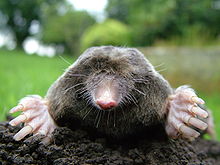
Writing – Are you a butterfly or a mole?

Writing - Are you a butterfly or a mole?

Is it better to flutter from project to project?


At the moment, I am questioning whether I am using the best strategy for my writing career.  I am adopting the butterfly method whereby I flit from children’s fiction to children’s plays to adult fiction.  (By adult fiction, I don’t mean X rated stuff, I simply mean books for adults.  The reason I am explaining this is that I had an embarrassing incident years ago when donating videos to my child’s school fair.  All the ones I had seen donated were videos for children, so I asked if they accepted adult ones – the teaching assistant thought I meant porn and coloured highly when I thrust my “Pride and Prejudice into her hand.)

I am a writing butterfly, I flicker back and forth working on both adult and children’s fiction and I wonder whether I would be more effective if I was a mole, digging and focusing on one tunnel or book until I had reach my goal.

Being a butterfly has its positive aspects in that it keeps the writing schedule fresh and lively.  It also means that if children think my kids’ stuff reeks, their mothers’ might like my physic detective.  In other words, I’m not putting all my eggs into one basket as the old saying goes.

I do feel that being a butterfly has its negative side especially when it comes to marketing.  It means trying to interest two sets of audience, which as any writer knows attracting a single one can be tough going, initially.  It also means that I constantly have more than one plot, setting and set of characters going around in my head which can be like living inside a bee hive at times.

When I talk about being a mole, I must clarify that I mean someone who works on a particular novel but also has a blog and writes articles etc…   I don’t mean that they only work on the novel they are writing at the time and nothing else whatsoever.  The positive side to being a mole is that we can concentrate wholly on the piece we are working on, we might have ideas for future books in our heads but if it is a series with the same main character, it all helps to know this person better.  I think it is the same with marketing, if we are sticking mainly to say writing vampire stories for adults, we can aim all our marketing energy into the one market; the output is far better targeted than that of the butterfly writer.

The negative side to being a mole writer is that the writing atmosphere could become a little staid for the writer after a period of time.  Fundamentally, I think that the main problem is that if the mole concentrates for instance, completely on a series with an alien detective and it flops, the mole needs to start again; obviously, this is not a problem if the series is a hit.

I have to say that as a butterfly writer, I do question whether I would be better off being a mole.  So what are you and is this because you have a strategy or is it because it is the only way for you to write?

Writing - Are you a butterfly or mole?

Being focused hits the spot.

29 Comments

Filed under Creative Writing, Inspiration and Us

Writing – Embracing Characterisation in a haunted, Victorian Prison.

Lincoln Victorian Prison in Lincoln Castle.

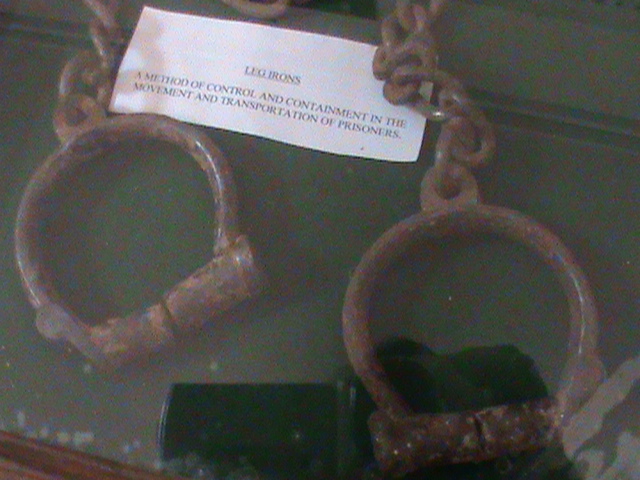
Handcuffs on display at Lincoln Victorian Prison in Lincoln Castle.


I am working on a novel called Mulgrave Castle in which my main character Harriet Twine is a psychic, Victorian detective.  In order to really embrace my character as I re-write, I wanted to visit a place I had been to before which I knew had both a mixture of atmosphere and spiritual energy.  It is the Victorian prison in Lincoln castle.

Lincoln Victorian Prison in Lincoln Castle

A faithful dog on display at the prison. His master was a poacher who shot a head keeper in the knee. Unfortunately, the man died and William Clark alias Slenderman was hanged for it at Lincoln Prison in 1877.

I decided to do most of my journey by train as this was a popular Victorian mode of transport.  I would have liked to do the whole day in Victorian costume but after doing other experiments in costume, I decided it really was not practical and I would have to use my imagination as far as clothing went.

I have written about the prison elsewhere on the site under Exciting Excursions.  The place which impressed me most on my last visit is the prison chapel.  In 1849 the Separate System came into force.  It was believed that if prisoners were kept in isolation they would become rehabilitated.  They were only let out of their cells to go to the Chapel and for exercise.  It is said to be the only one of its kind left in the world.  The Separate System meant that the inmates would sit in closed in seats, in The Chapel, so that they could not see or speak to anyone else.  The seats are tilted, therefore if any prisoners dared to fall asleep during a sermon they would fall forward and be punished.  There was an open bench at the back which was especially for condemned criminals; obviously it was thought that they were beyond redemption.  Debtors also were not included in the separate system and they would be seated in the gallery with the men above and the female debtors below.  There were sloping seats at the front for the women.  Each criminal in the Separate System was locked into his seat before another could be let in.  In addition to not being allowed to see others, the prisoners also had to wear masks to cover their faces.  In 1851, it was realized that this system did not work and it was abandoned.

Lincoln Victorian Prison in Lincoln Castle.

This is the only chapel of this kind left in the world.

The remarkable aspect of all this is that visitors to the chapel today can stand in the pulpit and have the view which the prison chaplain would have.  Some seats are fitted with a dummy criminal wearing a mask.  The vision is intimidating and the atmosphere is awful and on my first visit it gave me shivers down my back.

Lincoln Victorian Prison, Lincoln Castle

This is the view from the pulpit.

For this visit, I had strongly psyched myself up not to be so intimidated by the chapel, after all, Harriet is Victorian and has never witnessed the liberal world which I am used to.  As I stood in the pulpit looking down on the chapel to take the photographs, I felt a very strong sensation which made me lean backwards so that I could not be pushed.  I put that down to my own imagination and went down into the seats and sat on the front row.

I had not planned to do this but I found that I was sitting observing the other visitors.  People seemed reluctant to stay in the chapel, I found that most were scuttling straight through and not visiting the pulpit.  They seemed as if they should not be in there and were frightened of getting caught.  I decided to stop the next visitors and explain about the pulpit and directed them up to it.  They didn’t look happy and didn’t actually climb into the box.  So as the next people I directed up there were sneaking off, I pointed the pulpit out.  They declined going in.  I eventually witnessed one couple going in and their faces suggested they had eaten something which had gone off.

I felt at this point that my experiment had worked in that I had become like my intrepid Victorian heroine compared to the other visitors, I had lost my modern day queasiness for harder times than ours.

Lincoln Victorian Prison, Lincoln Castle.

A display portraying the gallows just in case we forget what took place in Lincoln Prison.

However, all of that fell by the wayside when I entered Cobb Hall which was built in the 13th century and has been used as a prison and for executions.  The stench of urine as I entered was overwhelming which puzzled me, later it actually made sense as when people are extremely frightened it is not unknown for them to wet themselves.  There is a ladder which leads down to the dungeon and there was very strong negative energy emanating from that area so I declined to go down.  I felt rather ashamed at that point as Harriet would definitely have gone down to try to find out what had happened down there.  For me however, the feeling of evil was too strong.  I did climb up to the top where the hangings took place.  In the mode of Victorian psychic detective, I did not sense anything there.

Cobb Hall, Lincoln Castle.

For many, when they went through those doors – they never came out again alive.

Whilst I was up at the top, unbeknown to me, my son had entered Cobb Hall seen the ladder area leading down to the dungeon and had left immediately, he too got a really negative feeling from that area and rushed to tell me about it as I left Cobb Hall.

Cobb Hall, Lincoln Prison

Down into the dungeon. There is a malevolent energy around this spot.

Did my experiment work?  I feel it did as I think that I have discovered that Harriet is rather more adventurous than I am.  I have discovered that leading a life as a sheltered Victorian lady has made her more likely to throw herself into situations because her life is dull and it is not enough for her.

Do you ever do experiments like this?  If so, please tell so that I know that I am not the only one hanging around Victorian prisons.

18 Comments

Filed under Creative Writing, Inspiration and Us, Mulgrave Castle - Harriet Twine the Saucy, Victorian Detective.

What sort of writer are you – explorer or planner?

English: Mulgrave Castle. Castle ruins situate...

English: Mulgrave Castle. Castle ruins situated in Mulgrave Woods, near Sandsend on the east coast. (Photo credit: Wikipedia)

At the moment, I am on a major re-write of my supernatural, Victorian novel, “Mulgrave Castle”.  I am having days where I am conjuring up the atmosphere I need to re-create the book in my head and I feel truly satisfied.  However, I am also having days when I will do anything before getting started and then find that I have wasted my writing time.  I am beginning to wonder if this is to do with the type of writer I am.

As I see it, there are basically two types of writers. (Of course, many will be a mixture of the two.)  There is the explorer who has maybe a very basic plot and outline ideas for characters and then lets the whole work evolve as she/he writes.  There is also the planner who has virtually everything worked out either on paper or in their head before they start to write.

I would love to be a planner but my writing muse hates it and I have to accept that I am an explorer.  Being an explorer can be tremendous fun as I sit and type and imagine and all sorts of scenes taking place which help me get to know my characters.  However, it means that I have to do about seven drafts of a book and by drafts I don’t mean spellcheck.  I mean doing a draft purely to re-write the plot, exploring the best point of view, then the same with character development and another one to put signposts in etc…

As I work, I have another file open which is called “Mulgrave Castle Leftovers”, this is basically the cutting room floor.  Being an explorer means that I have scene after scene which is cut because there might only be one relevant sentence in it – however writing these scenes are not a waste of time as they give me an intimate insight into characters and setting.  When we first begin to write, we find it difficult to cut, it is almost as if someone is threatening to cut parts of our person off.  The longer we work at our craft, the more we can see what doesn’t work or what simply is clogging the arteries of the story up.  I call it “boning the text” – basically, I am cutting it down to the bone.  To demonstrate the severity of it, I am on page 63 of my most recent re-write and the “Mulgrave Castle Leftovers” file has 10,000 words in it already.  Goodness knows how many words will be in it by the time I get to the end.

So, I’ve shared with you – now do tell, how do you write?

36 Comments

Filed under Creative Writing, Inspiration and Us, Mulgrave Castle - Harriet Twine the Saucy, Victorian Detective.

Conjuring and Capturing Feelings – Inspiration in Ruins.

English: The Gatehouse at Thornton Abbey

English: The Gatehouse at Thornton Abbey (Photo credit: Wikipedia)

I have great writing days and I have writing days when I simply do not understand why I am writing at all.  On the great ones, I experience life at its best, I know I am not simply alive but actually LIVING, really living as the excitement generates around my body and my fingers flash along the keyboards.  On the bad writing days, I stare at the text and I hate it, every word seems wrong; the characters are cardboard and the plot is boring.  I have trouble concentrating as my mind is more concerned with Bowie songs which will play themselves on a loop in my brain and my study looks like a dusty dump.  At this point, it might seem that on the great days, I get lots of quality writing done and on the bad days, I get nothing done at all.  On the contrary, I still get some done on the bad days, maybe not as much as the good days but the main difference is that it is unpleasant.  To be honest, it puzzled me so much that I started to analyse it to see if I could do anything about it.

I thought about the great days and how they start off and after a while it occurred to me that it is all about feeling certain ways for certain pieces of writing.  For instance, when I work on Mulgrave Castle a supernatural, Victorian novel, I often get a certain feeling coming over me which is my supernatural, Victorian feeling –all it is, is how I felt when I read books and visited places which inspired Mulgrave Castle.  In other words, I had captured the feelings when being inspired to write the book and sometimes they appear when I am actually writing it.  On the bad days, when I would rip it up, if it was on paper, I have not conjured up these feelings and it is jolly hard work.

The more I thought about this, the more it occurred to me that if I could retain the feelings I get when I am inspired and conjure them up at will, my writing and writing experience will greatly benefit from it.  I suppose that really it is merely what Stanislavski suggested  actors should do all those years ago, capture the emotion, store it and learn to bring it back at will.  As I reflected on this, I thought it would be useful if when visiting places to be inspired, I also went with the purpose of capturing the feelings to use again later.  To do this as an experiment, we decided to visit Thornton Abbey in North Lincolnshire as we have used it before for inspiration; I expect though that all ruins will do perfectly well, wherever you are.

Thornton Abbey

Thornton Abbey

There are some places which one should arrive at preferably by train, Venice being the most obvious example, however, Thornton Abbey in North Lincolnshire is another one.  If you want to feel as if you have gone back to the world of Enid Blyton or “Swallows and Amazons” dump the car at one of the rural villages along the Barton Upon Humber to Cleethorpes railway line and catch the train to Thornton Abbey.

As I chug along through the flat Lincolnshire countryside, I prepare myself for the jump down from the train.  The platform at the Thornton Abbey stop is so old, I literally have to jump off as the platform is way lower than the train.  It is at this point that I start to feel as if I’ve gone back in time.  The beautiful Thornton Abbey Gatehouse beckons in the distance as we make our way along a path which has glorious countryside on either side and big faced, lazy sheep greet us with a glimmer of interest.  The reason I suggest dumping the car and catching the train somewhere along the line is that walking up the path to Thornton Abbey transports me into another world and is a strong source of inspiration when writing children’s adventure stories.  I strongly remember being eleven and long summer holidays; I close my eyes and monitor the feeling, truly noting it and recognising it instead of simply basking in it.  I picture an eleven year old me running down the path towards Thornton Abbey and hold it.  I do a mental click as if I have taken a photograph and hope that I will be able to conjure up this wonderful feeling when the time is right.

We get to the entrance of The Gatehouse and I am really excited as I have been here before and I have to say that it is one of my favourite places to visit.  I am not going to write the history of Thornton Abbey as that is not the point of the piece and there is lots of information on that elsewhere on the internet.

One of the reasons I love visiting Thornton Abbey so much is that it has a wonderful effect on me.  Whenever I visit it, it changes my mood into a very happy, carefree one; the peaceful, happy feelings on the land are so powerful it is like taking a tonic. I intend to capture that strong feeling today, hopefully for use in the future. I have to say at this point that I am well aware that there are stories of Thornton Abbey being haunted by Thomas De Gretham, the 14th abbot of Thornton Abbey,  who was supposed to have been a practitioner of the dark arts and rather partial to the pleasures of the flesh.  He suffered for his crimes in that he was bricked up alive in an underground dungeon and was found still sitting at his desk in the 1830s, hundreds of years later.  There are supposed to have been sightings of him but the only feelings I get from there are happy, beneficial ones which I can use to energise me when I am writing.

Even though Thornton Abbey has a very strong happy aura, it can be used to create feelings for writing spooky stories.  Will and I took picnic rugs and a copy of Edgar Allan Poe’s “The Tell-tale Heart” to Thornton Abbey to read the story amongst the ruins.  We had just finished the story when the sky turned black and we were assaulted with that hard, harsh rain which hurts and soaks within minutes.  We had to shelter in the ruins, which, being ruins, did not really shelter us at all.  It was too far to run to the gatehouse or the small exhibition room so we had to wait and watch the turbulent weather and the swallows flew in and out of our shelter telling us to go – the scene was spooky but made me feel excited.  I closed my eyes and focussed on the image I experienced.  Hopefully, when I remember the scene, the emotions I experienced would return when I want to create that feeling for writing.

Thornton Abbey

A spooky place to take shelter when there is a storm.

Once the rain stopped, we went to do our final experiment.  We were going to use the main hall on the second floor of the gatehouse for Will to perform a Richard III monologue.  The room was darkly lit with a wooden floor which bends slightly when walked along and shafts of light escape through the gaps up into the room.  It was perfect for Will to perform the villain’s piece and as I watched I shivered and did feel as if I was in another time.  Will took the emotion of how he felt in that room away with him; he really did feel that it was a powerful exercise.

Thornton Abbey

I could really imagine Shakespeare’s Richard III in here plotting.

It might all seem like a great deal of fuss for a bit of writing and acting but it works, not every time because we all have times in our life when it is distraught and we cannot escape reality.  However, because the great moments in life are so precious, we have to create them when and where we can – give it a go when you get the chance or have you been doing it for years? Let me know.

17 Comments

Filed under Creative Writing, Exciting Excursions, Inspiration and Us

I Feel Rather Stupid – To Post Or Not To Post?


Leading up to Castle Rising.

The reason I feel stupid is that I travelled for just over two hours by car to Castle Rising in Norfolk and spent less than twenty minutes in the castle itself.  Before we go any further, I have to state that Castle Rising is a wonderful place to visit and I would certainly recommend it to anybody.  So, if indeed it is such a good spot to visit, why did I only spend twenty minutes in the castle itself?  I believe I have a bit of explaining to do.

At the moment, I am working on a supernatural novel set in Victorian times called Mulgrave Castle.  I have been working on this, on and off, for a number of years.  At one point, I actually got rid of the supernatural element and decided to have it as a detective story.  The reason for this was that whilst writing it, strange things happened and it spooked me.  I have had a number of supernatural experiences in the past and I find them hard to believe and on occasions have been frightened, I am a sceptic but know what I have seen, heard and felt.

A short while ago, when I decided to go back to working on Mulgrave Castle, I decided that it would be what it had set out to be – a supernatural story.  I resolved that instead of cowardly hiding from the supernatural world, I would do lots of research and find out more instead of closing it firmly out.  This is how I ended up at Castle Rising.

At the same time, my son and I have been doing a lot of family history.  This has brought up some surprises which makes me question why I am sensitive to supernatural experiences even though I have always tried to block them out.  Whilst looking up family history in Lancashire, I stumbled upon MJ Wayland’s (author, paranormal explorer and relic hunter) website www.mywayland.com  In one post, he writes about the most haunted families in Lancashire.  As I read the names the Singletons, the Osbaldestons and the Southworths – I realised that I am descended from all these families.   I will explain further on why I am mentioning these three families.

English: Isabella of France, wife of Edward II...

English: Isabella of France, wife of Edward II of England. From http://www.william1.co.uk/pg1.htm (Photo credit: Wikipedia)

Further research discovered that Isabella of France is my 21st great grandmother, for those who are not au fait with her, she is otherwise known as She Wolf for allegedly being involved in the murder of her husband, Edward II.  Castle Rising in Norfolk is where Isabella was under house arrest for many years.  It has been said that she haunts the castle and people have heard her hysterical laughter.  The genealogical line which I followed to get from myself to Isabella involves the families Singleton, Osbaldeston and Southworth from Lancashire.  Are certain genealogical lines more susceptible to hauntings than others?

English: Castle Rising Castle. By William M. C...

English: Castle Rising Castle. By William M. Connolley; 2006/11. (Photo credit: Wikipedia)

As we love visiting castles, we decided to go to visit Castle Rising.  I have to point out that I sincerely did not want the story of Isabella laughing hysterically to be true.  Ancestor or not, the thought of souls who cannot rest in peace leaves me feeling desolate.  I wanted to visit the castle and enjoy it purely for its history minus any supernatural incidents.  So not only am I a sceptic who needs proof of supernatural phenomena, I also think deeply about what some of these stories actually mean if they are true.

Do these creatures guard Castle Rising?

So we arrived at Castle Rising and had a very civilised picnic in the grass covered car park and used the exceptionally clean and well looked after lavatories.   After putting away our chairs and picnic basket, we sauntered down to the castle.  We decided to walk where the battlements would have been first to take in the magnificent views of the surrounding countryside.  After a few minutes, I started to feel unsure of my footing even though I had no need to.  We left the battlements and went into the castle.  By the time I had climbed the first lot of steps, I felt decidedly ill.  I felt so hot my head was pounding and I felt as if I had a huge lump of something in my right ear.  It was a hot day but we were in the cool darkness of the castle.  I complained about how hot I was and my son said that I was standing in what was once the fireplace.  I hadn’t realised as I felt too uncomfortable to read any information signs.

I was trying desperately to feel well as I didn’t want to spoil the visit for the rest of the party.  I looked out and saw a bridge and I heard myself saying that I could not go across the bridge; no one could make me go across the bridge.  I was aware that I sounded like a petulant child but at that point fear was a stronger emotion than shame.  My family asked if I wanted to leave as I looked on the verge of having a palpitation attack.  We hurriedly made our exit.

Within minutes of getting into the car, I was well again.  My son asked me why I was so afraid of going across the bridge.  I told him that at that point, I knew that if I went on that bridge, it would collapse underneath me.  He said that the floor had collapsed around that area in the 16th century.  I had been too unwell to read the wall plaques when I was in there.  The suggestion could be that my eye maybe had quickly skimmed it or I had read about it and not remembered.  The only problem with that theory is that I did not do much reading about the castle before I went to it once I had read about Isabella supposedly haunting it as I did not want any suggestions of anything which have happened implanting itself in my brain.  The other problem with the theory that I might have briefly seen the wall plaque or read about the floor collapsing was that I was truly petrified and I have been to many places where things have happened but they didn’t have that effect upon me.  Nobody would drive all that way on a family day and leave so quickly if not made to do so.

A way to make a quick exit.

Also, it left me feeling really stupid, it has taken me almost two weeks to write about it – in fact, I almost didn’t write about it because it seems too silly for words.  I will be going back; firstly, I am so annoyed with myself because none of us got to really see it and explore.  Luckily, my son had the sense to get some quick photographs before we left.  The other reason I will return is my curiosity – will I be able to overcome my fear of what looks like a perfectly safe bridge?


22 Comments

Filed under Mulgrave Castle - Harriet Twine the Saucy, Strange Stories

Giving Fanny Fear the Finger – Part One!

Conjuring up an image of Fanny Fear is important.

Gosh, that sounds downright rude but unfortunately, that is how we have to behave towards Fanny Fear.  Fanny is short for Frances or Francis, it all depends whether your shoulder blade troll is male or female.  My Fanny Fear is female, she has an extended chin which ends at a point and hunched over shoulders as she is always bent over whispering in my ear with a harsh, hissing voice.  Therefore, I will be referring to Fanny Fear as “she” throughout this post.  However, if you have a male Fanny Fear, please feel free to change the pronoun to “he”.  Fanny Fear infiltrates all aspects of our lives.  However, in this post I want to concentrate on how this shapeshifter stops us from writing, acting, filming or painting.


Let’s start at the beginning.  Fanny Fear will appear in all disguises to actually prevent you from being creative.  Fanny Fear will appear in your mind dressed as your spouse, your school friends, your mother or your work colleagues.  Fanny Fear is an accomplished mistress of disguise.  You’ve been to see a wonderful film or read a book which gave you shivers down your spine.  It has created a spark in your mind, you have an idea for a poem, short story, novel, film or painting.  Hey, this feels good – you feel uplifted, a shadow starts to cover the feeling.  You listen, can you hear something?  You realise it’s the most popular girl/ boy in the school grinning at you in your head.  All the followers appear and they are laughing.  A feeling of darkness blots out your happy, uplifted feeling as you realise they are all mocking your creative work.  Your shoulders hunch and you slump – better not risk it.

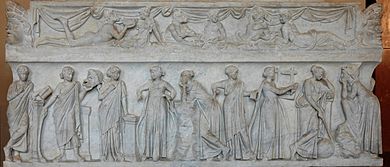
The Nine Muses from Greek mythology. The Sarcophagus at The Louvre.

You get to 45 and are still getting ideas for stories and other creative things – not as many as you used to do because you bat them away like pesky flies.  One day, that creative feeling comes over you again with a renewed strength, it makes you feel good, you want to write your idea down.  You’re a grown up now, you don’t need to worry about your school mates making you look stupid.  You imagine telling your wife/ husband that you’re going to write.  You see them in your head bursting out laughing and saying “what are you wasting your time for, you’ll never get a publisher.”  The dark shadow returns and you give it one last go – you imagine telling your mother.  In your mind, she smiles and says “that’s nice dear – did you get my tablets?”

Okay, that is a worst case scenario with Fanny Fear.  However, I had to do this to point out how Fanny Fear operates.  Fanny Fear is not other people; Fanny Fear is how we imagine other people are going to react concerning our creativity.

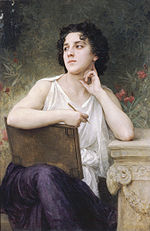
A woman searches for inspiration – William Adolphe Bouguereau.

Fanny Fear feeds on the fear of being mocked.  She sits like a piece of fungus in the back of your mind.  Each time she whispers in your ear and conjures up images in your head and you allow it, she grows and flourishes.  She is the plague of creative people.  The good news is that Fanny Fear can be controlled.

In the first instance, I want you to give Fanny Fear, who might simply be a hissing voice, a pain in your stomach or a dark shadow who looms down on you, a face and body.  It is important that you make Fanny Fear as exaggerated as possible, because that is what she is queen of, exaggeration. Okay, we have this troll fixed in your mind, can you see her?  Take her in, look her over slowly –make sure that you recognise her.  It is important that you attach the look to the dark shadowy feeling, pain in your stomach, or whatever she gives you.  Give her a new name if you like.  That is step one, recognising Fanny Fear, once you have given her a look and a name – if you think of her every time you start imagining people mocking the fact that you are being creative – the horrible feeling which is associated with this instantly lessens.

The next bit becomes easier with awareness.  Be alert because Fanny Fear sneaks up on you at all times.  If you are reading a book and stop to think of the wonderful way with language the writer has; Fanny Fear might quietly whisper “Of course, you will never be able to write like that.”  Stop!  Mentally grab the troll by the ear and face up to it.  Tell the piece of fungus, in your mind, that you are working on your writing and one day will be an accomplished writer.  It then helps to mentally give the creature a swift boot up the backside and imagine it flying through the air.  The more you do this on a regular basis, the less Fanny Fear will visit you.

Once you get Fanny Fear under control – give yourself permission to write, act, film, paint etc…  Tell yourself out loud, write it down.  You have permission to write, act, film or paint.

Okay, so what are you wasting time here for?  Get out there and give Fanny Fear some wellie and then get creating!

Have a wonderful time.

1 Comment

Filed under Creative Writing, For Teens, Inspiration and Us, Self Esteem and Literature